

title: [Book Sharing] Don Don Don Don Don - The Secret Birth of Japan's Five Major Donburi!
published: false
date: 2023-01-14 00:00:00 UTC
tags:
canonical_url: http://www.evanlin.com/reading-donburi/
---
[](https://moo.im/a/1rFKNV "丼丼丼丼丼")
丼丼丼丼丼
The Secret Birth of Japan's Five Major Donburi!
27 ratings
Author: Ryoichi Iino Translator: Chen Xianru Publisher: Taiwan Commercial Press
Published: 2021/09/01
#### Book Purchase Recommendation:
- Readmoo: [Purchase Link](https://moo.im/a/1rFKNV)
# Preface:
This is the second book I finished reading in 2023. I bought this book because I was hungry (not really) and because I was about to travel to Japan. I wanted to learn about the history of Japanese **donburi (pronounced ㄉ ㄢ v)**. The content summary of the entire book is quite interesting, making me want to buy it and slowly read the related knowledge.
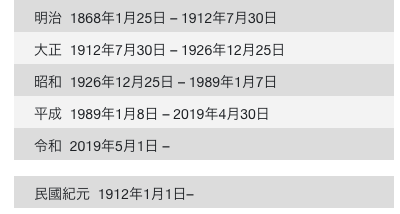
In addition, this book really needs a comparison table of Japanese era names and Western years:
# Content Summary:
- Through historical materials, understand the birth process of popular Tendon, Tonkatsu Don, Gyudon, Unagi Don, and Oyako Don.
- Present the scene of the birth of donburi with historically rich pictures.
- Explain the early methods of eating and ingredients of various donburi.
Explore the common people's food that swept across Japan during the Edo period.
Taste the timeless historical flavor filled with the aroma of rice.
How did grilled eel, which was originally a side dish for drinking, transform into Japan's earliest donburi?
How did the Japanese, who originally didn't eat chicken, invent the national dish Oyako Don?
How did the cow, originally from overseas, transform into Japanese ingredients under the influence of Europeans?
How did the originally thin pork cutlet increase in thickness, and even change its name to Tonkatsu?
Tendon, Tonkatsu Don, Gyudon, Unagi Don, and Oyako Don, five types of donburi that have caused a sensation among the people, but you may not know their origins.
This book traces anecdotes from the Edo period to the Meiji period, exploring how the Japanese people competed to imitate the way of making donburi, and their eagerness to enjoy donburi. If you want to get a glimpse into the core of the lives of the Yamato people and understand the driving force behind Japan's move towards modern times, start by understanding these five types of donburi!
## Before the Appearance of Donburi
Before the appearance of donburi (pronounced "dan"), in fact, Edo had already started the process of eating ochazuke (tea and rice) since 1805. (So ochazuke was that early).
## The Birth of Unagi Don
Grilled eel appeared in Japan very early (1688~1704), and it began to appear in high-end restaurants in Edo. Later, in 1777, there were dishes of grilled fish with white rice.
In 1804, the sponsor of Kyo-machi - Ima-suke Okubo, because he liked to eat eel, put it together with rice. This is said to be the beginning of eel rice.
So, how did Unagi Don start?
From 1837, Kyoto and Osaka called eel rice (Mabushi), which is the abbreviation of Unagi Don. The approximate price was: 200 mon. Inside, mainly five or six small eels were grilled after being beheaded.
It is worth noting that although it is said that the use of chopsticks came from China. However, `disposable chopsticks`, which can be thrown away after eating, came from Japan. Because at that time, Unagi Don in Edo and Kyoto both came with chopsticks that were not recycled. And the sauce also gradually changed from the more concentrated soy sauce flavor of Kyoto to a sweet taste.
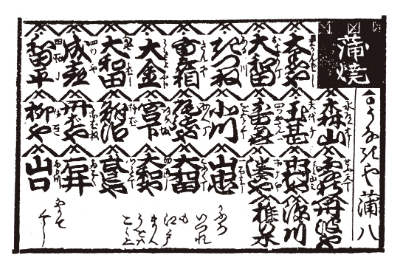
Ranking of Japanese grilled eel rice at the time (Kaei 6th year)
## The Birth of Tendon
Tendon, which is tempura donburi, was originally eaten separately. But because of the tempura of Kichibei in Nihonbashi, because his tempura was so delicious, the soba noodles next to it also became popular together. It became a famous store around Nihonbashi, and the tempura at that time was also sold together with soba noodles.
But from 1797, many ochazuke shops already had tempura for sale. Later, it was widely welcomed, and there were even tempura specialty stores. In 1874, the name "Tendon" also came into being. At that time, Tendon was to dip the tempura in sauce, or soak it slightly, and then put it in the rice together. The method at this time was not much different from the current Tendon.
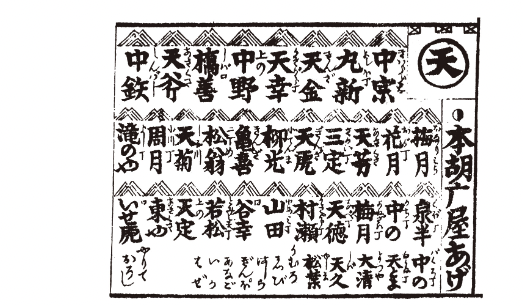
Tendon menu
## The Birth of Oyako Don
Speaking of Oyako Don (which is to put chicken and eggs together and eat them with rice), the historical story is even more interesting. Japan actually started raising chickens two thousand years ago, but in 675 AD, Emperor Tenmu issued a law prohibiting the eating of beef, horse, dog, monkey meat and chicken. So, at first, the Japanese raised chickens for their eggs as a source of nutrition. But not for the chicken itself. Over hundreds of years, there were even stories in many stories that eating chicken would result in punishment and breaking the precepts.
Around the Edo period (AD: 1626), the cooking of chicken meat was seen in the books at that time. But at that time, chicken meat was still considered a lower-class poultry food, and even in the "Oyako Negi Soba" that appeared in the Edo period, it used goose meat and eggs, not chicken meat. After that, duck, goose and eggs were considered superior, while chicken meat was considered inferior (black question mark).
In 1854 AD, due to the opening of the country after the isolation, the consumption of chicken meat began to increase. Japan's chicken farming industry also began to flourish. "Oyako Don" also appeared around this time, around 1880.
## The Birth of Gyudon
Gyudon is now considered a national dish in Japan, but as mentioned earlier, after Emperor Tenmu had a ban on killing. Cows were also one of the animals that could not be slaughtered. It was not until the end of the Edo period after the opening of the country that beef became a well-known delicacy in Japan after the changes brought about by foreign culture.
It also started with beef hot pot, and there was meat hot pot in the late Edo period.
After the Great Kanto Earthquake (AD: 1923), due to the serious casualties in Tokyo, Japan, there were even reports of deaths in various places. At that time, many people who escaped did not have much food to do, so they sold beef with rice, which is the later Gyudon.
## The Birth of Tonkatsu Don
And Tonkatsu Don also has a similar story to Gyudon, which also turned from pork hot pot into Tonkatsu Don. (It was still a thin slice at the time), and then it was added with pork cutlets fried through eggs and breadcrumbs. This is also the origin of Tonkatsu Don.
# Thoughts:
This book is quite interesting, with many ancient artifacts and menus and related news at the time. It can be seen that the author has really carefully investigated the history of the related donburi. It also lets people know what kind of humanities, history and related era changes Japanese cuisine has gone through. Without reading this book, you really wouldn't know the following related matters:
- Among the donburi, the first to appear was Unagi Don.
- Tendon was originally sold with ochazuke. Later, it was served with white rice.
- Oyako Don was not originally made with chicken, but mostly goose meat and duck meat, with eggs.
- The Japanese could not eat beef and pork for many years.
It's really quite interesting, I recommend everyone to read it. It also talks about the changes and methods of the related sauces. You'll get hungry after reading it.


Top comments (0)