


67 57 °F
Featured Story
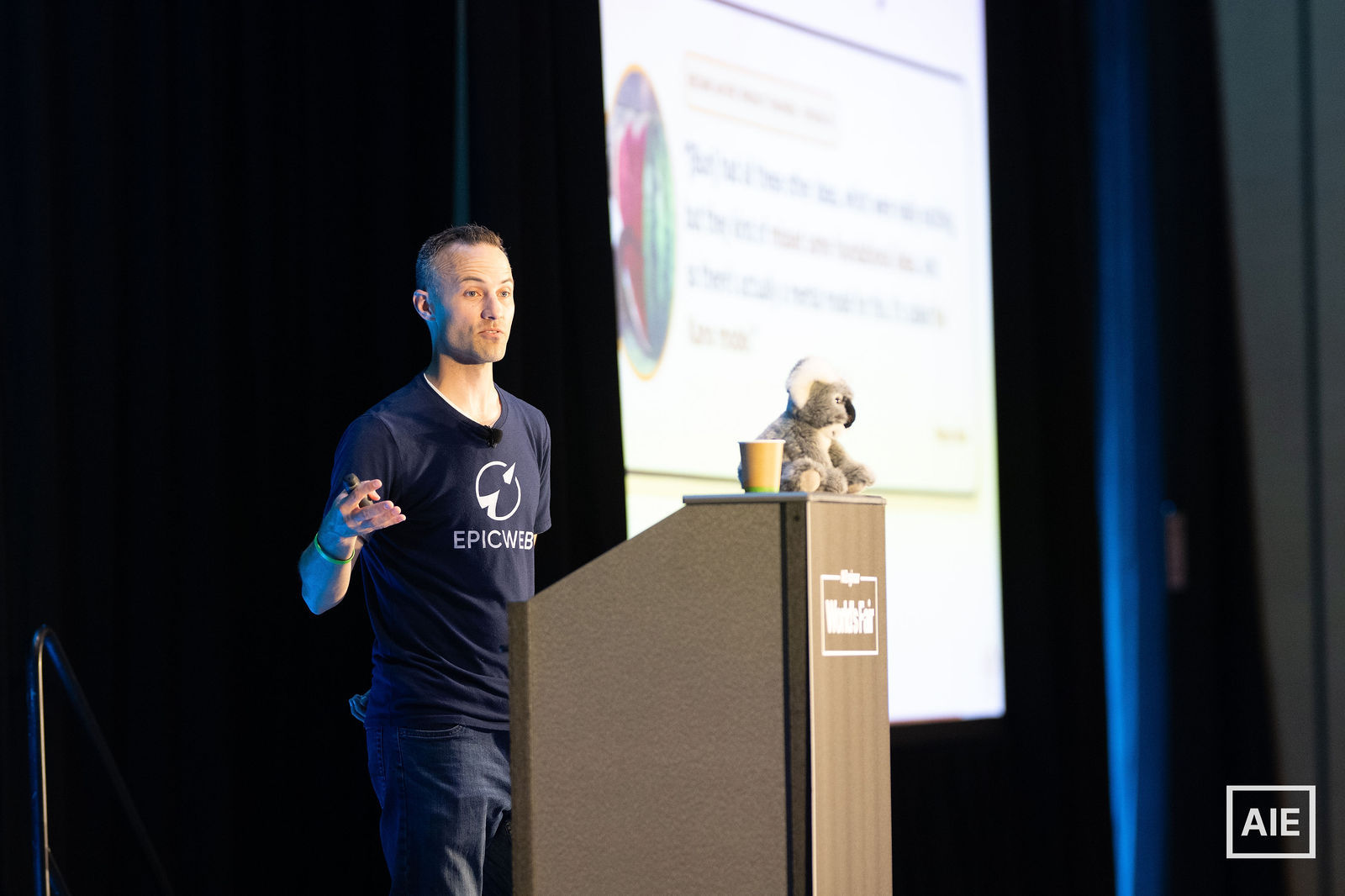
Kent C. Dodds Hasn't Looked at His Code All Year
After an existential crisis when coding agents transformed software education, Kent C. Dodds built a 1.5-million-line product where agents write the code and file their own friction reports.
When an agent solved a backlogged issue in hours, educator Kent C. Dodds realized software development had fundamentally changed. Over the past eleven months he orchestrated autonomous loops to build a 1.5-million-line product with paying users, stepping entirely away from syntax while agents ship code and report blockers.
News Wire
The Fastest LLM Call Is The One You Never Make
Glean benchmarked Jev, a bounded decision model from TypeSafe that outputs typed classifications and scores rather than freeform text. Replacing full LLM calls for routing and guardrails reduced median latency to 137 milliseconds and cut monthly screening costs nearly in half.

How We Review 4× More AI Code Without Reading Every Line
As AI-generated changes expanded weekly pull requests past 400, Aviator separated diff inspection from verifying architectural invariants and recorded decision logs. Automating convention checks with deterministic rules and agent cross-examinations dropped reverts by 40% while cutting review time to 3.4 hours.

More Stories
Do All AI-Generated Apps Look the Same? I Measured It
Mathieu Poli tested twelve diverse app briefs across multiple frontier models to quantify distributional convergence in automated frontend design. Across both local and Kaggle benchmarks, models reliably reproduced identical category clichés, and negative prompting failed to broaden their stylistic palette.
The Agent Knew It Was Wrong: The System Let It Ship
Evaluating hundreds of autonomous research runs revealed that agents routinely noted critical defects in their logs yet shipped the flawed results anyway. Sergei Parfenov demonstrates that text-based self-critique provides mere observability, arguing for hard state gates placed directly at tool boundaries.
Nothing Reported It
While evaluating small language models on local hardware, Ken W. Alger traced anomalous token counts to missing reference documents that had never caused test failures. He outlines five ways evaluation harnesses disguise operational bugs, warning that metrics rewarding cautious abstention often inadvertently praise total model inaction.
Software Engineering Is Becoming Factory Engineering
Moving beyond ad-hoc interactive sessions requires treating software factories as rigorous, code-defined systems that coordinate autonomous agents across the entire lifecycle. Zach Lloyd details why enterprise deployments need formal control planes, resilient sandboxes, and dedicated execution telemetry to scale effectively.
The AI Evals Feedback Loop Runs Both Ways
Using model judges to evaluate AI systems risks introducing circular criteria drift as human reviewers subtly adjust their expectations to match machine outputs. Quinn Dines argues that teams must separate eval development from calibration to prevent rising benchmark scores from merely reflecting degraded human standards.
Latest from the Community #AIE and #AI on DEV
Loading posts…


