

This is a submission for the Hacktoberfest Open-Source AI Challenge Week 2: Side Hustle
What I Built
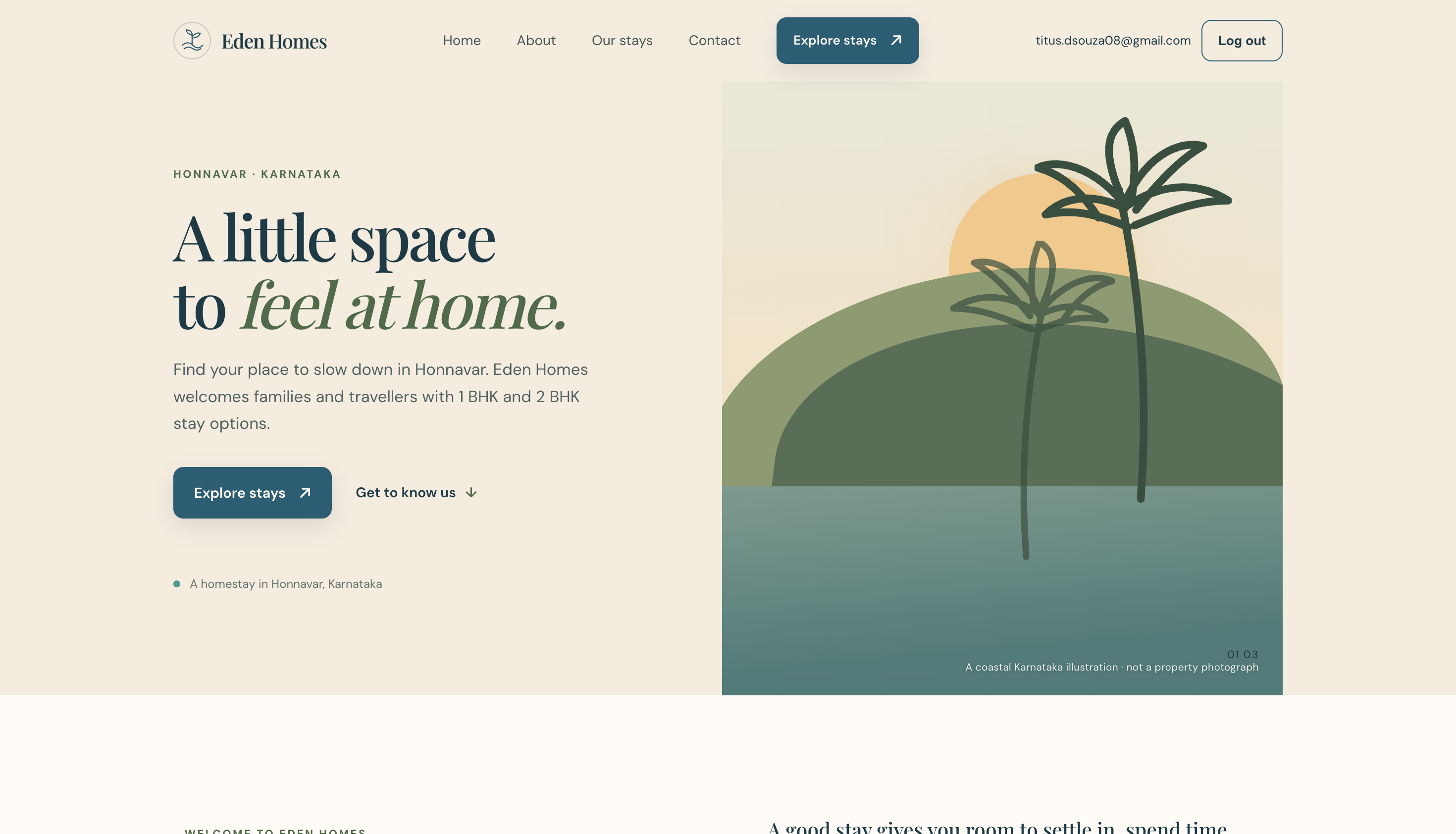
Eden Homes is a website project for a homestay business in Honnavar, Karnataka, India.
Small hospitality businesses often rely on phone calls and messaging to handle enquiries. I wanted to build a straightforward online experience where travellers can explore accommodation options and contact the owner without navigating a complicated booking platform.
Eden Homes focuses on two accommodation options: 1 BHK and 2 BHK.
The website is designed to help visitors:
- Explore property options through image-led listings.
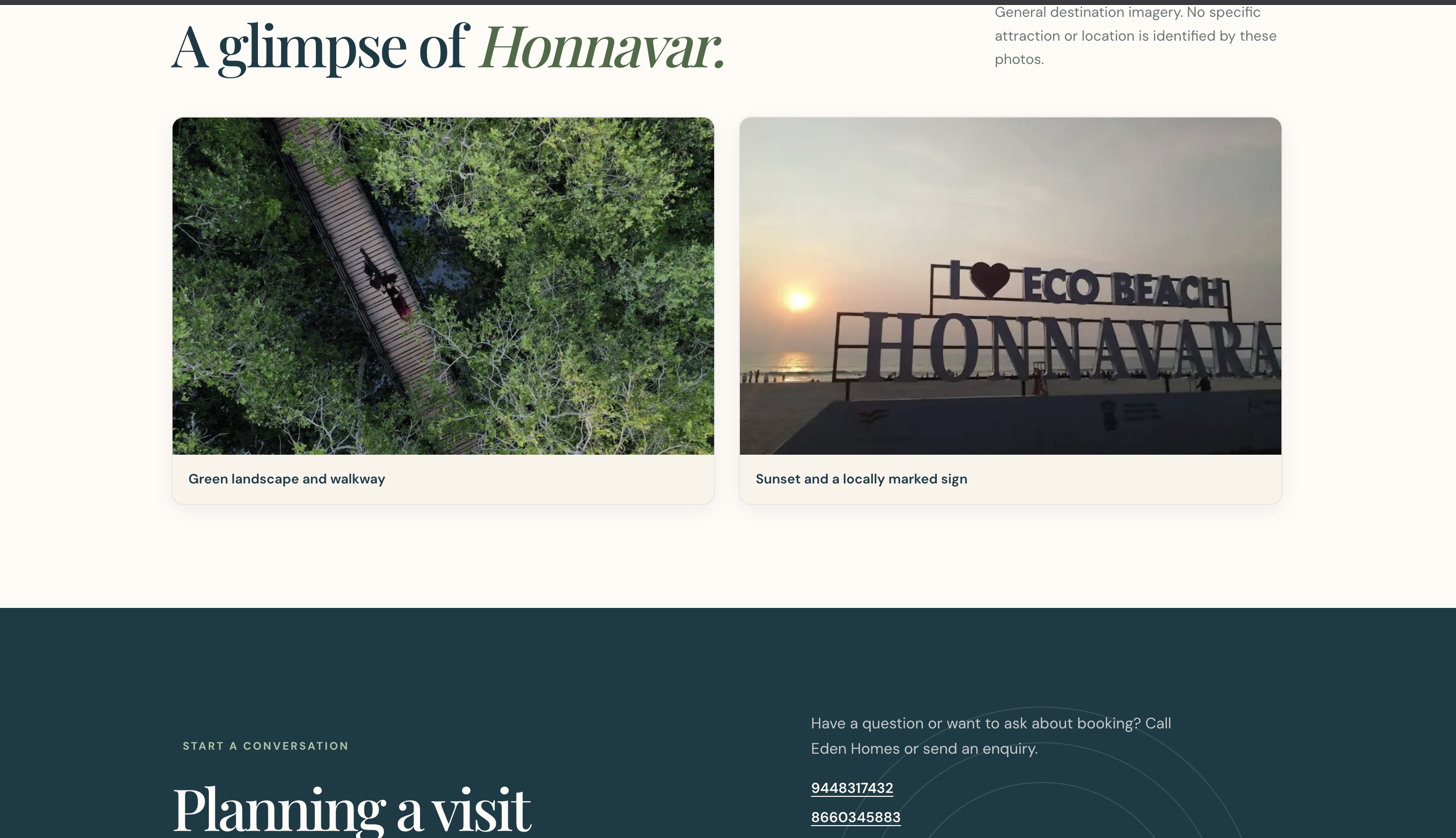
- View property photos in a gallery.
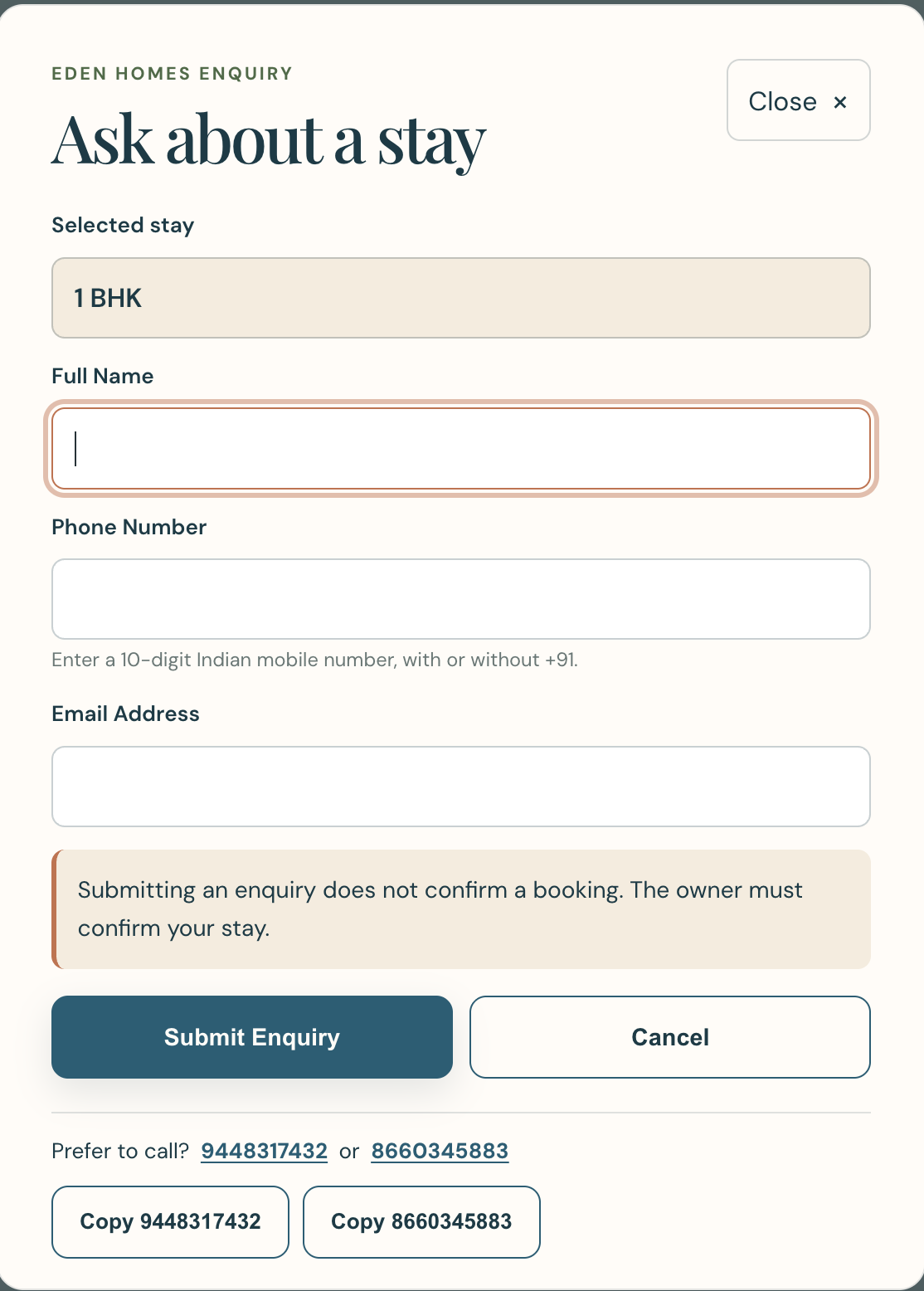
- Open a booking enquiry form for their selected property.
- Enter their name, phone number, and email address.
- Contact the owner directly by phone if they need more information.
The intended customers are families and tourists visiting Honnavar. The business could benefit from more enquiries and less manual effort managing potential bookings.
My goal is to keep the experience simple, accessible, and suitable for a small local business rather than building another complicated booking platform.
Code
GitHub repository: https://github.com/Titus-Dsouza/Eden-Homes
The project currently uses HTML, CSS, and vanilla JavaScript for the frontend, with Supabase being integrated for backend services.
I'm developing the codebase in phases so that the interface, database, authentication, and future AI features can be built and tested incrementally.
How I Built It
I started with a simple frontend and developed the property listings and booking enquiry interface.
Current technologies:
- HTML5 — page structure and forms.
- CSS3 — responsive styling and layout.
- Vanilla JavaScript — property selection, gallery interactions, and booking form behaviour.
- Supabase — database and authentication services, with an Edge Function intended to process booking enquiries.
I'm approaching the project phase by phase rather than trying to build everything at once. This helps me understand how the frontend, backend services, and database fit together.
I'm also exploring how open-weight AI models could support an Eden Homes AI concierge in the future. The goal is to help visitors understand accommodation options and get answers to common questions.
The AI concierge is a planned extension, not a completed feature. I want to integrate it in a way that is useful for the business and practical to maintain.
Why Does Open Innovation Matter?
For a small business, the cost of building and maintaining software matters.
Open innovation makes it possible to experiment with open-weight AI models, inspect how components work, and choose infrastructure according to the project's needs. It also offers the flexibility to explore locally running models instead of depending entirely on a paid, closed AI API.
For Eden Homes, this could eventually mean a more affordable AI concierge that answers frequently asked questions, explains property options, and helps visitors prepare booking enquiries.
Open innovation also makes learning more accessible. As a student developer, I can experiment with the technology, understand its limitations, and build toward a practical use case without making expensive AI services a requirement from day one.
My aim is not to add AI just because it is trending. It is to explore whether AI can solve a real problem for a small hospitality business.
Prize Categories
Challenge: Hacktoberfest Open-Source AI Challenge Week 2 — Side Hustle.
I'm focusing on building a practical small-business project and exploring how open-source AI can become a useful part of it.
I'm building Eden Homes incrementally, learning along the way, and aiming to turn a simple local homestay website into a practical tool for a real small business.
Feedback, suggestions, and contributions are welcome!


Top comments (0)