


Digital Transformation in Insurance in 2026
A few years ago, digital transformation in insurance meant moving paper forms online and launching a customer portal. Most insurers have done that.
In 2026 the question is harder: does your technology change how fast you can launch a product, price a risk or settle a claim? And with AI now in almost every insurer's plans, a second question follows: is it creating measurable value, or just more pilots?
The Drivers of Change in the Insurance Sector
Several forces are pushing in the same direction.
Legacy systems still eat the budget. In a 2026 Wipro and Coleman Parkes survey of 100 CXOs at large US insurers, 93% said most of their IT budget goes on running existing systems, and 65% named legacy platform costs as the biggest barrier to moving money into new work.
Launching products takes too long. In BriteCore's 2025 core systems research, 75% of P&C insurers said the ability to introduce new products, lines or regions is highly important, but only 42% were satisfied with their current systems.
Distribution is shifting toward specialists. US MGAs and other delegated authority enterprises wrote $108.7 billion in direct premium in 2025, up 17.8% in a year, according to AM Best. Embedded insurance keeps growing alongside them, as cover is sold inside purchases, bookings and subscriptions.
Customers are less patient. J.D. Power found that among auto and home customers who rate their digital claims experience as "poor" or "just OK", 52% are likely to leave or not renew. Among those who rate it excellent, only 4% are at risk.

AI in Insurance: From Pilots to Real Value
AI is the defining theme of insurance transformation in 2026, but adoption and value are two very different numbers.
Adoption is broad. Celent reports that 48% of insurers worldwide are in production with generative AI, and BCG expects industry AI spending as a share of revenue to triple in 2026.
Value at scale is much rarer:
- Only 38% of P&C insurers are generating value at scale from AI in core workflows (BCG, 2026).
- Only 23% of insurers have achieved enterprise-wide AI integration, and 83% report moderate to severe shortfalls in turning AI into business value (Accenture, via Risk & Insurance).
- Only 10% of P&C insurers have successfully scaled AI, while 60% remain in exploration or proof of concept and 55% see no clear ROI (Capgemini World P&C Insurance Report 2026).
- Fewer than 5% of insurers analyzed by the Swiss Re Institute disclosed a financial impact from AI.

The gap matters because the payoff for getting it right is real. Capgemini's "trailblazers", the roughly 10% that have scaled AI, report up to 21% higher revenue growth over three years than the rest of the industry.
Where AI Is Already Paying Off
The insurers seeing results are not running the most ambitious projects. They're applying AI to specific, high-volume tasks inside their core processes:
- Claims. Allianz's agentic AI for small food spoilage claims in Australia cut processing and settlement time by 80%, while payout decisions stay with people. Travelers reported that its claim call centre population is down by a third and more than half of its claims are now eligible for straight-through processing. Lemonade almost halved its loss adjustment expense ratio, from 13% to 7%, largely through AI-driven automation.
- Underwriting. Aviva uses generative AI to summarize GP and medical reports for life and protection underwriting, cutting review time per case by around half with 99.7% accuracy in testing. Travelers reported a 30% reduction in average handle time for personal lines renewal underwriting, and Hiscox has shown that AI-assisted lead underwriting could cut lead open-market quotes from three days to three minutes.
- Fraud. Ping An P&C reports RMB 10.51 billion in claims savings from smart fraud detection in 2025.

These are company-reported figures, but they share a pattern worth copying:
- Narrow scope first. Each started with one well-defined process, such as small spoilage claims, medical report summaries or renewal reviews, not "AI for underwriting".
- People keep the decision. AI drafts, extracts and recommends; a handler or underwriter approves. That's what makes it acceptable to regulators, auditors and the business.
- AI sits inside the core workflow. The value comes when AI works on the same record as the policy, claim and payment, not in a separate chat window someone has to copy from.
- The underlying system can change. If a rule change needs a development project, AI can only point out problems, not act on them.
That last point is where many AI programs stall. Capgemini found that P&C insurers put 72% of their AI investment into technology and infrastructure, and only 28% into the change management that makes it stick. Neither works well on a core system that is hard to change.
Five Dimensions of Successful Digital Transformation
Where should insurers invest to get the best return? Five dimensions matter most. Which comes first depends on each insurer's situation, but they rarely work in isolation, and AI now runs through all of them.

Modernizing the Legacy Core
Most established insurers still rely on rigid core systems, deeply embedded in underwriting, claims and policy administration. They are stable, but they weren't designed for today's speed of change, and they absorb the budget that should fund it.
Insurance software modernization doesn't have to mean ripping everything out. An incremental approach works better: extend the existing system with APIs and automation, modernize the parts that hold the business back, and replace the core one line of business at a time, starting with a new product that would be hard to launch on the old system.

A Data Foundation Ready for AI
Data is the backbone of transformation, and AI makes that more obvious, not less. Models are only as good as the data they can reach.
Insurers getting value from AI tend to keep policy, claims and billing data on one consistent model rather than spread across systems that need nightly reconciliation. Multitenancy helps insurers that run several brands, programs or partner channels, keeping each entity's data separate while managing everything centrally. Strong data governance, with field-level access control and full audit trails, is what lets AI work with sensitive data safely.
Choosing the Right Deployment Model
Cloud offers faster deployments, easy scaling and less maintenance, but it isn't the default answer everywhere in insurance. In regulated markets with data residency rules, and for insurers that want sensitive data and AI processing to stay in their own environment, on-premise or in-region hosting is still a requirement.
Cost matters too. As cloud usage grows, pricing models tied to consumption, seats or premium can erode long-term ROI. The safest choice is a platform that runs either way, with configuration and data you can export, so the deployment model can change with your needs.
Unlocking New Business Models and Sales Channels
With the right core, insurers can move into embedded insurance, usage-based and parametric products, affinity programs and delegated authority partnerships with MGAs. These models sell insurance inside everyday transactions, from booking engines and car dealerships to subscription services.
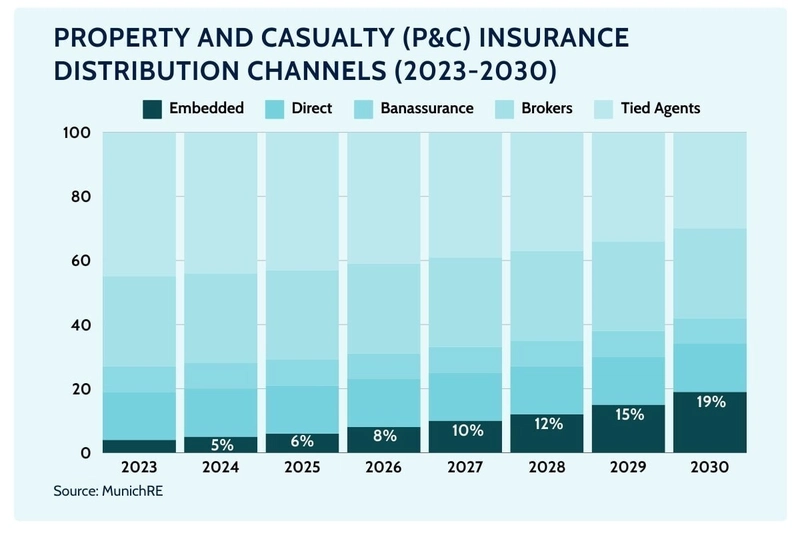
They all depend on a flexible core that can take a new product configuration, a partner API and a new front end without a long project. Insurers with adaptable systems can experiment, partner and pivot quickly; those on rigid platforms watch these channels go to others.
Personalizing Experiences
True personalization goes beyond marketing automation. It reaches pricing, product design and real-time engagement: cover that adjusts to the customer, quotes that reflect their actual risk, and service that knows their history.
That requires the right data flows, decision engines and feedback loops, and increasingly AI that can draft the right response for a person to review. A digitally transformed insurer delivers contextual experiences while collecting the insight to keep improving them.
How Openkoda Puts AI to Work Across the Insurance Lifecycle
Openkoda is a highly customizable, AI-enabled policy administration system built around the pattern that works: AI inside the core workflow, on one data model, with people approving every change.
It runs product and rating, underwriting, policy administration, claims, billing, documents, bordereaux and reporting on one platform, and AI is part of each step:
- AI Product Builder. Describe a new product or a change in plain English, or upload a requirements document, and review a before-and-after change-set covering coverages, rating, rules, forms and workflow before anything is applied. Every change creates a new version, so policies in force keep their terms.
- Reporting AI. Ask questions about your book in plain English and get a report, with the generated query shown. Only the database schema goes to the model; the data stays in your system.
- Underwriting copilot. Highlights the risk and pricing factors that matter on a referred case. The underwriter decides.
- AI document reading and drafting. Extracts details from submissions and attachments for a person to confirm, and drafts claim correspondence for a handler to review.
- MCP server. Lets assistants such as Claude work with the live book, limited to each user's permissions, with every action confirmed and audited.
Here's how that looks across the lifecycle of a life insurance product:
Because products, rules and workflows are configuration rather than code, the same platform also covers the other four dimensions: it can take over one line of business next to a legacy core, keeps data on one governed model, runs on managed cloud or on-premise, and supports embedded and delegated authority distribution through APIs, portals and carrier-ready bordereaux.
And here's how an insurer can launch and run a complete life insurance business on that one platform:
Digital Transformation in Insurance: Closing Thoughts
Digital transformation is no longer about catching up on digital channels. In 2026, it's about how quickly an insurer can turn an idea into a live product, and whether AI changes the numbers or just the slide decks.
The insurers pulling ahead are doing unglamorous things well: picking narrow, high-volume use cases, keeping people in charge of decisions, and running AI on a core system that can change as fast as they learn.
Those who build that foundation now will set the market standards for the rest of the decade.


Top comments (0)