

Category: AI Skills · Digital Marketing · Career Growth
Read Time: 7 min · Updated: April 2026
Quick Answer: The best AI for marketers course in 2026 combines hands-on Claude training, prompt engineering, and workflow automation — with no coding required. Top picks include SpeedChat Academy, Anthropic Academy, and Coursera's Claude AI track.
Something shifted quietly in marketing over the last 18 months. It wasn't a single announcement. It wasn't one viral tool. It was the slow, steady realization that the marketers pulling ahead weren't necessarily the smartest or most experienced ones in the room.
They were the ones who learned how to work with AI — not around it.
If you've been meaning to take an AI for marketers course but haven't pulled the trigger yet, this is the article you've been waiting for. No hype. No recycled listicles. Just a clear breakdown of what's worth your time, your money, and your attention in 2026.

What Does "AI for Marketers" Actually Mean?
Before we get into platforms and pricing, let's clear something up.
"AI for marketers" is not about building models. It's not about writing Python scripts or understanding neural networks. It's about using tools that already exist — and using them well.
The right training teaches you to:
- Write better, faster content using AI as a thinking partner
- Build repeatable workflows that run without you babysitting them
- Create prompt libraries your whole team can use
- Automate the research, reporting, and admin that eat your week
- Think strategically about where AI creates leverage in your specific role
The gap in 2026 isn't between marketers who know AI and those who don't. It's between marketers who have a system and those who are still prompting randomly and hoping for the best.
What Is a Claude AI Course — And Is It Different From General AI Training?
Yes. Meaningfully so.
Claude is Anthropic's AI model, and it's earned a reputation among marketing professionals for three specific things: writing quality, long-document comprehension, and nuanced brand voice calibration. It handles 200,000-token context windows — meaning it can read your entire brand guide, past campaigns, and competitor research before writing a single word.

A Claude AI course teaches you to exploit those specific strengths. You learn:
- How to structure prompts that produce publish-ready output (not starting-point output)
- How to feed Claude documents, briefs, and reference material effectively
- How to build multi-step workflows that chain prompts together
- How Claude's reasoning differs from other models — and when to use it
This is different from a generic "intro to AI" course that name-drops five tools and explains what a large language model is. Claude-specific training is applied from day one.
Top Platforms for AI Marketing Courses in 2026
Here's the honest breakdown — including what each platform is actually good at, and who it's right for.
1. SpeedChat Academy — Best for Marketers Who Want a Complete System
SpeedChat Academy is purpose-built for people who want more than just tool familiarity. The curriculum spans 147 lessons across 7 structured tracks — covering Claude usage, prompt engineering, AI workflow automation, and a full certification path.
What separates it from the pack is the operational focus. You're not just learning how Claude works. You're building the actual systems — prompt libraries, automation workflows, content pipelines — that run inside a real marketing business.
No coding required. Designed explicitly for non-technical professionals.
Best for: Marketers who want structured learning + immediate deployment + a credential to show for it.
2. Anthropic Academy — Best Free Technical Resource
Anthropic's own learning platform is thorough, credible, and free. The prompt engineering course content is detailed and based on first-party knowledge of how Claude actually works under the hood.
The caveat: it skews technical. If you're comfortable with APIs, this is excellent. If you want marketing-specific application, you'll need to bridge the gap yourself.
Best for: Technically curious marketers or those who plan to use the Claude API.
3. Coursera — Claude AI and Prompting for Everyone (via Edureka)
A well-structured beginner course with no prerequisites. It covers Claude's core capabilities, Constitutional AI principles, and practical prompting scenarios. The classroom-style format suits learners who prefer guided progression over self-directed exploration.
Best for: Absolute beginners who want a credentialed starting point.
4. Coursiv — Best Self-Paced Claude Certification
Thirty days. Twenty minutes a day. A verifiable certificate at the end. Coursiv's Claude AI course is lean and practical, built around the certification outcome. Good for professionals who want LinkedIn-ready credentials without a major time commitment.
Best for: Busy professionals who want a focused, time-boxed learning path.
*5. Great Learning Academy — Best Free Beginner Option
*
Zero cost, lifetime access, certificate on completion. It's not marketing-specific, but it's a legitimate on-ramp if budget is a constraint. Think of it as the foundation before you go deeper elsewhere.
Best for: Total beginners who want to explore AI before committing to paid training.
How to Pick the Right AI Course: A Decision Framework
Don't overthink this. Run through four questions:
1. What's your actual goal?
Productivity boost → any solid course works. Career pivot or client-facing credential → prioritize certification. Team upskilling → look for platforms with shared resources and multiple seats.
2. How technical are you?
Non-technical → look for "no coding required" explicitly stated. Technical or developer-curious → Anthropic Academy's API content is worth your time.
3. What's your timeline?
30 days → Coursiv. 3–6 months of deep learning → SpeedChat Academy's full curriculum. Ongoing reference → Anthropic Academy.
4. Do you want marketing-specific examples?
If yes, eliminate any platform that doesn't show you real marketing use cases in the first module. Generic AI education won't change how you work. Applied marketing AI training will.
What Real Marketers Are Doing With AI Right Now
These aren't hypothetical benefits. These are workflows happening across agencies and in-house teams today.
Content at Scale
Teams are using AI to produce first drafts, adapt content for different audiences, and maintain consistent brand voice — cutting production time by more than half without adding headcount.
Competitive Research in Minutes
Instead of manually scanning competitor blogs and industry reports, marketers are feeding sources directly to Claude and getting synthesized positioning insights in minutes.
Email Sequences That Actually Convert
Prompt libraries built around proven frameworks mean subject line testing, sequence writing, and personalization at scale — without starting from scratch every time.
Reporting That Writes Itself
Performance summaries, client updates, and monthly reports — structured prompts turn raw data into formatted narratives in a fraction of the time.
Freelancer Leverage
Independent professionals are using AI workflow automation to handle significantly more client work — not by cutting corners, but by eliminating the low-value time between strategy and execution.
The common thread: these results don't come from using AI occasionally. They come from having a system — which is exactly what structured training is designed to build.
Why Structured Learning Beats the "Figure It Out" Approach
There's a version of AI learning that looks like this: watch a few YouTube videos, read some Reddit threads, try things randomly, give up when results are inconsistent, conclude that "AI isn't that useful for my work."
That path is avoidable.
The argument for structured platforms like SpeedChat Academy isn't that free resources are bad. It's that unsystematic learning produces unsystematic results. You end up knowing a lot of disconnected things without knowing how to chain them into an actual workflow.
A structured AI for marketers course gives you:
- A logical progression from fundamentals to advanced application
- Pre-built prompt libraries you can deploy immediately — not just study
- AI workflow automation modules designed around real marketing tasks
- An AI certification course outcome that signals competence to clients and employers
- Community and accountability that keeps you from stalling out at module three
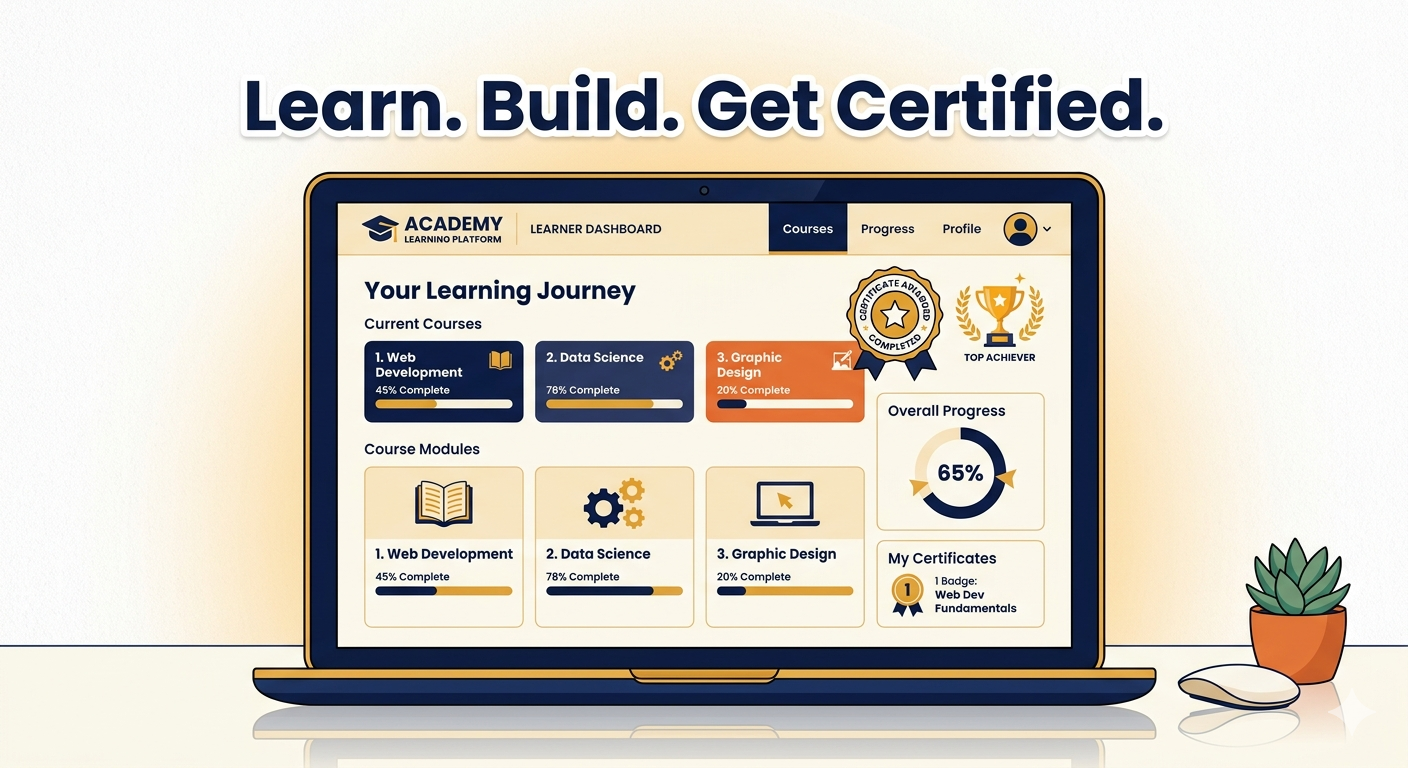
The cooking class vs. cooking videos analogy holds up: both expose you to the same ingredients. Only one builds actual skill.
Frequently Asked Questions
What is the best AI for marketers course in 2026?
For structured, marketing-specific training with certification, SpeedChat Academy and Coursiv are the strongest options. For free technical depth directly from Anthropic, the Anthropic Academy prompt engineering course is authoritative and costs nothing.
Can I learn AI for marketing without any coding skills?
Yes. The majority of marketer-focused AI courses — including Claude AI courses — are designed entirely around prompting and workflow design, not programming. If a course requires coding knowledge, it's not built for marketers.
What is prompt engineering and why does it matter for marketing?
Prompt engineering is the practice of writing structured, intentional instructions that reliably produce high-quality AI output. For marketers, it's the skill that separates consistent, publish-ready content from vague, unusable drafts.
How is a Claude AI course different from a general ChatGPT course?
Claude has distinct strengths — long-document analysis, nuanced brand voice calibration, and deep reasoning — that are particularly useful for marketing work. A Claude-specific course teaches you to leverage those strengths rather than applying generic prompting advice that works inconsistently.
What does an AI workflow automation course teach?
It teaches you to build repeatable systems — connecting prompts, inputs, and outputs into processes that run consistently. Instead of manually prompting Claude for every task, you create templates and workflows that your whole team can execute reliably.
Is an AI certification course worth it professionally?
Increasingly, yes. Clients, hiring managers, and agency leaders are starting to treat AI literacy as a demonstrable skill, not just a casual capability. A recognized certification distinguishes you from people who have "experimented with AI" versus people who've completed structured training.
How quickly can a marketer see results from AI training?
Most professionals who apply their learning to real work see meaningful productivity improvements within two to four weeks. The critical factor is application — completing modules without changing how you actually work produces no results.
Which AI tools should marketers learn first in 2026?
Claude is the recommended starting point for writing, research, and workflow automation. Pair it with a structured prompt library and one automation tool, and you have the foundation of an effective AI marketing stack.
Bottom Line
The marketers who struggle with AI in 2026 won't be the ones who tried and failed. They'll be the ones who kept waiting for a better time to start.
The right AI for marketers course won't make you dependent on technology. It'll make you better at the work you were already doing — faster, more consistently, and at a scale that wasn't possible before.
You don't need to learn everything. You need to learn enough to build a system, then let the system do the heavy lifting.
Start with one platform. Block one hour. Give it thirty days.
The gap between where you are and where you want to be is smaller than you think — and a structured course is the shortest path across it.
Was this helpful? Consider sharing it with a marketer who's been putting this off.


Top comments (0)