


Small experiments, less friction with AI, and a simple way to pick up where you left off.
Get the guide to build your first AI agent directly in your inbox with a newsletter signup:

So you’re a developer who is very ambitious but at the same time very lazy.
It sucks. You know what you want, and you’re a software engineer, so you’re someone who can build it, but at the same time you never get to it.
You keep being the same person year after year. Basically, you are stuck.
I’ve been there and done that.
With this newsletter, I started two or three years later than I would have wanted. With other important projects, I would have liked to dedicate the time, but I never got to them.
It’s easier to say what we want to visualize it than to actually do it. In this article, I will help you identify where you are ambitious but lazy and put an end to it.
👉 If this sounds interesting, subscribe now. 22,000+ engineers are already becoming more productive. Paid subscribers have access to premium resources
Why you’re ambitious but lazy
There is always a gap between what we want and where we are right now. If you don’t have such a gap, you may think that you have already achieved great things, and that is great, by the way. But you are not gonna get better at anything.
I have talked at length in this newsletter about my planning process from years all the way down to the days.
So I always have a gap between what I want and where I am. If I get closer to where I am, I update so I have more room for growth.
And that gap sucks.
If you get too crazy with your goals, you will find that you are not clear on how to get there. Or maybe you’re clear on how to get there, but it’s so intimidating, it’s so tedious, and you are so tired after work that you never start.
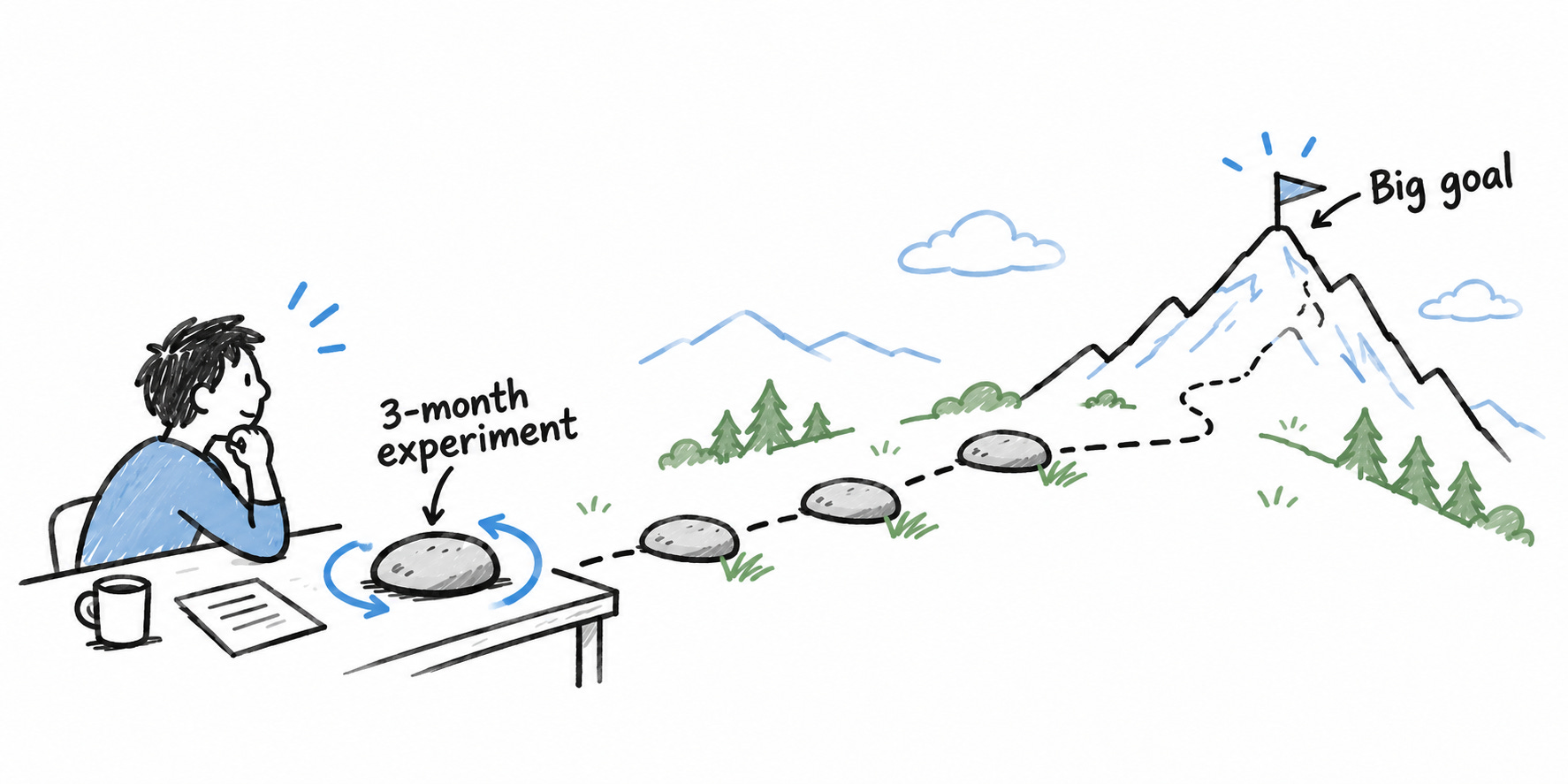
That’s why, while I keep envisioning how my life will be in five or ten years and have big goals, I go down into smaller experiments.
Take one meaningful project or learning goal that you have, something that is going to get you closer to that ideal life. Then instead of planning that project by itself, just plan an experiment. Something that you can just do in three months, and you can get some results, and you can iterate from there
I have been writing for three years here on Substack, but the reality is that I started with, “I will write this weekend and then try to write time to time on the weekends until the end of the year”
Remove friction
For the sake of continuing with the example of my writing as a project, there was so much friction in getting myself to write.
If you have never written online, just consider it any other project: you have many things in the pipeline in order to produce one article. You need to decide on an idea, create an outline, write it, edit it to remove any grammar mistakes, and make sure that the article still makes sense. Then you have to put it on Substack, publish it, share it in some forums…
Whenever you start something, you have to do absolutely everything. And even if you had the money or the resources in order to delegate, I will still encourage you to do everything at least at the beginning. Then you realize which areas you are really needed at and which areas someone else can do.
But now, my dear friend, we are in the era of AI. From all the pipeline of tasks that you have to do, you can decide to do literally everything with AI. Then you realize which parts you add no value to, and you can just delegate to AI. Those are the same tasks that someone with a million subscribers in a newsletter will delegate to someone else.
But you will also realize which areas you are really needed in. And even in those areas, you can improve your life a lot by reducing the friction to do it.
Now I’m still writing these articles, but instead of writing by myself, I’m talking to the computer, and the computer is transcribing word by word what I say. I think this is a great example of how you can lower the friction because getting myself to write on a blank page is daunting. However, getting myself to just talk to the computer is easier.
Whenever you’re feeling lazy about something, the first thing you have to do is get yourself started.
Finish work
Now that you’re started, you still want to do something meaningful instead of losing your time.
That’s why I asked you to define what progress means. For example, if you are doing a project by writing code, then progress can mean the number of commits. For someone doing some kind of content creation, it can be the number of articles, videos, or posts.
There are some times where delegation to humans or to the machine is worse than doing it yourself. And software engineers have usually the anti-pattern of automating a problem that was not worth automating.
This has happened to me at work in multiple times and now I’ve come up to the conclusion that rather than trying to fix that problem with the solution that I thought at the beginning, I need to find understand that the right problem and then probably I’ll find some other solution that requires less effort and does ninety percent of the job.
For example, I wanted to give myself an early review on any code commit or document that came my way. I thought it was going to be very hard to have some event-based system that, whenever I receive an event, triggers an agent to review.
So because the underlying problem was that I wanted to have some ready review whenever I arrived at a task, I ended up doing a cron job that just triggers agents and checks for work to review.
It solves the same problem, but it’s a much easier solution for me to implement.
Make the next session easy to start
Whenever you’re already taking action on your project, you think that you’ll be able to continue that every single day. We tend to project our future linearly.
But the reality is that you’ll still be lazy the next day.
That’s why you should plan when you end the activity. Instead of just finishing because you have a meeting or you have some hard stuff that makes you step away from the computer or from the task immediately, It’s better if you know when you will step out of the task, and you can dedicate the last five minutes to making your life easier whenever you come back.
For any piece of work that you’re doing, you should know what you were planning to do, what you did, and what you need to do next.
This works right because if you see that something is already started, you may only have to move it from 60% to 100% in the next session, instead of having to start it from scratch. It’s always harder to go from zero to one than from one to any.
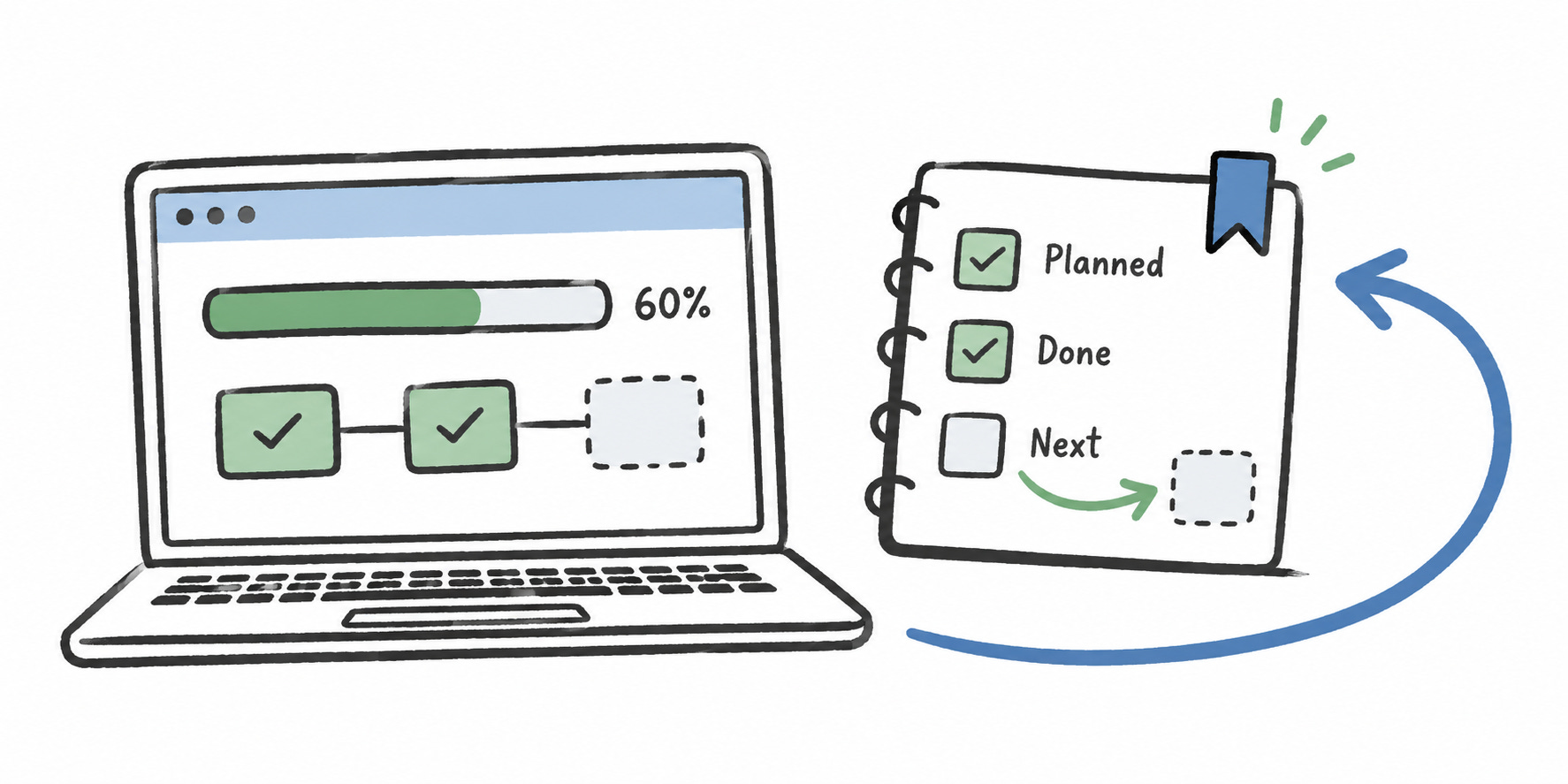
Always be the one closing your working sessions instead of someone or something closing them for you.
So now, if you’re feeling ambitious but lazy, Let’s plan a system to make your life easier for your lazy self:
- Define small experiments that feed into bigger goals
- Remove most of the friction with AI
- Define what is progress and start tracking it. It will get you motivated
- Make the next session easier to start
If you found value in this post:
- ❤️ Click the heart to help others find it.
- ✉️ Subscribe to get the next one in your inbox.
- 💬 Leave a comment with your biggest takeaway
- ♻️ Share it with your peers
This article helps you move from phase one, having no time, toward phase two: becoming proactive and regaining time. Small experiments, less friction with AI, and a clear next step make it easier to act on the goals you keep postponing.
I’m building this system below for paid subscribers. Thanks for your continued support!


🗞️ Other articles people like
The easy road to become a TOP performer software engineer: Simplifying productivity
This year create a strategy using your 360 feedback (it saved me a year in my promotion)


Top comments (0)