


A new AI application service industry is being formally established
On August 31, 2026, China's Ministry of Industry and Information Technology (MIIT) published the Notice on Launching a Special Action to Foster Artificial Intelligence Application Service Providers, numbered Gong Xin Ting Ke Han [2026] No. 414. The document was dated August 27 and addressed to the industry and information technology authorities of all provinces, autonomous regions, municipalities directly under the central government, and the Xinjiang Production and Construction Corps.
A news headline alone could make this look like another general statement supporting AI. Reading the notice, its five annexes, and the subsequent explanation from MIIT's Department of Science and Technology reveals a more specific problem. The question is no longer simply whether China has large models or enough computing power. It is this: who can connect models, data, computing resources, and agents to real enterprises, keep them operating, and take responsibility for effectiveness, security, and compliance?
Document No. 414 gives this previously indistinct industrial role a formal name: AI application service provider.
It also goes beyond naming the category. It sets out local surveys, provider profiles, a national resource pool, service consortia, real-world scenarios, first-purchase and first-use mechanisms, risk compensation, computing vouchers, talent development, standards, dynamic updates, and implementation evaluation. In other words, it seeks to build infrastructure for a market, rather than merely attach a new label to it.
The central argument of this article is that China's AI policy is moving beyond the creation of model and computing supply toward the development of scalable application delivery capacity. Document No. 414 is not the beginning of that shift, but it is an important marker of AI application service providers being systematically organized as a distinct policy subject.
The notice and its five annexes are available on the official MIIT publication page.
Why now: technical supply has grown faster than delivery capacity
Several published figures help explain the context.
| Indicator | Published figures | What they suggest |
|---|---|---|
| China's core AI industry | More than RMB 1.2 trillion in 2025, with over 6,200 enterprises | Technical supply has reached substantial scale |
| Average daily token usage in China | Approximately 100 billion in early 2024, about 100 trillion at the end of 2025, and over 140 trillion in March 2026 | Models are moving from training and demonstrations to large-scale use |
| AI adoption among manufacturing enterprises above the designated size | Over 30% in the first half of 2026 | AI has entered production, but most enterprises remain outside this measure of adoption |
| Global organizational AI use | 78% in 2024, compared with 55% in 2023 | Adoption is growing quickly, but use does not automatically create stable value |
| China's SME digital transformation pilots | Two rounds covering 66 cities and supporting over 30,000 enterprises; policy targets of around 100 cities and more than 40,000 enterprises | Government already has experience organizing enterprise transformation through cities and service providers |
The RMB 1.2 trillion and 6,200-enterprise figures were disclosed by the MIIT minister during the ministerial interview session at the 2026 Two Sessions. Growth in average daily token usage from 100 billion to 140 trillion represents an increase of more than 1,000-fold in roughly two years, with about 40% growth between the end of 2025 and March 2026. Public information attributed to the National Data Administration connects this trend with AI moving from conversation toward decision-making and execution. The manufacturing adoption figure of over 30% in the first half of 2026 further indicates that applications are entering the real economy. Related industrial figures
These increases also expose a structural gap. Models are improving, token usage is expanding, and enterprises are willing to experiment, yet many projects remain pilots, demonstrations, or isolated tools. Production introduces a different set of questions: how to connect existing systems, whether business data can be used, who holds invocation permissions, how execution errors are recovered, whether the application survives a model replacement, how outcomes are accepted, who is accountable for security incidents, and who maintains the system after launch.
International data reflects a similar tension. Stanford's 2025 AI Index reports that 78% of organizations used AI in 2024, up from 55% in 2023. Widespread adoption, however, has not automatically resolved governance, reliability, or value realization. Stanford AI Index 2025
The bottleneck is therefore no longer only whether a model can perform a task. It is whether an organization can use it reliably. Document No. 414 addresses that distance between technical capability and productive capability.
What the title means: a special action to foster providers
The title of the policy already establishes its character.
“Foster” indicates that the government sees an emerging market whose participants, capability expectations, and commercial practices are not yet well defined. It is not creating an industry from nothing or directly selecting a few favored companies. Identification, profiling, classification, support, and evaluation are intended to turn dispersed participants into a recognizable industrial community.
“Special” narrows the focus to a particular bottleneck: insufficient application delivery services, rather than AI development in general.
“Action” denotes an implementation program with targets, a timetable, responsible bodies, and evaluation. It is not an administrative regulation establishing a permanent system of rights and obligations. Its milestones include December 1, 2026, the end of 2026, December 1, 2027, and the end of 2027.
Document No. 414 is therefore not an “AI application service provider license,” nor does it state that providers outside the pool may not operate. It is better understood as an industrial organization initiative: central authorities set the direction, local authorities implement it, enterprises and institutions participate, and standards and resources follow.
The recipients reveal who will implement it
The notice is addressed to provincial-level industry and information technology authorities, including the relevant authority of the Xinjiang Production and Construction Corps, rather than directly to enterprises. This matters.
A company does not complete entry into the pool simply by sending an application to MIIT. Regions first identify providers, consolidate information, establish local pools, and report to MIIT's Department of Science and Technology. Central authorities form the national pool, develop standards, and conduct overall evaluation. Local authorities identify enterprises, organize consortia, and connect local scenarios with policy resources.
This is a central-framework, local-implementation approach. Whether a company catches the first window may depend less on whether it has read the central notice than on whether it becomes visible to its provincial or municipal industrial authority, industrial park, industry association, or relevant solicitation channel.
Is this government-driven? Yes. But the government is not developing AI for enterprises itself. It is organizing directories, standards, scenarios, procurement, risk sharing, public resources, and evaluation to reduce the cost and risk of initial cooperation between buyers and providers.
The opening definition redraws the AI value chain
The document defines AI application service providers as enterprises or institutions that address the intelligent transformation needs of user organizations through services such as solution consulting and planning, delivery and implementation, operations management, and security governance. Each part of this definition matters.
Starting from organizational needs
The definition does not begin with model parameters, algorithmic choices, or computing scale. It starts with customer needs. A provider's value depends on its ability to identify and solve customer problems, not on the size of a model it owns.
The reference to “user organizations,” rather than individual consumers, also places the initial emphasis on institutional markets: enterprises, public institutions, and other organizations with business processes. Providers must understand procurement, deployment, permissions, workflows, responsibility, acceptance, and continuing operations. A personal chat interface is not enough.
Consulting, delivery, operations, and governance cover the full lifecycle
These services form a lifecycle: determine why and where AI should be used, build the system, keep it running, and embed security and compliance throughout.
Traditional software outsourcing often treats launch as the delivery endpoint. Generative AI introduces probabilistic outputs, changing models, complex tool permissions, and variable operating costs. An agent that passes a test today may not remain reliable tomorrow. A task marked “finished” may not have produced a correctly accepted business result. Including operations and security governance in the definition makes them part of the service itself, rather than optional after-sales support.
Enterprises and institutions: participation is not reserved for large technology companies
Annex 1 allows reporting by state-owned, private, foreign-invested, and joint-venture enterprises, public institutions, social organizations, universities, research institutions, and other organization types. Annex 3 further requires a legal person or unincorporated organization registered and operating normally within the People's Republic of China.
Individual developers therefore cannot enter the pool solely in a personal capacity, and overseas companies cannot report solely through an offshore entity. Universities, research institutes, social organizations, and smaller local service businesses may nevertheless participate. The pool is designed to create multiple layers of service supply, rather than select only national champions.
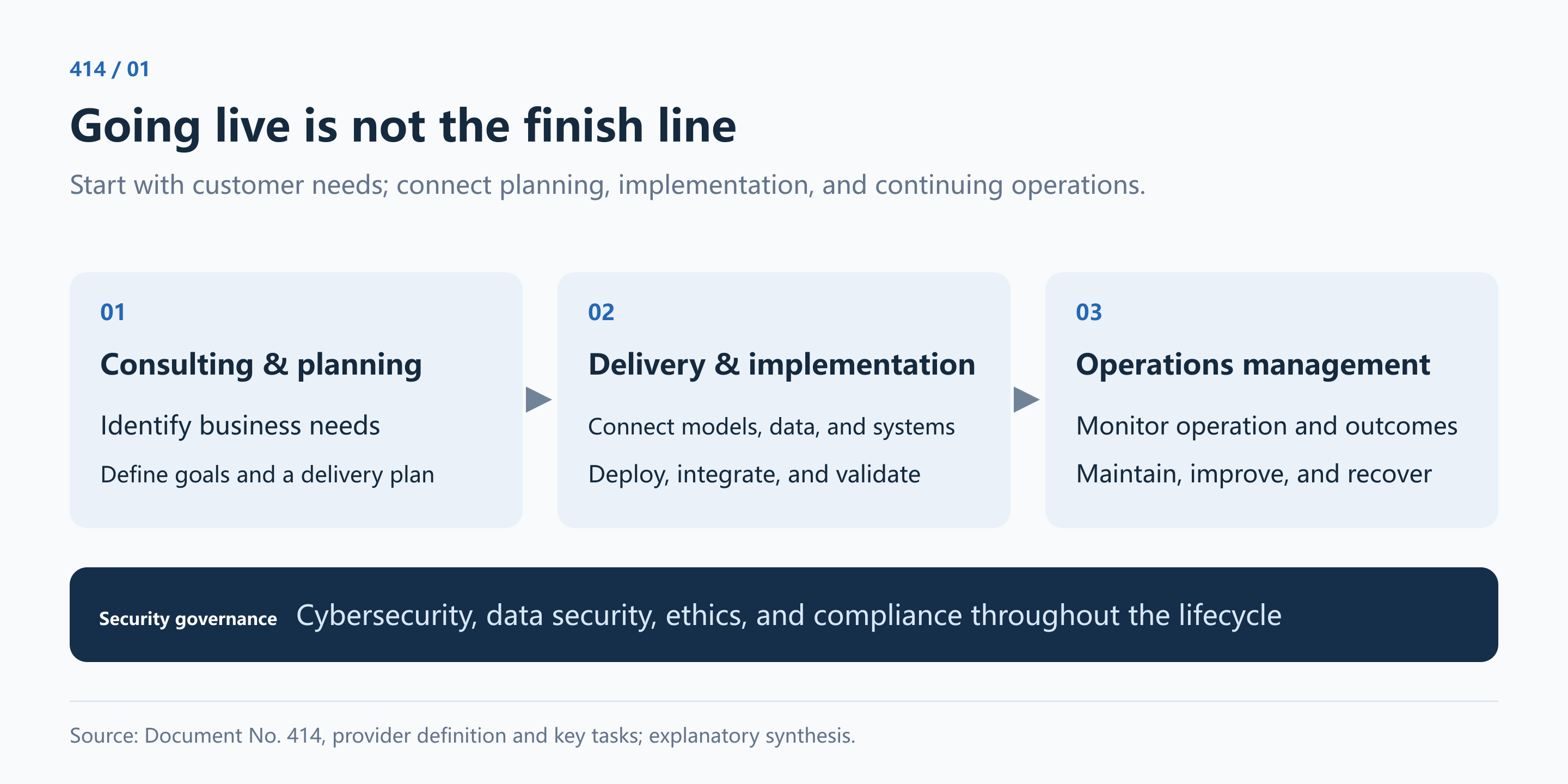
Figure 1. The full AI application service lifecycle. Select the image to view it at full size.
Eight phrases in the objectives describe the intended market
“Use the special action as a driving force”
The government intends to organize dispersed supply through policy signals and public resources, rather than take over the market. Enterprises must still build products, deliver services, and establish viable businesses.
“Establish a provider resource pool”
The pool serves several functions: market mapping, participant classification, capability presentation, supplier discovery, and subsequent policy outreach. MIIT also proposes an online platform at an appropriate time, suggesting that the pool may develop into a national service capability directory.
“Targeted improvement”
Support is intended to address specific capability gaps rather than be distributed uniformly. Pilot-scale testing bases, incubators, computing vouchers, API trials, practical training facilities, and expert guidance are among the possible tools.
“Technological innovation, integrated delivery, and security compliance”
Placing these three capabilities together moves evaluation beyond technical competence alone. Developing a system does not prove that a company can integrate it, and integration does not prove safe operation. Complex business scenarios require all three.
“Understand industry pain points, technical mechanisms, security risks, and delivery operations”
These capabilities span business knowledge, technology, governance, and implementation. Training a large model is not listed as a universal prerequisite. The scarce resource is a multidisciplinary team that can work across business and technical boundaries.
“A reasonable structure, orderly division of labor, and collaborative innovation”
The aim is not to have 3,000 companies offer identical services. Model, computing, data, terminal, integration, operations, security, and evaluation providers can occupy different positions and combine through service consortia.
“Multiple tiers”
This leaves room for national leaders, regional providers, industry specialists, and small professional institutions. The absence of a universal minimum registered capital or revenue threshold in the annexes is consistent with that approach.
“Delivery capability for complex scenarios”
Complex delivery is an objective, not the universal entry requirement. The policy supports small, rapid, lightweight, and precisely targeted products while also raising the ceiling for larger projects through consortia, hardware and software compatibility, and multi-model coordination. These are parallel routes.
The 2,000 and 3,000 targets are about more than headcount
Document No. 414 targets a national resource pool of more than 2,000 providers by the end of 2026 and no fewer than 3,000 by the end of 2027. Provinces containing national AI industry innovation and application pilot zones should have at least 100 providers in their local pools by the end of 2027.
These are organizational targets, not revenue targets. They show an intention to conduct a first systematic inventory of national service supply within a short period, with enough regional and sectoral density for enterprises to find delivery teams.
Pool expansion also means competition will remain substantial. A pool of 2,000–3,000 providers does not automatically create scarcity, and membership alone is unlikely to become a durable competitive advantage. Differentiation will depend on industry cases, repeat purchases, delivery costs, reliability, security capabilities, and reusable products.
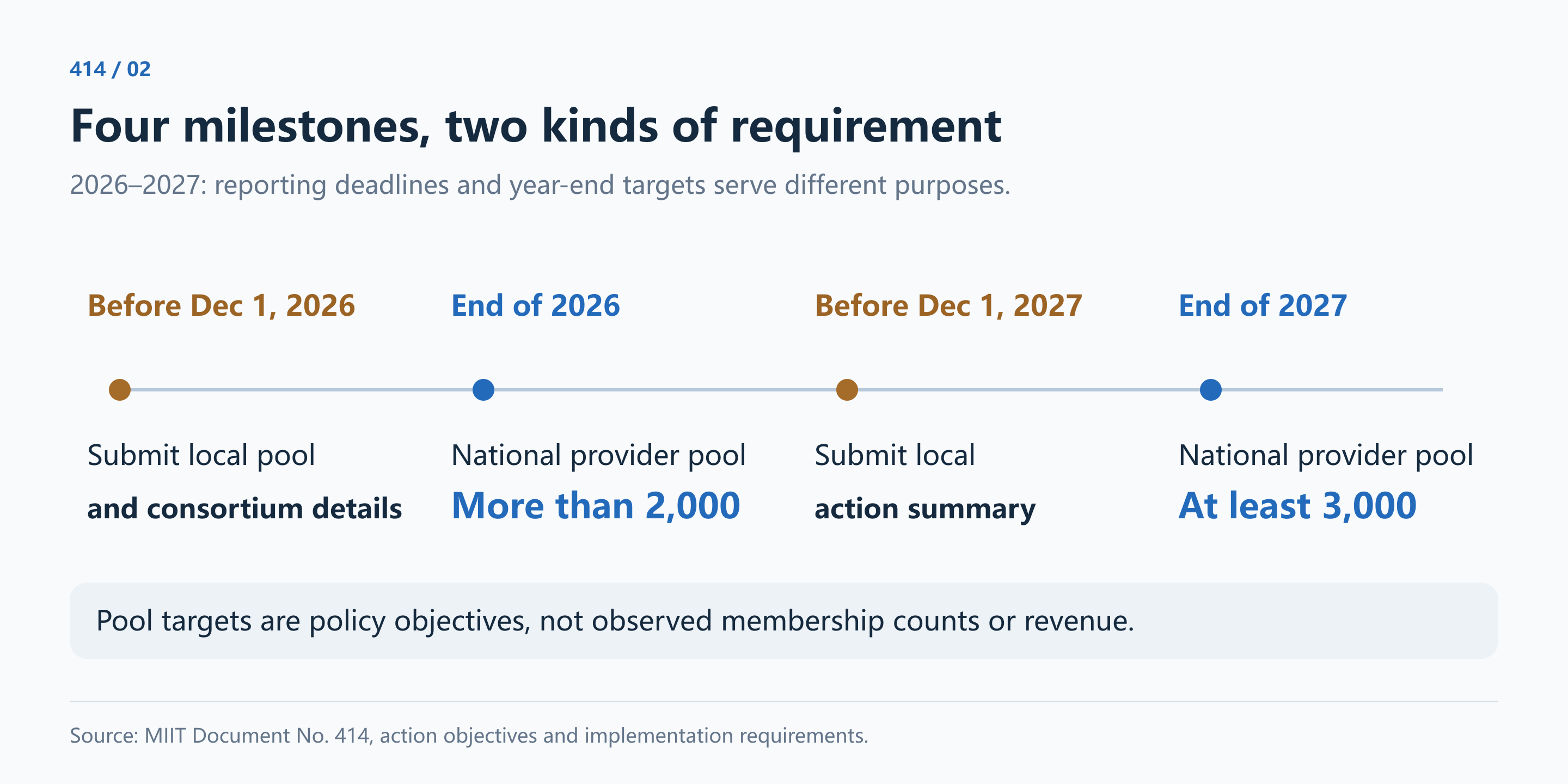
Figure 2. Action deadlines and resource pool targets. Select the image to view it at full size.
Four tasks form an industrial organization mechanism
Task 1: identify providers and make supply discoverable
Local authorities must establish provider profiles and local resource pools. MIIT will then form and publish a national pool, at an appropriate time, using relevant standards.
This addresses a basic policy problem. Without knowing which providers exist, which sectors they serve, and what they have delivered, authorities cannot match supply with demand or target support. The pool is a form of supply-side information infrastructure.
The reference to relevant standards also means local reporting does not necessarily guarantee admission to the national pool. MIIT's explanatory material says that general provider requirements, maturity assessment standards, and graded capability requirements for forward-deployed engineers are being developed. Reprint of the Department of Science and Technology's explanation
The first stage may emphasize profiling and coverage; standardization, differentiated levels, and dynamic removal may follow.
Task 2: move from individual companies to integrated delivery with shared participation
The second task introduces AI application service consortia, including model–data coordination and computing–power coordination. Real AI projects rarely depend on one enterprise alone: models require data; inference requires computing and electricity; software depends on operating systems and databases; applications also require terminals, integration, and security governance.
Each consortium has one lead service provider and at least two upstream or downstream participants. The lead role matters because complex projects still need an entity accountable for the overall solution and customer delivery. Collaboration must not dissolve responsibility.
The document also addresses hardware and software compatibility, multi-model coordination, and the integration of secure and reliable operating systems, databases, and AI training and inference chips. This should not simply be rewritten as “mandatory domestic sourcing”: the notice uses encouragement and security/reliability language without specifying particular brands or origins. It does, however, suggest that solutions relying on one overseas model, one cloud platform, or one development environment may struggle to serve the full range of public-sector and important industrial scenarios. Replaceability, adaptability, and portability will be important engineering capabilities.
Task 3: organize demand as well as supply
The third task is closest to the sources of commercial opportunity. It promotes modular, standardized product packages for frequent, essential, reusable business needs; supply–demand matching through alliances, associations, and open-source communities; access to real scenarios; and exploration of first-purchase, first-use, risk-compensation, and procurement mechanisms for large models, agents, and token services.
The approach addresses three familiar barriers:
- Customers do not know what to buy, creating a need for standardized products and industry matching.
- Customers hesitate to be the first to bear failure risk, creating a role for first-use and risk-sharing mechanisms.
- Providers lack real data and scenarios, making it difficult to accumulate cases, so public and industrial scenarios need to become accessible.
Calls for increased procurement suggest that government and relevant institutions may organize early demand. But the word “explore” means that amounts, subsidy ratios, and scope depend on later local policies and projects. Enterprises cannot book a policy direction as certain revenue.
Task 4: provide shared support through computing, tools, data, and talent
The fourth task covers national computing nodes, the China computing platform, computing vouchers, intelligent coding tools, open interfaces, trials, practical training facilities, and forward-deployed engineer (FDE) teams. The aim is to reduce providers' access costs for essential inputs.
The proposal to improve intelligent coding tools and expand software supply is particularly significant. Coding assistance is treated as a means of increasing application software supply and shortening delivery cycles, rather than only improving individual programmer productivity.
FDEs represent a developing delivery role. They are neither purely coding-focused R&D engineers nor relationship-focused presales staff. They work close to users to understand business needs, combine models and systems, solve deployment problems, and maintain application effectiveness. Their inclusion recognizes the last mile as a problem requiring a dedicated talent system.
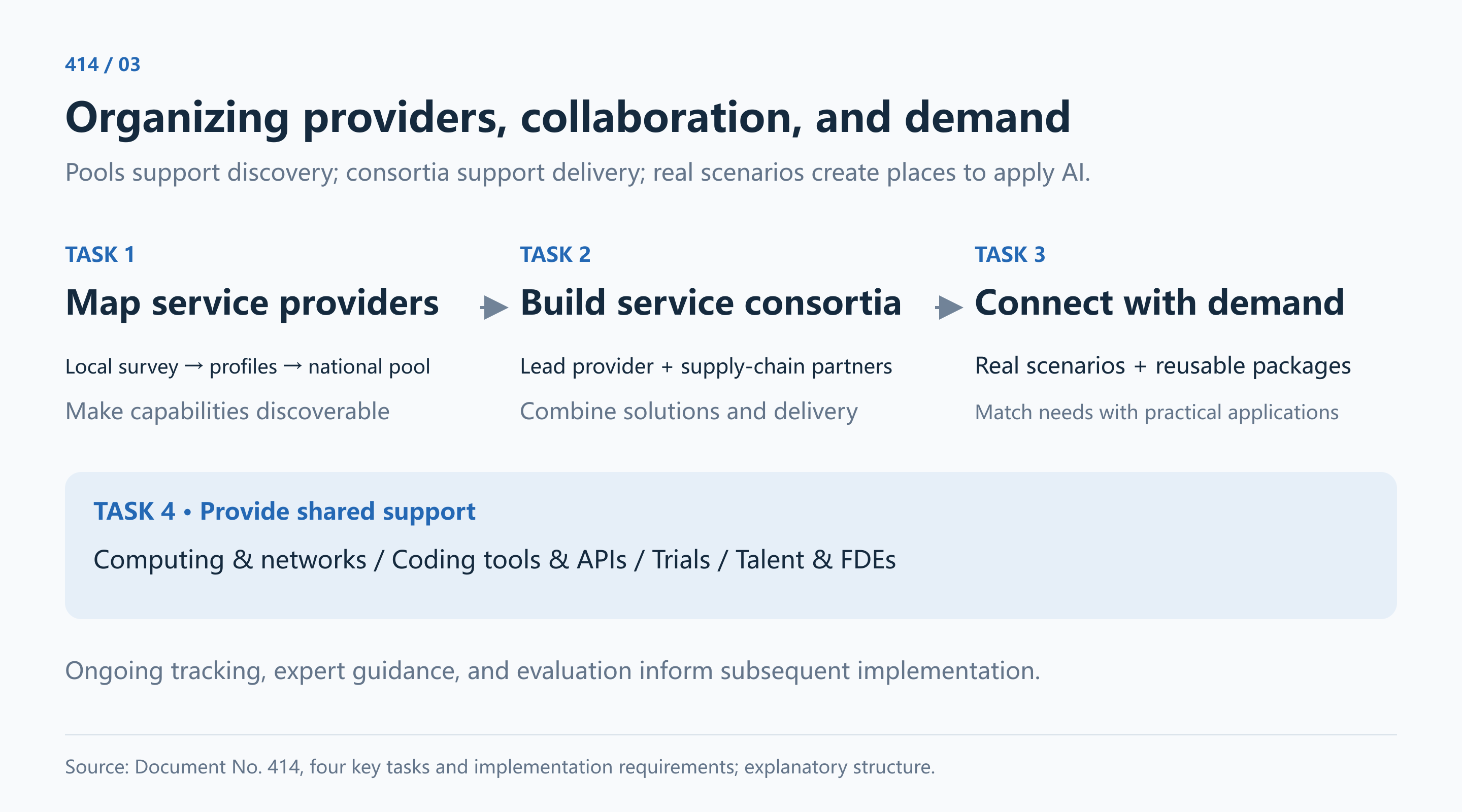
Figure 3. How the four policy tasks fit together. Select the image to view it at full size.
The five annexes make participation requirements concrete
The main text sets the direction. The annexes determine how providers are identified, what evidence supports their claims, and how the action is evaluated.
Annex 1: provider profiles record operating and delivery facts
The profile collects registration details, organization type, establishment date, years in AI services, annual revenue, AI service revenue, total staff, AI service team size, organizational structure, staff qualifications, served industries, service categories, and actual cases.
Five implications follow.
First, separately reporting AI service revenue helps distinguish businesses genuinely providing AI services from those that have merely adopted the label.
Second, teams must explain organization, capabilities, and responsibilities, with social insurance evidence for staff. This discourages temporary assembly of nominal external personnel.
Third, providers identifying specific sectors may select up to three principal industries, although an all-industry option also exists. The structure favors a verifiable industry position over an undifferentiated general pitch.
Fourth, cases must identify customers, contract amounts, implementation periods, scenarios, solutions, and results, supported by contracts or evidence of application. Repositories, demonstrations, papers, patents, and media coverage can establish that technology exists; they do not replace actual service cases.
Fifth, providers make commitments concerning truthful materials, tax and credit standing, the absence of major financial violations or debt defaults in the previous three years, intellectual property, lawful activity, and the non-confidential, publishable nature of submitted material. Participation therefore involves public disclosure and credit responsibility as well as capability.
Annex 2: the pool template acts as a service capability index
The pool table retains concise structured fields such as provider name, service category, principal industries, main customer types, and contact details. It is an index for finding providers, rather than the full assessment record.
An eventual online platform may therefore initially function as a discovery tool. Providers that can explain whom they serve, what they solve, and what they have delivered in a few fields are more likely to receive an initial inquiry. Clear industry positioning and customer evidence matter more than a long list of technical terms.
Annex 3: reporting requirements emphasize real delivery rather than company size
Annex 3 sets out the most explicit current reporting conditions:
| Dimension | Stated requirement | Implication |
|---|---|---|
| Entity | Registered and operating normally in China, with principal business covering AI-related services | Excludes personal projects and purely conceptual entities |
| Credit | No serious credit or legal violations by the enterprise, legal representative, or actual controller in the previous three years | Responsibility extends to key individuals |
| Intellectual property | No infringement of third-party intellectual property | Models, data, code, and content provenance matter to delivery risk |
| Team | In principle, at least three direct service staff, with social insurance evidence | Small teams can participate, but must be real and stable |
| Basic conditions | Necessary premises, equipment, and tools | Capability must be deliverable through an organization |
| Process | Complete, usable, standardized service manuals or documentation | Ad hoc performance is not a substitute for service capability |
| Cases | For providers with under three years of experience, in principle at least 10 cases; for those with three or more years, at least 30 cases in the past three years | Actual delivery records are a substantive threshold |
The annexes collect registered capital and revenue but do not specify universal minimums for capital, total revenue, or AI revenue. Nor do they make proprietary large models, patent counts, financing scale, or R&D staff degrees universal prerequisites. This creates room for small specialist providers.
The case threshold is nevertheless meaningful. Newer teams still need, in principle, at least 10 service cases; established providers need at least 30 within three years. The policy favors smaller teams with actual delivery over treating technology demonstrations as equivalent to service provision.
Qualifications are triggered by the service being offered
Third-party testing and evaluation require applicable capability evidence such as CMA/CNAS credentials. Public-facing websites, apps, and mini-programs require applicable filings or permissions. Generative AI services with public-opinion attributes or social-mobilization capabilities require the corresponding filing or registration.
This is a service-dependent compliance approach, rather than a demand that every provider hold every qualification. Companies should first define their service boundaries and then assemble the appropriate evidence, rather than collect certificates indiscriminately.
Annex 4: service consortium information identifies a lead organization
Consortia report their lead organization, members, principal industries, combined capabilities, and completed cases. Each consortium should in principle include at least two member organizations, potentially from computing, data, terminals, and other upstream or downstream fields.
Using 31 provincial-level jurisdictions plus the Xinjiang Production and Construction Corps as a rough basis, a reporting expectation of at least 10 consortia per region suggests around 320 initial consortium submissions nationwide. The same entity may participate in multiple consortia, so this is neither 320 wholly separate sets of companies nor a fixed final total. It nevertheless indicates an attempt to organize a nationwide collaboration network.
Two opportunities follow. Companies with industry customers and delivery capability can seek a lead role. Specialists in models, data, security, computing, terminals, or operating platforms can enter project delivery as members.
Annex 5: the summary assesses local implementation, not just enterprises
The final report requires the provincial industrial authority's seal and covers target achievement, economic and social benefits, contributions to industrial development and new industrialization, implementation measures, lessons, problems, and recommendations.
The pool is therefore intended to be more than a static list left to enterprise self-promotion. Local authorities must demonstrate what they did and what resulted. MIIT also plans ongoing evaluation, expert field guidance, and identification of exemplary outcomes.
The responsibility chain is observable: central tasks, local pools and consortia, enterprise delivery, expert follow-up, local summaries, and central evaluation, with results informing subsequent support and projects.
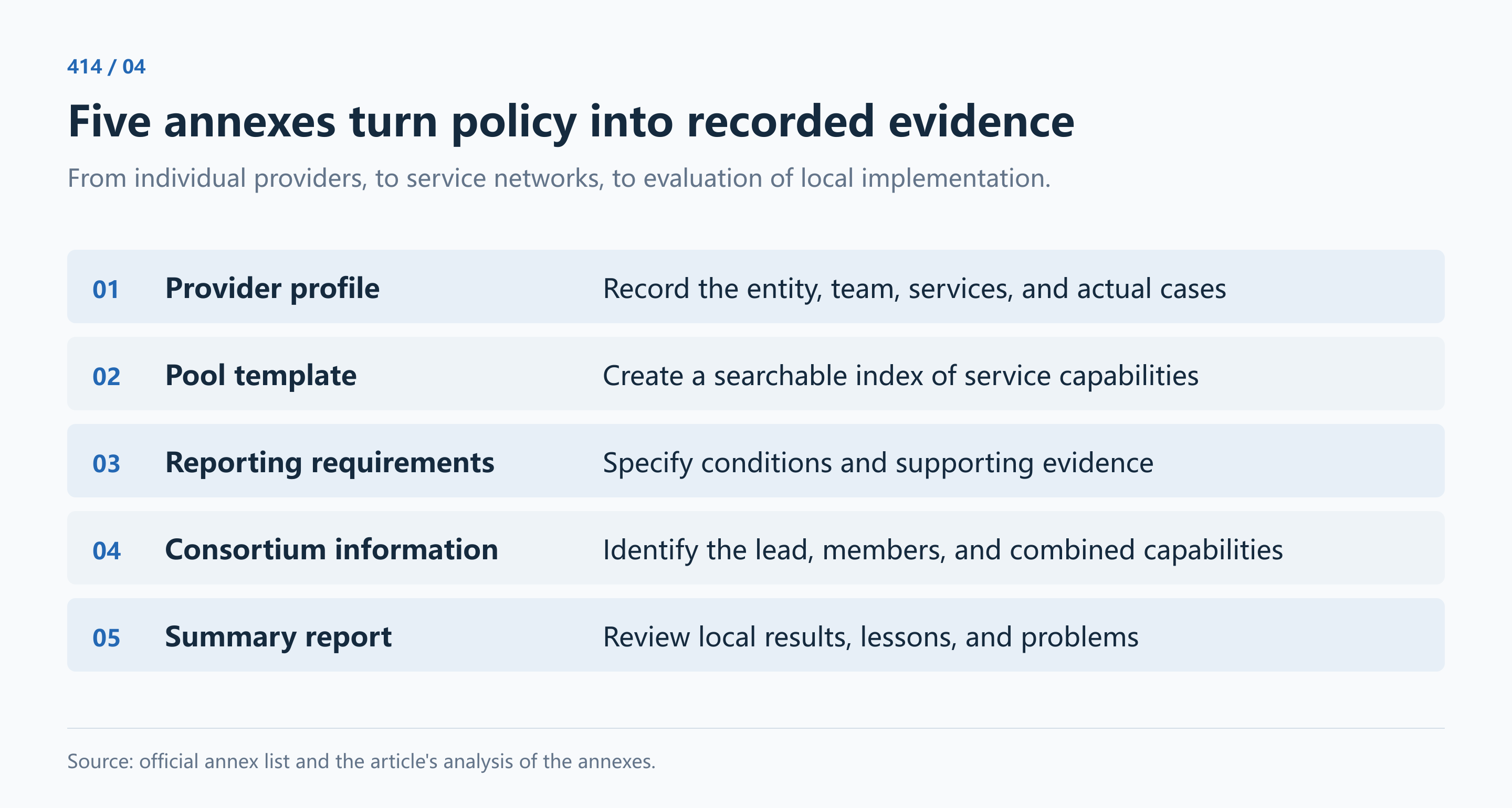
Figure 4. The roles of the five annexes. Select the image to view it at full size.
Policy verbs have different force
Reading policy requires distinguishing required actions from potential support.
| Wording | Broad policy force | How to read it |
|---|---|---|
| “Should” or “submit before a specified date” | A stated task or condition | Useful for identifying responsibilities and deadlines |
| “Will establish” or “will organize” | A departmental arrangement | Timing and implementation still need to be followed |
| “In principle” | A qualified threshold or quantity | The normal expectation, with room for justified exceptions |
| “Support” or “guide” | Policy direction | Does not automatically entitle every company to resources |
| “Encourage” | An advocated approach | Implementation depends on local authorities and participants |
| “Explore” | A prospective or pilot mechanism | First-use and risk-compensation tools are not uniform national entitlements |
| “At an appropriate time” | A direction without a fixed date | The national pool's online platform is an example |
The document launches a nationwide organizational action, but does not set uniform subsidy amounts, government procurement quotas, a national pool scoring system, or maturity grades. Opportunity is emerging; revenue still depends on local implementation and enterprise delivery.
Ten potential sources of opportunity
1. Provider profiling and capability assessment
Software firms, systems integrators, and industry consultants will need to establish whether they fit the provider category and address gaps in teams, processes, cases, and qualifications. Application preparation, maturity diagnostics, and service-system development may create professional demand.
2. Small, rapid, lightweight, precisely targeted product packages
The immediate product opportunity is to package frequent, essential, reusable tasks into offerings that can be installed quickly, priced clearly, and accepted within a short cycle. Examples include R&D document organization, equipment maintenance analysis, supply-chain exception handling, enterprise knowledge queries, compliance checks, customer service, and business reports.
3. Industry AI consulting and implementation
The annexes allow providers to highlight up to three principal industries. Teams that understand manufacturing, energy, finance, healthcare, education, or legal-service constraints may be better positioned than developers who know only generic model invocation.
4. Systems integration and multi-model adaptation
Enterprises will not abandon ERP, MES, CRM, office systems, or databases for AI. Connecting agents to these business systems and sources of record while supporting model replacement, permission isolation, and cost control creates a continuing engineering market.
5. Ongoing operations
Model upgrades, prompt and knowledge updates, monitoring, failure recovery, cost analysis, and repeated evaluation continue after delivery. Revenue may evolve toward a combination of implementation fees, annual operations, usage charges, and ongoing optimization.
6. Security governance and audit
The document includes security governance among its service categories and calls for cybersecurity, data security, ethics, and business compliance throughout the process. Authorization controls, tool admission, operating records, content traceability, risk warnings, independent evaluation, and incident recovery may support distinct products and services.
7. Testing and evaluation
Provider maturity, model capability, agent reliability, application outcomes, and security risk all require assessment. Third-party testing intended to carry evidentiary weight may trigger applicable CMA/CNAS qualification requirements; ordinary product self-testing must not be presented as statutory or authoritative third-party assessment.
8. FDE training and field services
Universities, vocational institutions, leading providers, and training organizations can develop FDE courses, practical training, certification, and talent services. Enterprises may establish resident, regionally shared, or combined remote-and-onsite teams.
9. Consortium membership and foundational capabilities
Not every enterprise needs to be a prime contractor. Computing, data, model, terminal, security, protocol, runtime, and development-tool companies can join delivery projects through consortium membership.
10. Overseas applications
The notice refers to overseas projects through Belt and Road, BRICS, and China–ASEAN cooperation. Teams that combine local deployment, multilingual support, regional compliance, ongoing operations, and training may find new opportunities. The offering is an application capability, not only a software license.
Connections with existing policies clarify where demand may come from
Document No. 414 is not isolated. “AI Plus” entered the Government Work Report in 2024. In 2025, State Council Document No. 11 set targets for next-generation intelligent terminals and agent adoption above 70% by 2027 and above 90% by 2030, while promoting application service providers, Model as a Service, and Agent as a Service. Reprint and explanation of the State Council's AI Plus initiative
The 2026 Government Work Report further called for faster agent adoption, commercial and scaled AI applications in key industries, AI-native businesses, large intelligent computing clusters, computing–power coordination, and improved AI governance. Related content from the 2026 Government Work Report
Another policy stream concerns SME digital transformation. Two rounds have supported 66 cities and more than 30,000 enterprises, with plans for around 100 cities and over 40,000 enterprises, including 10,000 specialized and innovative SMEs. A further target is cloud adoption above 40% among SMEs by 2027. SME digital empowerment action plan
Together, these policies describe a sequence:
- Set broad goals for AI adoption across the economy and society.
- Supply computing, data, models, pilot-scale testing facilities, and open-source resources.
- Open local industry scenarios and organize SME transformation.
- Use Document No. 414 to strengthen providers that can consult, deliver, operate, and govern.
- Connect dispersed participants through pools, consortia, and standards.
Potential demand therefore comes from more than central fiscal funding: government scenarios, state-owned enterprise demonstrations, local funds, enterprise digital transformation budgets, computing vouchers, first-use mechanisms, risk compensation, association-led matching, consortium projects, and overseas delivery. Government helps create market conditions; revenue ultimately comes from solving real needs.
Who is positioned to benefit, and who may struggle?
The strongest opportunities are likely to favor:
- Small specialist providers with industry customers and at least 10 demonstrable cases.
- Software companies able to standardize offerings while retaining necessary customization.
- Teams capable of taking continuing responsibility for implementation, operations, and security.
- Integrators with customer relationships and project management skills sufficient to lead consortia.
- Neutral platforms that support multiple models, systems, and terminals.
- Specialists in testing, evaluation, governance, training, or FDE services.
- Teams that turn open-source technology into installable, maintainable, auditable products.
Providers with demonstrations but no contractual delivery cases, thin wrappers around a single model that cannot connect to customer systems, and projects without post-launch operators or clear accountability will find it harder to earn organizational customers' long-term trust.
A three-stage outlook
Stage 1: before the end of 2026, visibility and organizational participation
Regions must submit pool and consortium information before December 1. The first round may emphasize identification and coverage, favoring established software providers, digital transformation firms, and integrators with existing cases, local connections, and complete records.
The keyword is visibility. Smaller innovative teams should prepare their entity, team, service manuals, case evidence, and industry positioning rather than wait for the national online platform.
Stage 2: in 2027, competition shifts toward maturity and demonstrated outcomes
As the national pool target rises from more than 2,000 to no fewer than 3,000, membership alone becomes less distinctive. As general requirements, maturity assessments, and FDE capability standards develop, providers may be differentiated by capability, industry, region, and results. Local summaries will also create demand for exemplary providers, solutions, and consortia.
The keyword is verification. Reliable reuse, measurable benefits, controlled risk, and repeat customer purchases will matter more than inclusion in the first list.
Stage 3: from 2028 to 2030, AI services may enter routine procurement
If adoption continues toward the State Council's targets, AI services may increasingly enter ordinary organizational budgets, alongside cloud, cybersecurity, and enterprise software. Procurement may move from one-time construction toward combinations of agent seats, token consumption, operating service levels, security responsibilities, and outcome measures.
The pool could become more closely connected with local projects, state-owned enterprise procurement, industrial platforms, standards certification, credit evaluation, and cross-regional matching. This is a projection from current mechanisms: Document No. 414 does not establish such a procurement system.
Risks that remain
First, early pools may prioritize quantity over quality. Pressure to meet the 2,000- and 3,000-provider targets may produce uneven lists, requiring later maturity standards and dynamic evaluation.
Second, case thresholds may disadvantage genuinely young teams. The expectation of at least 10 cases for providers with under three years of experience may favor established integrators with customer channels over technically innovative startups.
Third, consortia may become nominal partnerships. Member lists cannot solve complex delivery problems without clear technical boundaries, delivery responsibilities, data permissions, and incident accountability.
Fourth, project-based revenue may bring low margins and long collection cycles. Government-organized demand does not automatically give providers pricing power. Custom development can still become highly price-competitive.
Fifth, security governance may be reduced to certificate checking. Agent security also depends on authorization for each invocation, observable facts, failure states, independent acceptance, and recovery from side effects. Governance must reach the operating process to support long-term responsibility.
Conclusion: building the delivery layer that takes AI into industry
The central significance of Document No. 414 is not an announcement of another 3,000 companies carrying an AI label. It is a systematic policy answer to a practical question: once models and computing resources exist, who will take them into industries and enterprises?
The answer is not one model vendor or one employee who knows how to write prompts. It is a service workforce able to understand industries, combine technologies, work in real settings, sustain operations, and carry security responsibility.
Provider profiles, national pools, consortia, real scenarios, first-use mechanisms, risk compensation, computing vouchers, FDEs, customer evidence, and local evaluation form a connected policy mechanism. Government is seeking to accelerate the formation of a dispersed market by reducing information costs, initial procurement risk, and access costs for foundational resources.
For entrepreneurs, the opportunity is to become capable of real delivery. For software firms, it is to make frequent business needs into reusable products.
As the industry moves from asking whose model is stronger to asking who can keep AI working over time, the deeper competition is only beginning.
Sources and scope
- MIIT Document No. 414 and its five annexes
- Reprint of MIIT's seven-question policy explanation
- Reprint and explanation of the State Council's AI Plus policy
- 2026 Government Work Report
- National Data Administration information on average daily token usage
- SME Digital Empowerment Action Plan, 2025–2027
- Stanford AI Index Report 2025
Forward-looking statements in this article are analysis based on current policy mechanisms. They do not stand for unpublished local application rules, subsidy amounts, procurement quotas, or final national pool admission standards. Statistics from different sources use different populations and definitions: AI enterprise counts, core industry size, service provider pool counts, and organizational AI use cannot be substituted for one another. They are used here only to describe the industrial context and policy stage.


Top comments (0)