


The first time I heard about MCPs I was quite flabbergasted. I was like what are they. But today thanks to n8n I know them like the back of my hand 😁.
tl;dr
- MCP stands for Model Context Protocol.
- The real innovation in Agentic AI isn't MCP, it's tools.
Tools are the game-changer. The ability for an LLM to decide, based on the tokens it generates, that it wants to call a function or API. MCP is simply an standard that makes sharing and reusing these tools much easier.
- Use structured output as much as possible instead of simple strings returned usually by LLMs since we can work a lot easier with JSON.
If you ask me to summarize it I'd say let's imagine we wanna create a lead hunter tool. I do NOT care how it works internally, I just wanna give it a prompt like this: "I wanna sell a CO2 calculator and optimizer to south east Asian countries. Gimme 10 top major compnaies/organizations" and then get a structured response back with direct contact info as accurate as possible.
So you go to n8n and create a published workflow like:
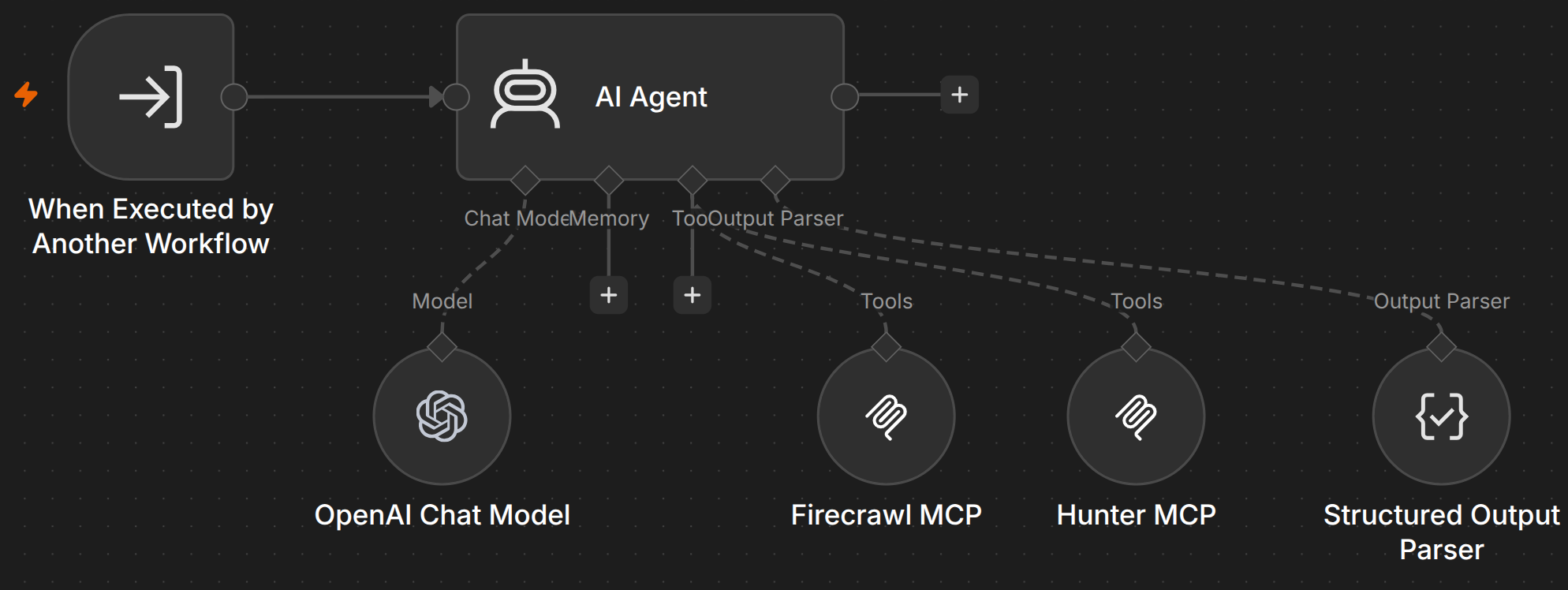
Then you need to create a separate published workflow which exposes the new MCP server

Then you just need to add it to your agent or you can for example add it to Claude:

You can see the n8n workflows here: https://gist.github.com/kasir-barati/eb1059bbd85abf6cadd83a10c35f4cf4
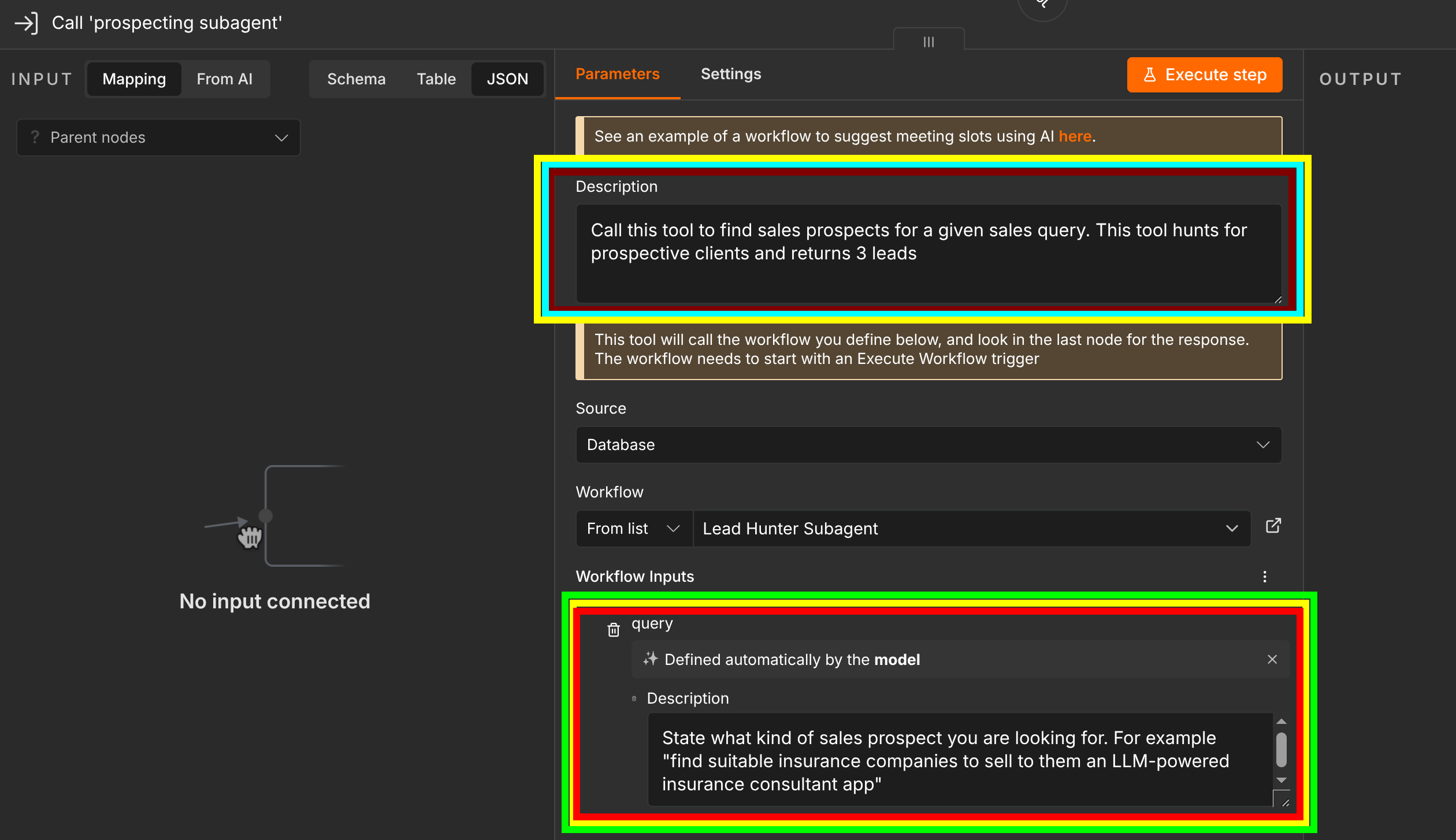
Also pay close attention to have we declared what our MCP is capable of in n8n so Claude knows what it needs to send to the MCP server and what it should expect to receive in response:
Fun Fact
The builtin n8n tools are all MCP servers with accurate and neat descriptions similar to what we had done for our little MCP server. That is why LLMs know which tool they have to call!
So the full flow of our little MCP would look like this:
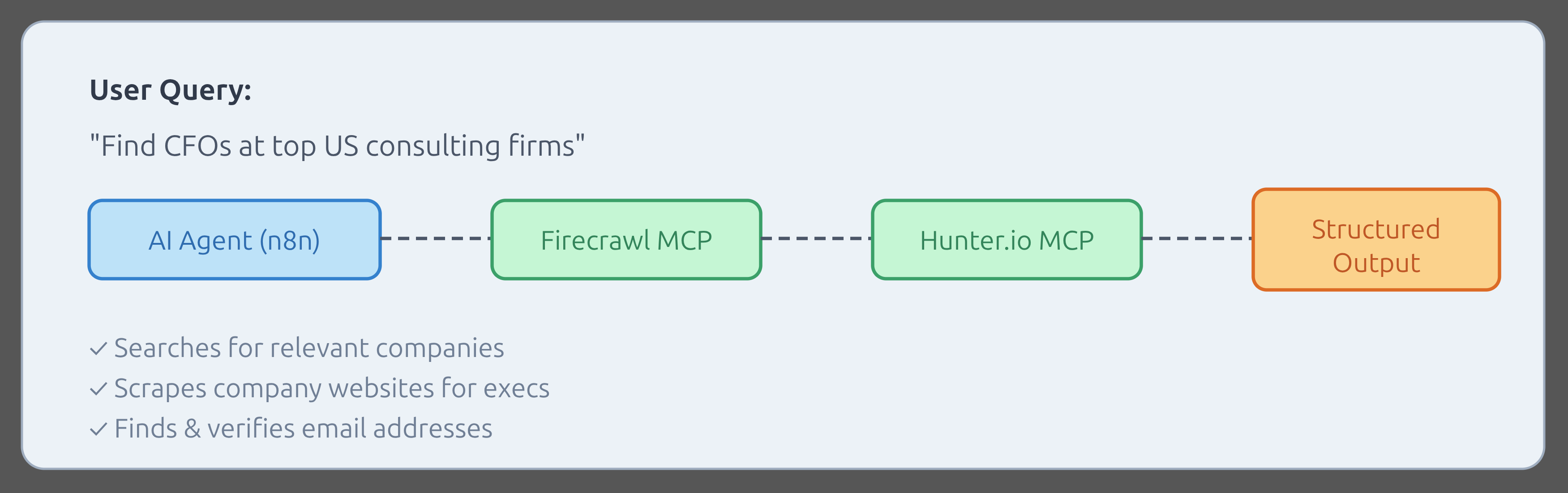
And the Claude part is just the client whom initiate the request, receives the response, and finally visualize it to the user.
What is MCP?
Anthropic create MCP and released in late 2024. It took off around March-April 2025 and has become a major force in the AI ecosystem.
Anthropic describes MCP as the USB-C port for AI applications (ref), a good analogy for a protocol designed to standardize how AI applications connect to external systems.
The Three-Part Architecture
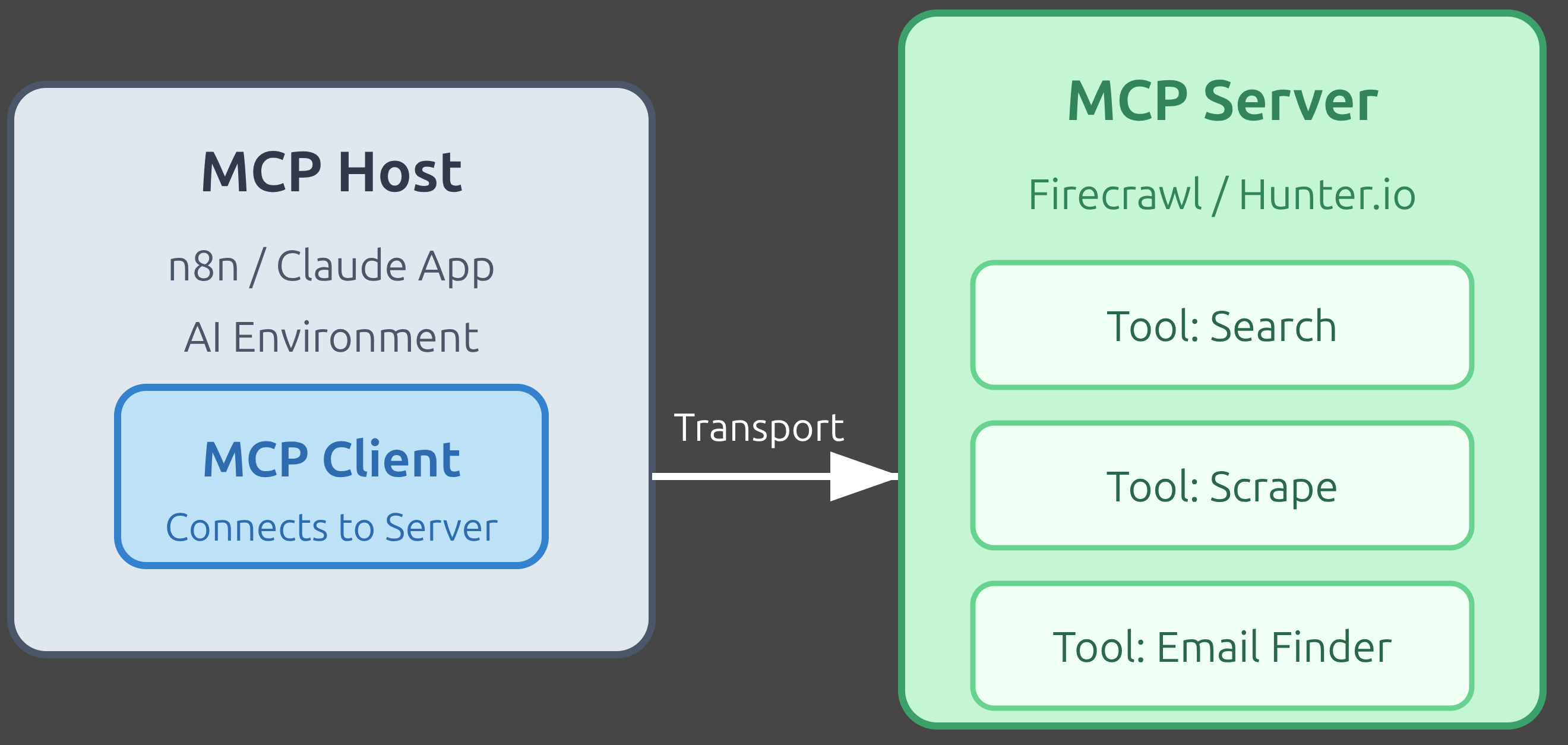
MCP consists of three key components:
- MCP Host: The overall environment where your agents run (e.g., Claude desktop app, an n8n workflow, or any AI application).
- MCP Client: A component within the host that connects to MCP servers.
- MCP Server: The actual tool provider that exposes functionality to LLMs.
Transport Mechanisms
MCP clients and servers can communicate in three ways:
- stdio (Standard Input/Output): The simplest method, but only works when server runs on the same computer as the host.
- SSE (Server-Sent Events): Deprecated.
- Streamable HTTP: The modern replacement for SSE, supports remote connections (server can run anywhere).
Important ⚠️
n8n currently only supports Streamable HTTP and SSE, not Stdio.
Why MCP Matters
- What MCP is:
- An easy way to use tools that someone else built.
- A standard for sharing tools across AI applications.
- Open source.
- What MCP is NOT:
- The tools themselves (it's the glue between LLMs and tools).
- Technically innovative (it uses proven technologies).
- Guaranteed to be the final word (alternatives like Claude Skills and Code Mode are emerging).
But even then I believe knowing MCP will enable us to have an easier time adopting and moving to Code Mode or any other standard. As the old saying goes: same song, different verse.
Learning MCP gives you the "melody", so picking up Code Mode is just learning the "new verse".


Top comments (0)