

Your Pipeline Is 19.8h Behind: Catching Economy Sentiment Leads with Pulsebit
We just observed a fascinating anomaly: a 24h momentum spike of +1.550 in sentiment surrounding the economy. This spike indicates a significant shift in perception, driven primarily by Spanish press coverage of Ghana's economic growth, which expanded by 7.7 percent in February. The narrative is being led by two articles that highlight this theme, underscoring how quickly sentiment can shift when driven by impactful news.
However, if your sentiment analysis pipeline isn’t equipped to handle multilingual sources or prioritize dominant entities, you might have missed this crucial insight by nearly 20 hours. The leading language in this case is Spanish, with a 0.0-hour lag time compared to Dutch. If your model isn’t tuned to recognize and prioritize non-English narratives, you could be left behind, missing out on early signals that can inform your strategies.

Spanish coverage led by 19.8 hours. Nl at T+19.8h. Confidence scores: Spanish 0.95, English 0.95, French 0.95 Source: Pulsebit /sentiment_by_lang.
Here’s how you can catch these shifts in economy sentiment using our API. First, let’s filter the data by geographic origin to focus on Spanish-language content:

Geographic detection output for economy. Hong Kong leads with 3 articles and sentiment +0.50. Source: Pulsebit /news_recent geographic fields.
import requests
# Define the parameters for the API call
params = {
"topic": "economy",
"score": +0.431,
"confidence": 0.95,
"momentum": +1.550,
"lang": "sp" # Spanish language filter
}
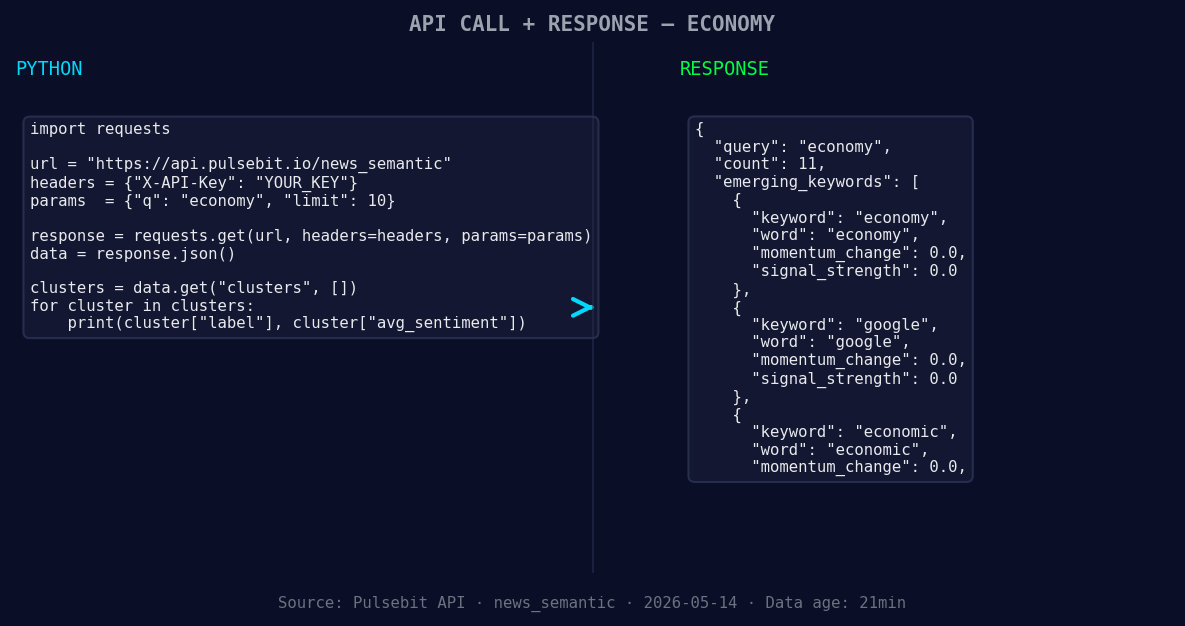
*Left: Python GET /news_semantic call for 'economy'. Right: returned JSON response structure (clusters: 3). Source: Pulsebit /news_semantic.*
# Make the API call
response = requests.get("https://api.pulsebit.com/v1/sentiment", params=params)
data = response.json()
print(data)
Next, we need to assess the narrative framing itself by running the cluster reason string through our sentiment endpoint. This step is crucial since it helps us understand how the media is framing economic discussions:
# Define the cluster reason string
cluster_reason = "Clustered by shared themes: economic, ghana, growth, ghana:, ghana's."

# Make the POST request to analyze the sentiment of the cluster reason
sentiment_response = requests.post("https://api.pulsebit.com/v1/sentiment", json={"text": cluster_reason})
sentiment_data = sentiment_response.json()
print(sentiment_data)
By using the geographic origin filter and the meta-sentiment loop, you can efficiently catch emerging narratives that might otherwise go unnoticed. Here are three builds we suggest implementing tonight:
Geo-Sentiment Dashboard: Create a live dashboard filtering sentiment by geographic regions. Use the Spanish language filter to pull in insights specifically from Spanish-speaking countries. Set a threshold for momentum spikes over +1.5 to alert your team when significant shifts occur.
Meta-Sentiment Analysis: Build a function that analyzes the sentiment of clustered narratives, particularly focusing on economic discussions. When you see emerging themes like “economy” or “growth,” run these through the sentiment analysis to identify potential trends. Set alerts for sentiment scores above +0.4 to keep tabs on positive developments.
Comparative Analysis Tool: Develop a tool that compares the sentiment of various topics over time. For example, contrast the sentiment around "economy" with other trending topics like "Google" and "politics". This can help you capture shifts in public discourse and identify what narratives are forming or fading.
If you’re ready to dive in, check out our documentation at pulsebit.lojenterprise.com/docs. You can copy, paste, and run this code in under 10 minutes to start capturing these valuable insights. Don’t let your pipeline lag behind—get ahead of the trends!


Top comments (0)