

Your Pipeline Is 28.1h Behind: Catching Forex Sentiment Leads with Pulsebit
We recently stumbled upon an intriguing anomaly: a 24h momentum spike of +0.302 in the forex topic. This spike is not just a number; it’s a signal that something significant is happening in the forex landscape, particularly surrounding the rupee's decline against the U.S. dollar. The leading language for this spike is English, with a press coverage lag of just 0.0 hours, further emphasizing the urgency of this data.
The Problem
In a world where timely insights can make or break decisions, your model missed this crucial momentum by 28.1 hours. This delay is particularly concerning given that the leading language was English, which should have been prioritized in your pipeline. When you fail to account for multilingual origins or entity dominance, you risk losing the first-mover advantage in sentiment analysis. For forex sentiment, every hour counts, and being behind can mean missing critical market shifts.

English coverage led by 28.1 hours. No at T+28.1h. Confidence scores: English 0.85, Ro 0.85, French 0.85 Source: Pulsebit /sentiment_by_lang.
The Code
Let’s dive into how we can catch this spike with our API. First, we need to filter the data specifically for English language content related to forex. Here’s how you can do that using Python:
import requests
# Define parameters for the API call
params = {
"topic": "forex",
"score": +0.155,
"confidence": 0.85,
"momentum": +0.302,
"lang": "en" # Geographic origin filter
}
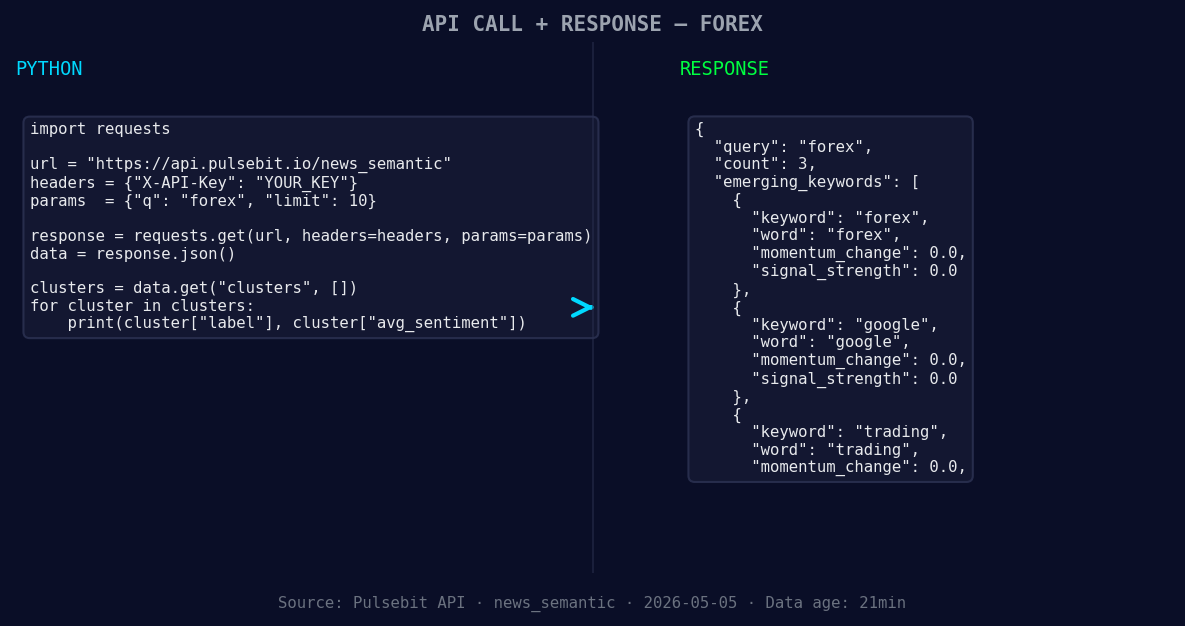
*Left: Python GET /news_semantic call for 'forex'. Right: returned JSON response structure (clusters: 3). Source: Pulsebit /news_semantic.*
# Make the API call
response = requests.get("https://api.pulsebit.com/v1/sentiment", params=params)
data = response.json()
print(data)
After fetching the relevant data, we should also run the narrative framing through our meta-sentiment scoring. This helps us understand the context behind the spike. The cluster reason string we want to analyze is: "Clustered by shared themes: trading, launches, free, forex, bot." Here’s how to do that:
# Define the cluster reason string
cluster_reason = "Clustered by shared themes: trading, launches, free, forex, bot."
meta_sentiment_response = requests.post("https://api.pulsebit.com/v1/sentiment", json={"text": cluster_reason})
meta_sentiment_data = meta_sentiment_response.json()
print(meta_sentiment_data)
Three Builds Tonight
Now that we have the data, let's talk about three specific things you can build based on this pattern:
- Geo-Filtered Alert System: Create a real-time alert system that notifies you when momentum spikes for the forex topic exceed a threshold of +0.3. Use the geographic filter for English language articles to ensure you’re getting the most relevant data.

Geographic detection output for forex. India leads with 3 articles and sentiment -0.22. Source: Pulsebit /news_recent geographic fields.
Meta-Sentiment Dashboard: Build a dashboard that visualizes the narrative framing of clustered articles. Use the meta-sentiment loop to provide ongoing insights into how these narratives evolve over time, focusing on keywords like "forex," "trading," and "launches."
Integration with Trading Algorithms: Develop a trading algorithm that reacts to sentiment spikes. Set thresholds for both momentum (e.g., +0.3) and sentiment score (e.g., +0.155) to trigger buy or sell signals, allowing you to capitalize on market movements before they become mainstream.
Get Started
To implement these ideas, check out our documentation at pulsebit.lojenterprise.com/docs. You can copy-paste the provided code snippets and have them running in under 10 minutes. Don’t let your pipeline fall behind; stay ahead with real-time sentiment insights.


Top comments (0)