

Your Pipeline Is 25.4h Behind: Catching Economy Sentiment Leads with Pulsebit
We just encountered a fascinating anomaly: a 24h momentum spike of +0.881 related to the topic of the economy. This spike indicates a notable shift in sentiment, driven by a cluster of articles discussing the precarious state of the economy. Given the leading language of the press coverage is English, with a 25.4-hour lead time, there's a compelling story emerging that your pipeline might be missing.
The Problem
If your pipeline doesn’t account for multilingual origins or entity dominance, you might be facing a significant structural gap. Your model missed this spike by 25.4 hours, which is critical considering the leading articles are primarily in English and discuss pressing themes like the economy. Without effectively filtering and analyzing sentiment across different languages and regions, you risk being blindsided by pivotal shifts in market sentiment.

English coverage led by 25.4 hours. No at T+25.4h. Confidence scores: English 0.85, French 0.85, Spanish 0.85 Source: Pulsebit /sentiment_by_lang.
The Code
Here’s how we can catch this momentum spike using our API. First, we need to filter the sentiment data based on the geographic origin, specifically for English-language content related to the economy:

Geographic detection output for economy. India leads with 4 articles and sentiment +0.20. Source: Pulsebit /news_recent geographic fields.
import requests
# Define the parameters for our API call
params = {
"topic": "economy",
"lang": "en",
"score": 0.252,
"confidence": 0.85,
"momentum": 0.881
}
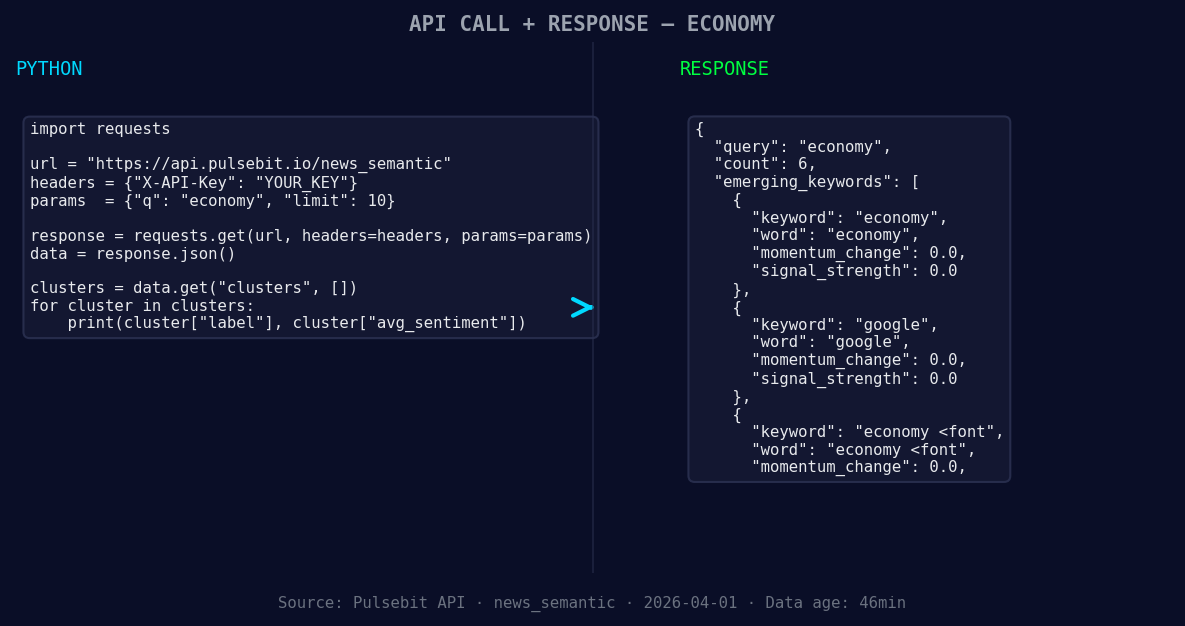
*Left: Python GET /news_semantic call for 'economy'. Right: returned JSON response structure (clusters: 3). Source: Pulsebit /news_semantic.*
# Make the API call to fetch relevant articles
response = requests.get("https://api.pulsebit.com/articles", params=params)
articles = response.json()
Next, we’ll run the cluster reason string through our sentiment analysis endpoint to score the narrative framing itself. This is where the magic happens—understanding the sentiment around the clustered themes:
# Cluster reason string to analyze
cluster_reason_string = "Clustered by shared themes: economy, edge, what, could, tip."

# POST request to analyze the sentiment of the cluster reason
sentiment_response = requests.post("https://api.pulsebit.com/sentiment", json={"text": cluster_reason_string})
sentiment_analysis = sentiment_response.json()
This code snippet allows us to capture the current sentiment around the economy while also framing it within the context of the articles being published. The insights from this analysis can help us understand not just what the sentiment is, but why it’s shifting.
Three Builds Tonight
- Geo-filtered Sentiment Analysis: Create a service that triggers alerts when momentum spikes exceed a threshold (e.g., +0.5) for specific topics like "economy," using a geo filter to ensure the content is relevant to your target audience.
   if momentum > 0.5:
       print("Alert: Significant momentum detected in economy sentiment!")
Meta-sentiment Loop: Develop a dashboard that visualizes the sentiment analysis results over time. It can include the sentiment score of the cluster reason string, helping you track how narrative framing evolves and impacts your investment decisions.
Thematic Analysis Tool: Build an endpoint that aggregates articles based on forming themes, such as "economy," "google," and "font," and scores them against mainstream narratives. Watch for shifts in sentiment as themes evolve.
Get Started
Ready to dive deeper? Check out our documentation at pulsebit.lojenterprise.com/docs. You can copy, paste, and run the above code in under 10 minutes to start capturing these insights today.


Top comments (0)