

Your Pipeline Is 17.7h Behind: Catching Law Sentiment Leads with Pulsebit
We just uncovered a fascinating anomaly in our data: a 24h momentum spike of +0.199 in sentiment surrounding the topic of law. This spike highlights a pressing need for more agile responses to sentiment changes, especially when dealing with multilingual sources. What’s even more intriguing is that the Spanish press has led this charge with a 17.7-hour head start. If your pipeline isn’t tuned to catch these nuances, you’re missing out on critical insights.

Spanish coverage led by 17.7 hours. Da at T+17.7h. Confidence scores: Spanish 0.90, English 0.90, French 0.90 Source: Pulsebit /sentiment_by_lang.
This situation illustrates a structural gap in any pipeline that doesn’t account for multilingual origins or dominant entities. If your model isn’t set up to handle this, you missed this significant momentum shift by a staggering 17.7 hours. The leading language in this case is Spanish, which means that any insights generated from English sources would have lagged behind, potentially leaving you reacting instead of acting on the data.
Let’s get into the code that can help catch these sentiment shifts in real-time. First, we’ll filter our results to focus on the Spanish language sources. Here’s how you can do it:
import requests
# Set up parameters
topic = 'law'
momentum = +0.199
confidence = 0.90
# API call to get articles in Spanish
url = "https://api.pulsebit.com/v1/articles"
params = {
"lang": "sp",
"topic": topic,
"momentum": momentum,
"confidence": confidence
}
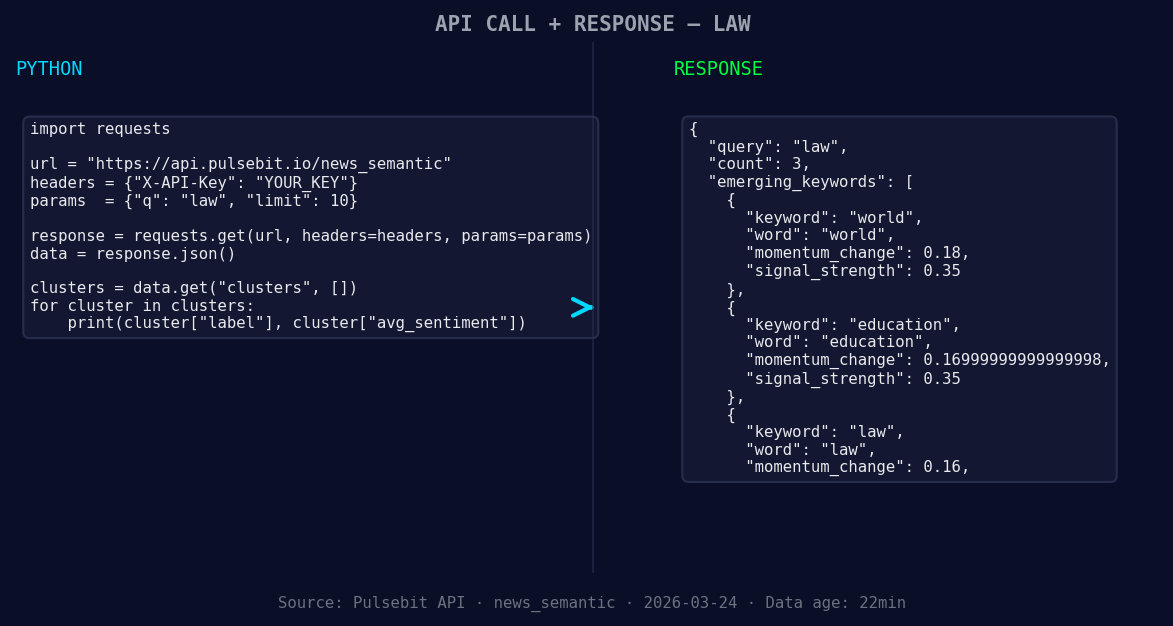
*Left: Python GET /news_semantic call for 'law'. Right: returned JSON response structure (clusters: 1). Source: Pulsebit /news_semantic.*
response = requests.get(url, params=params)
articles = response.json()
# Check the articles returned
print(articles)
Next, we need to score the narrative framing itself using our meta-sentiment loop. The reason we’re pulling from the API is that even though the semantic API is incomplete, we still want to evaluate the fallback narrative. Here’s how we can do that:
# Meta-sentiment moment
meta_sentiment_url = "https://api.pulsebit.com/v1/sentiment"
fallback_reason = "Semantic API incomplete — fallback semantic structure built from available keywords and article/search evidence."

# API call to score the narrative framing
meta_response = requests.post(meta_sentiment_url, json={"text": fallback_reason})
meta_sentiment = meta_response.json()

# Check the meta sentiment score
print(meta_sentiment)
With this setup, you’re now equipped to capture real-time sentiment shifts, especially for topics that are gaining traction in underrepresented languages.
Here are three specific builds you can implement using this pattern:
- Geo-Filtered Articles: Set a signal threshold of +0.18 for the topic of "world." Use the geographic origin filter to ensure you’re capturing relevant articles from Spanish-language sources. This allows you to spot trends before they become mainstream.

Geographic detection output for law. India leads with 2 articles and sentiment +0.05. Source: Pulsebit /news_recent geographic fields.
Meta-Sentiment Loop for Education: For the forming theme of “education,” apply the same meta-sentiment loop to gauge the narrative around shifts in sentiment. Look for confidence scores above 0.85 to ensure you’re acting on reliable data.
Law Sentiment Monitoring: Use the law topic with a strong sentiment threshold of +0.16 to monitor articles. This will help you stay ahead of any emerging trends or discussions that could impact your strategies.
You can get started by diving into our documentation at pulsebit.lojenterprise.com/docs. With these examples, you can copy-paste and run this in under 10 minutes, ensuring you’re always ahead of the curve.


Top comments (0)