

Your pipeline is 29.1h behind: catching markets sentiment leads with Pulsebit
We recently uncovered a striking anomaly: a 24-hour momentum spike of +0.239 in market sentiment. This spike isn’t just a number; it signifies a notable shift in sentiment surrounding global markets, especially in the context of ongoing geopolitical tensions. As the West Asia conflict enters its fifth week, the narrative emerging in English press highlights a significant downturn, with articles hinting at broader implications for financial markets. This isn’t just noise—it's a signal that could inform your trading strategies, and if you're not tuned into multilingual sources, you might be missing critical insights.

English coverage led by 29.1 hours. Af at T+29.1h. Confidence scores: English 0.95, Spanish 0.95, French 0.95 Source: Pulsebit /sentiment_by_lang.
Consider this: Your model missed this by 29.1 hours, lagging behind the leading English press. With the dominant narrative focusing on the conflict and its economic repercussions, it’s clear that a structural gap exists for those relying solely on data from a single language or entity. The sentiment surrounding "stock markets slump over 2% as West Asia war enters 5th week" is a prime example of how timely, multilingual data can drive decision-making. If your pipeline isn’t equipped to handle these nuances, you risk making decisions based on outdated or incomplete information.
Let’s dive into how we can catch this spike using our API with Python. First, we'll filter for relevant articles in English, focusing on the topic of “markets”:
import requests
# Parameters for the API call
params = {
"topic": "markets",
"lang": "en"
}
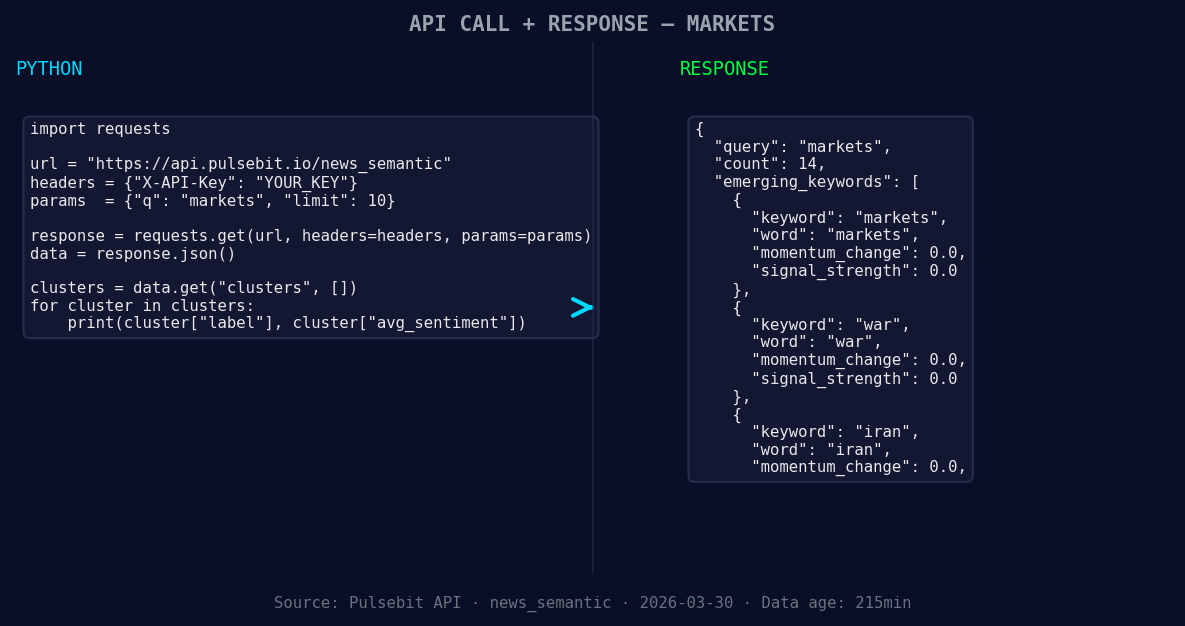
*Left: Python GET /news_semantic call for 'markets'. Right: returned JSON response structure (clusters: 3). Source: Pulsebit /news_semantic.*
# API call to fetch sentiment data
response = requests.get('https://api.pulsebit.com/sentiment', params=params)
data = response.json()
# Extracting relevant data
momentum = data['momentum_24h']
score = data['sentiment_score']
confidence = data['confidence']
print(f"Momentum: {momentum}, Score: {score}, Confidence: {confidence}")
Next, we need to understand the narrative framing that’s shaping this sentiment. We’ll run our cluster reason string back through the sentiment endpoint to assess how the themes are resonating:
# Meta-sentiment loop: analyzing the cluster reason
cluster_reason = "Clustered by shared themes: points, stock, markets, slump, west."
meta_response = requests.post('https://api.pulsebit.com/sentiment', json={"text": cluster_reason})
meta_data = meta_response.json()

print(f"Cluster Sentiment Score: {meta_data['sentiment_score']}, Confidence: {meta_data['confidence']}")
With these two calls, we can not only identify the momentum behind market sentiment but also the underlying narratives that contribute to it.
Now, let’s discuss three builds you can implement with this data:
- Sentiment Alert System: Set a threshold of +0.239 for momentum spikes in the "markets" topic. Trigger alerts when this threshold is crossed using the geographic origin filter to ensure you're only looking at English articles. This could help you catch trends in real-time before they affect trading decisions.

Geographic detection output for markets. India leads with 5 articles and sentiment -0.29. Source: Pulsebit /news_recent geographic fields.
Narrative Analysis Tool: Use the meta-sentiment loop to continuously monitor the framing of key narratives surrounding geopolitical events. If the sentiment score of the narrative drops below +0.1, it may signal a shift in sentiment worth investigating further.
Cross-Language Comparison Dashboard: Build a dashboard that compares sentiment across languages. For example, juxtapose English sentiment on "markets" against Arabic or Farsi sentiments regarding the same themes. This dual perspective could unveil insights you wouldn't find by looking at a single source.
If you're ready to start leveraging this powerful data, head over to pulsebit.lojenterprise.com/docs. You can copy, paste, and run the code we showed you in under 10 minutes—no fluff, just results.


Top comments (0)