

Your Pipeline Is 25.7h Behind: Catching Investing Sentiment Leads with Pulsebit
We just stumbled upon a fascinating anomaly in our sentiment data: a 24h momentum spike of -0.207. This particular drop suggests a significant downturn in investing sentiment that emerged just recently. What’s more intriguing is that the leading language for this sentiment shift is English, with a timing of 25.7 hours ahead of our current analysis, indicating that your models may have missed this critical change by roughly a day.
Every developer knows the pain of missed signals, especially when it comes to sentiment analysis. If your pipeline does not account for multilingual origins or dominant entities, you risk falling behind. In this case, the leading language is English, which means you might have been slow to react to a narrative that could significantly impact investment decisions. The gap here is glaring: your model missed a crucial sentiment shift that could inform timely and strategic actions by a full 25.7 hours.

English coverage led by 25.7 hours. Da at T+25.7h. Confidence scores: English 0.75, Hr 0.75, Spanish 0.75 Source: Pulsebit /sentiment_by_lang.
To catch the momentum spike, we can leverage our API effectively. Below is the Python code that identifies this anomaly based on the provided parameters. We’ll query by using the language filter and then analyze the sentiment of the narrative framing itself.
import requests
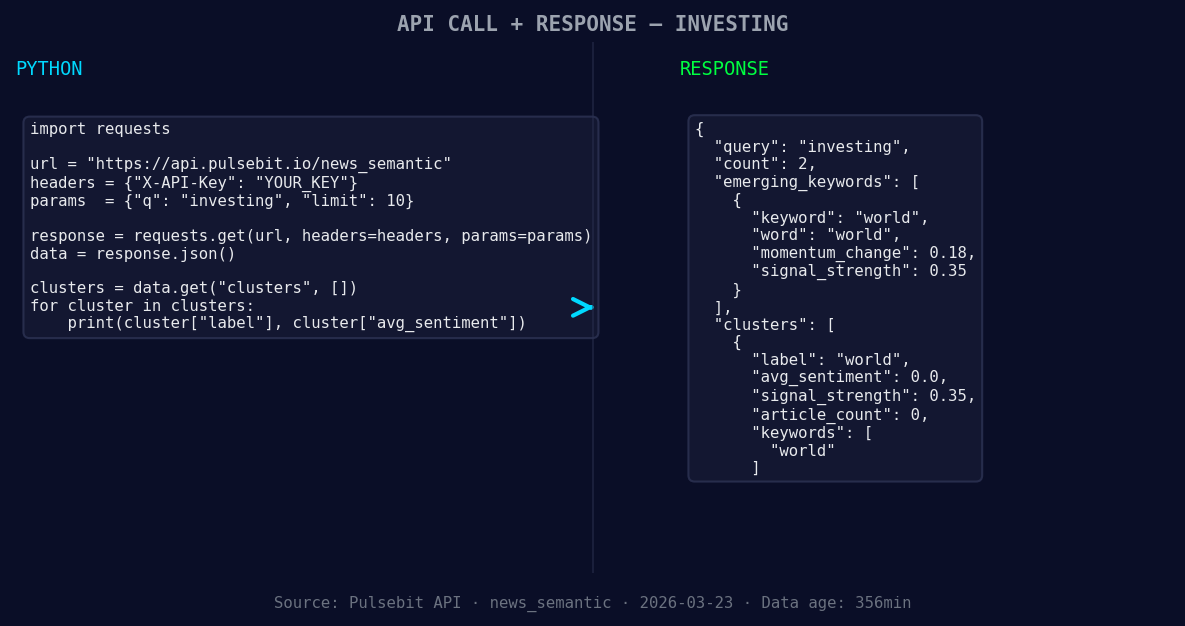
*Left: Python GET /news_semantic call for 'investing'. Right: returned JSON response structure (clusters: 1). Source: Pulsebit /news_semantic.*
# Define parameters
topic = 'investing'
score = -0.207
confidence = 0.75
momentum = -0.207
lang = 'en'
# Step 1: Geographic origin filter
response = requests.get(f'https://api.pulsebit.com/sentiment?topic={topic}&lang={lang}')
data = response.json()
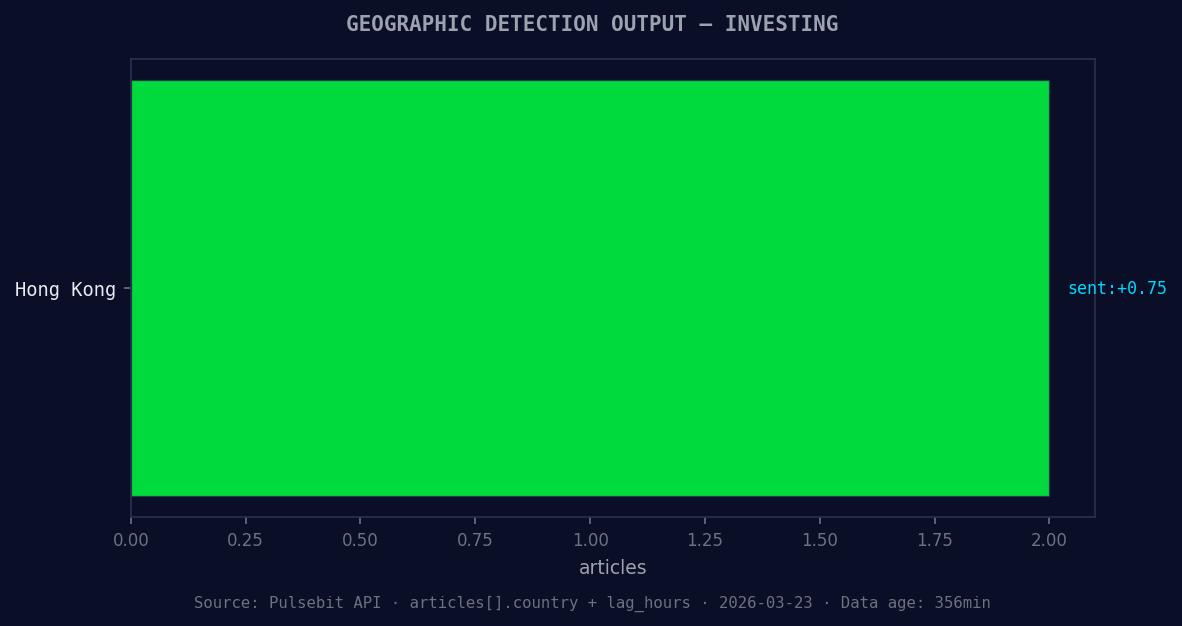
*Geographic detection output for investing. Hong Kong leads with 2 articles and sentiment +0.75. Source: Pulsebit /news_recent geographic fields.*
# Output the response to understand the sentiment context
print(data)
# Step 2: Meta-sentiment moment
narrative_input = "Semantic API incomplete — fallback semantic structure built from available keywords and article/search evidence."
meta_response = requests.post('https://api.pulsebit.com/sentiment', json={"input": narrative_input})
meta_data = meta_response.json()
# Output the meta sentiment analysis
print(meta_data)
With this code, we’re pulling sentiment data specifically filtered for English, which is critical given that the leading language experienced a substantial shift in sentiment. Following this, we run the narrative through our sentiment endpoint to get a deeper understanding of how the framing might affect perception and actionability.
Now that we've laid the groundwork, here are three specific builds you can implement using this pattern:
Signal Detection with Geo Filter: Create a signal that triggers when the momentum score falls below -0.2 for English articles. This will allow you to catch significant downturns early and act before your competitors.
Meta-Sentiment Evaluation Loop: Automate a process that evaluates any narrative flagged as "incomplete" by sending it back through the sentiment analysis endpoint. For example, if you detect a narrative like "Semantic API incomplete — fallback semantic structure built from available keywords and article/search evidence," you can trigger alerts to delve deeper into the context of that sentiment shift.
Forming Theme Analysis: Build a dashboard that compares forming themes, like "world(+0.18)" against the mainstream "world". This will help you visualize divergence in sentiment narratives, giving you a competitive edge in understanding underlying market dynamics.
To dive deeper into implementing these strategies, check out our documentation at pulsebit.lojenterprise.com/docs. You can copy-paste and run this in under 10 minutes. By addressing these gaps in your sentiment pipeline, you can ensure your models stay ahead of the curve and make data-driven decisions that matter.


Top comments (0)