

Your Pipeline Is 27.7h Behind: Catching Real Estate Sentiment Leads with Pulsebit
We just uncovered a specific anomaly: a 24-hour momentum spike of -0.454 in the real estate sector. This indicates a significant shift in sentiment that should not be ignored. The leading language for this spike is English, with a noteworthy 27.7-hour lead time on sentiment activity. If your pipeline isn't tuned to catch these nuances, you're missing out on critical insights that can drive your decisions.
The problem here is clear: your model missed this spike by 27.7 hours due to a lack of handling for multilingual origin or entity dominance. The leading language, English, indicates a strong performance in that demographic, yet your data pipeline might be lagging behind. In a world where sentiment can shift rapidly, being 27 hours late can mean the difference between capitalizing on a trend and watching it pass you by.

English coverage led by 27.7 hours. Tl at T+27.7h. Confidence scores: English 0.85, French 0.85, Spanish 0.85 Source: Pulsebit /sentiment_by_lang.
To catch this anomaly, we can leverage our API effectively. Below is a Python code snippet demonstrating how to catch this sentiment spike based on the recent data:
import requests
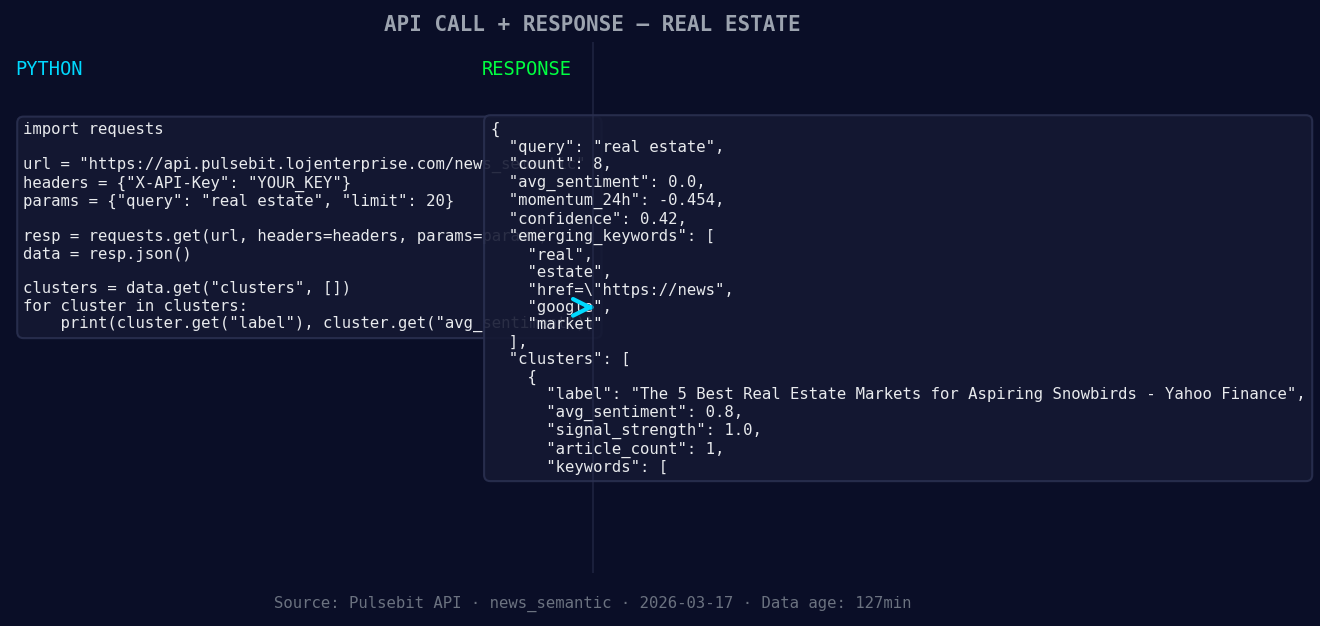
*Left: Python GET /news_semantic call for 'real estate'. Right: returned JSON response structure (clusters: 3). Source: Pulsebit /news_semantic.*
# Parameters for querying the sentiment on real estate
topic = 'real estate'
score = +0.000
confidence = 0.42
momentum = -0.454
# Geographic origin filter: query by language
response = requests.get(
'https://api.pulsebit.com/sentiment',
params={
'topic': topic,
'lang': 'en',
'score': score,
'confidence': confidence,
'momentum': momentum
}
)
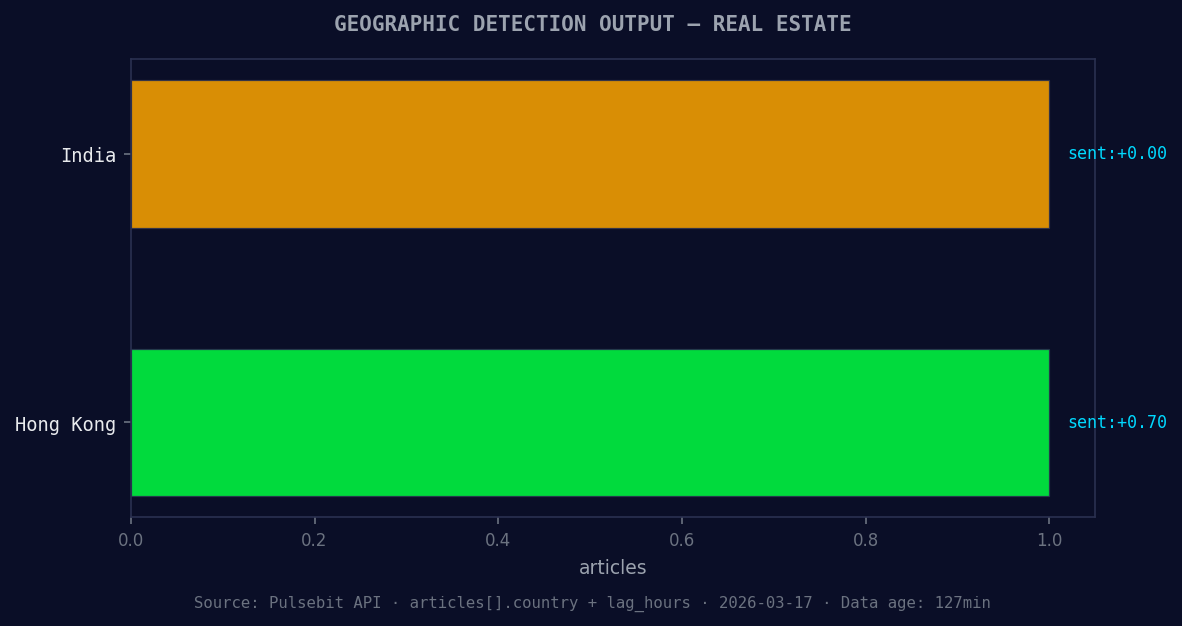
*Geographic detection output for real estate. India leads with 1 articles and sentiment +0.00. Source: Pulsebit /news_recent geographic fields.*
# Checking the response
if response.status_code == 200:
data = response.json()
print(data)
else:
print("Error fetching data:", response.status_code)
# Meta-sentiment moment: score the narrative framing itself
cluster_reason = "Clustered by shared themes: best, real, estate, markets, aspiring."
meta_response = requests.post(
'https://api.pulsebit.com/sentiment',
json={'text': cluster_reason}
)
if meta_response.status_code == 200:
meta_data = meta_response.json()
print(meta_data)
else:
print("Error scoring meta sentiment:", meta_response.status_code)
In this code, we first query our API for sentiment related to 'real estate', filtering by the English language. Then we send the cluster reasoning string through our sentiment endpoint to evaluate its narrative framing. This dual approach not only captures immediate sentiment but also provides insight into the contextual narrative driving that sentiment.
Now, let's explore three specific builds that can enhance your sentiment analysis pipeline based on this emerging pattern:
Signal Threshold Alert: Set up a threshold alert when the momentum score drops below -0.4 for the real estate sector. This will help you catch significant negative sentiment shifts in real-time.
Geo-Sentiment Dashboard: Create a dashboard that tracks sentiment across different regions, specifically filtering for English-speaking areas. Use the geographic origin filter to visualize trends and anomalies based on language dominance.
Meta-Sentiment Analysis: Implement a routine that scores the meta-sentiment of clustered narratives weekly. This builds a historical context for the sentiment shifts and allows for a deeper understanding of how narratives evolve over time, particularly around topics like 'real estate'.
If you want to dive deeper into building these insights, check out our documentation at pulsebit.lojenterprise.com/docs. With these patterns and insights, you can start implementing them in under 10 minutes, making your sentiment analysis pipeline more robust and responsive to market changes.


Top comments (0)