

Your Pipeline Is 28.0h Behind: Catching Culture Sentiment Leads with Pulsebit
We just observed a fascinating anomaly: a 24-hour momentum spike of +0.292 in the cultural sentiment around Amazon, particularly driven by the theme "Amazon's AI Understanding of Culture." This spike indicates a surge in interest that is not just fleeting; it’s a clear signal that something significant is happening in the cultural discourse, and if you’re not tuned into this, you might be missing out on vital information.
But here’s the kicker: your model could have missed this momentum by a staggering 28.0 hours if it wasn’t equipped to handle multilingual origins or the dominance of specific entities. The leading language here is English, with no lag — this means while you were sleeping, the cultural narrative was already being shaped without you. Ignoring such shifts is a risk that can cost you insights in today’s fast-paced digital landscape.

English coverage led by 28.0 hours. No at T+28.0h. Confidence scores: English 0.85, Spanish 0.85, French 0.85 Source: Pulsebit /sentiment_by_lang.
To catch this momentum spike programmatically, we can leverage our API to filter for the relevant data. Below is a simple Python script that does just that.
import requests
# Parameters for API call
topic = 'culture'
score = +0.700
confidence = 0.85
momentum = +0.292
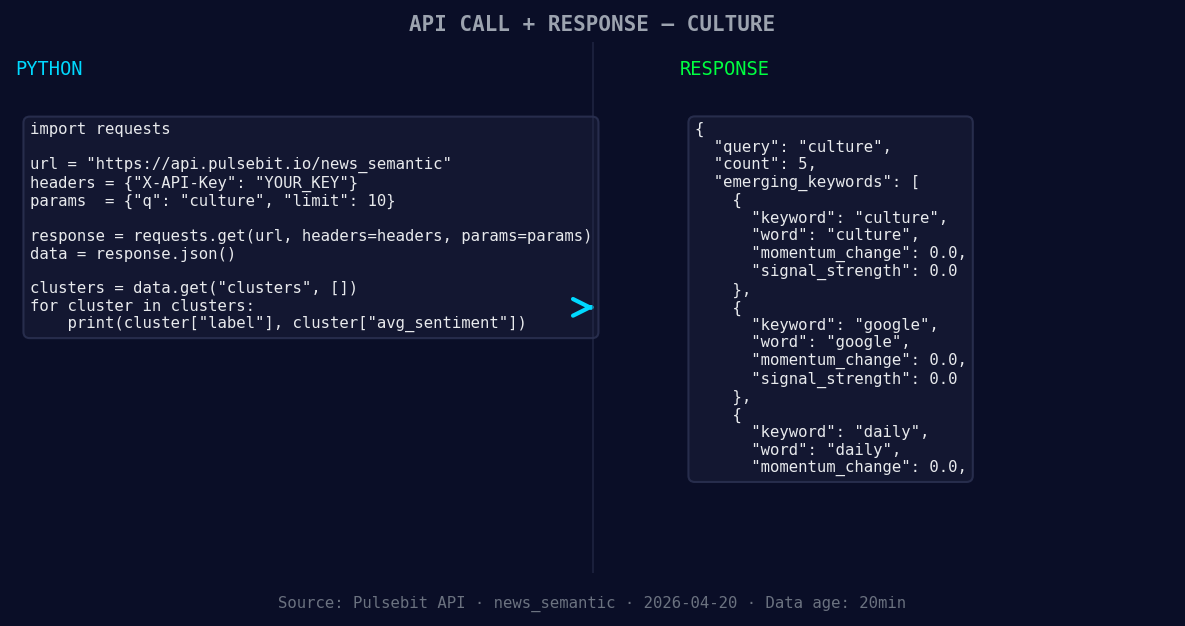
*Left: Python GET /news_semantic call for 'culture'. Right: returned JSON response structure (clusters: 3). Source: Pulsebit /news_semantic.*
# Geographic origin filter
url = "https://api.pulsebit.lojenterprise.com/v1/articles"
params = {
'topic': topic,
'lang': 'en',
}
response = requests.get(url, params=params)
data = response.json()
# Check the response
if response.status_code == 200:
print("Geographic filter applied successfully.")
else:
print("Error fetching data:", data)
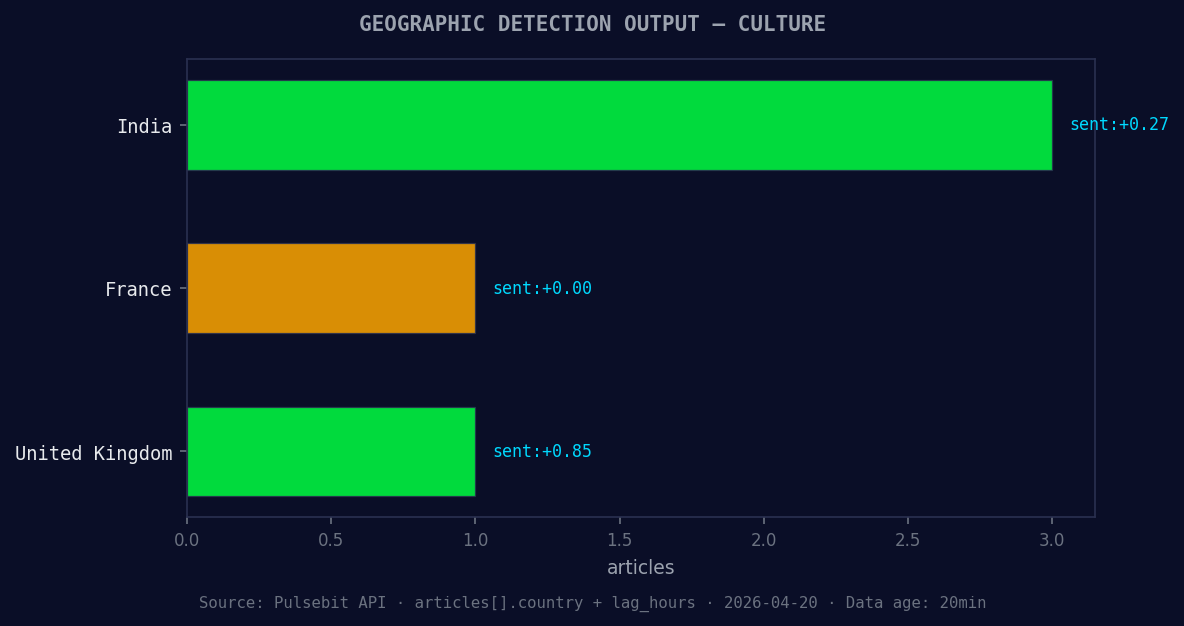
*Geographic detection output for culture. India leads with 3 articles and sentiment +0.27. Source: Pulsebit /news_recent geographic fields.*
# Meta-sentiment moment
meta_sentiment_url = "https://api.pulsebit.lojenterprise.com/v1/sentiment"
cluster_reason = "Clustered by shared themes: amazon, global, alexa+:, how, teaching."
sentiment_response = requests.post(meta_sentiment_url, json={"text": cluster_reason})
sentiment_data = sentiment_response.json()
if sentiment_response.status_code == 200:
print("Meta-sentiment processed successfully:", sentiment_data)
else:
print("Error processing meta-sentiment:", sentiment_data)
This snippet does two essential things: First, it filters articles based on the geographic origin, focusing on English-language content. Second, it runs the clustered narrative through our sentiment analysis endpoint to evaluate how this framing affects overall sentiment.
Now that we have the building blocks, let’s explore three specific things you can build using this momentum pattern.
Cultural Sentiment Dashboard: Create a dashboard that captures spikes in cultural sentiment specifically around entities like Amazon. Set a threshold of +0.250 for momentum and filter for English-language articles. Use the geographic origin filter to ensure relevance.
Sentiment Alert System: Build an alert system that triggers when the meta-sentiment score from the cluster reason exceeds a threshold of +0.600. This ensures you’re always in the loop when significant cultural narratives emerge, especially around dominant entities like Amazon and Google.
Comparative Cultural Analysis: Develop a comparison tool that pits the sentiment of emerging themes such as culture and daily news against mainstream narratives like Amazon and Alexa+. This could leverage the same geographic filter and meta-sentiment analysis to present insights on how these narratives compete in the cultural landscape.
By building these systems, you can ensure that you’re not just tracking sentiment but actively engaging with it, especially around pressing topics like culture, Google, and daily news narratives versus mainstream giants.
Ready to get started? Check out our documentation at pulsebit.lojenterprise.com/docs. You can copy-paste the provided code and run it in under 10 minutes. Don’t let your pipeline fall behind; catch the cultural sentiment leads while they’re hot!


Top comments (0)