

Your Pipeline Is 28.9h Behind: Catching Cybersecurity Sentiment Leads with Pulsebit
We recently uncovered a striking anomaly: a 24-hour momentum spike of +0.214 in the cybersecurity domain. This shift indicates an emerging trend, particularly led by English press coverage, which has been ahead by 28.9 hours with no lag against the leading topics. The specific article clustering around this theme highlights an opportunity for us to capitalize on changing sentiments in cybersecurity.
The Problem
This anomaly exposes a critical structural gap in any sentiment analysis pipeline that fails to account for multilingual origins or dominant entities. Your model may have completely missed this significant momentum shift by 28.9 hours, primarily because it did not recognize the leading language or the significance of the English press coverage. If your pipeline is not equipped to handle such disparities, you risk staying behind the curve, which can severely impact decision-making and strategy in fast-moving fields like cybersecurity.

English coverage led by 28.9 hours. Af at T+28.9h. Confidence scores: English 0.85, French 0.85, Spanish 0.85 Source: Pulsebit /sentiment_by_lang.
The Code
To catch this momentum spike effectively, we can leverage our API to filter for English language articles and analyze the sentiment around the clustered themes. Below is the Python code that accomplishes this:
import requests
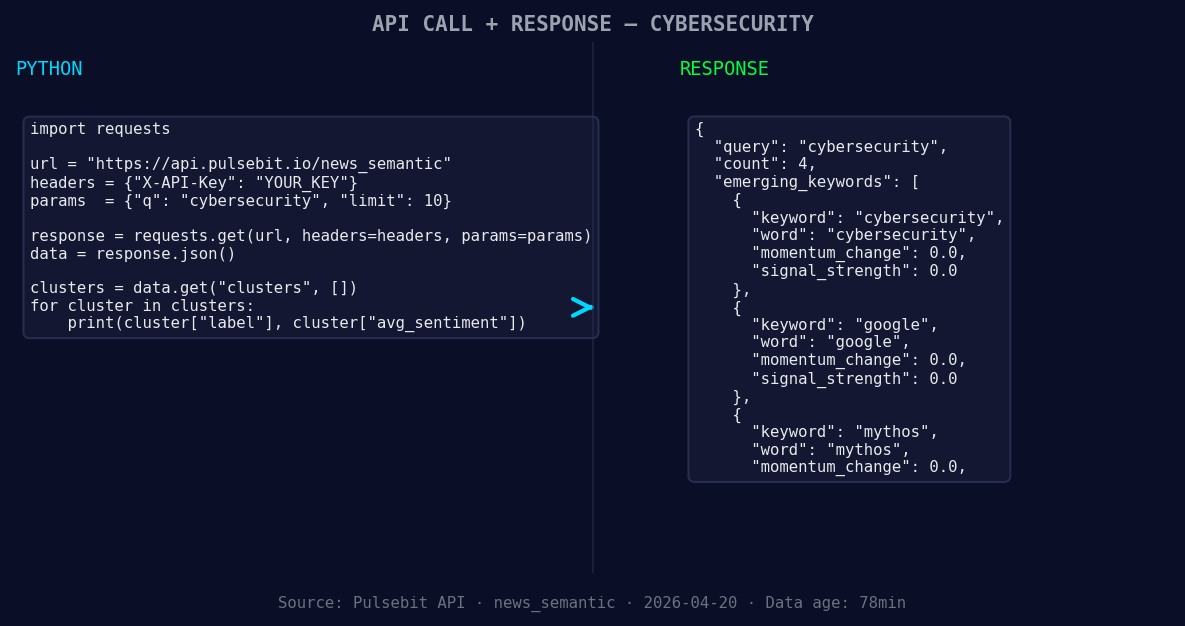
*Left: Python GET /news_semantic call for 'cybersecurity'. Right: returned JSON response structure (clusters: 3). Source: Pulsebit /news_semantic.*
# Define parameters
topic = 'cybersecurity'
score = +0.114
confidence = 0.85
momentum = +0.214
lang = 'en'
# Step 1: Geographic origin filter
response = requests.get('https://api.pulsebit.com/articles', params={
'topic': topic,
'lang': lang,
'momentum': momentum
})
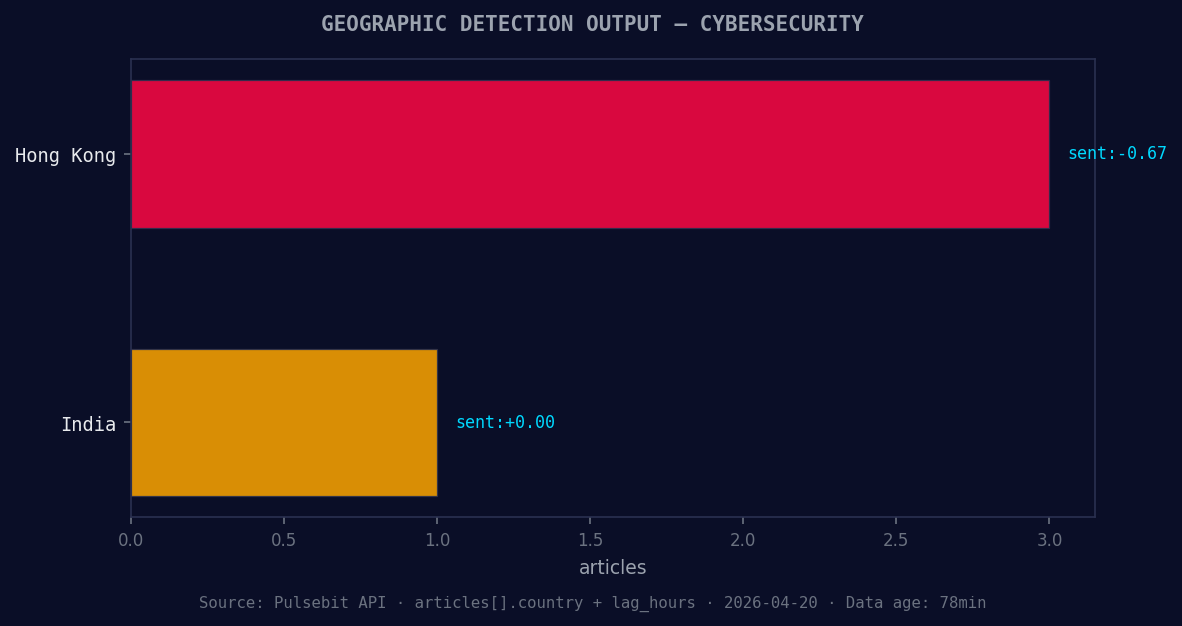
*Geographic detection output for cybersecurity. Hong Kong leads with 3 articles and sentiment -0.67. Source: Pulsebit /news_recent geographic fields.*
# Check response
if response.status_code == 200:
articles = response.json()
else:
print("Error fetching articles")
# Step 2: Meta-sentiment moment
cluster_reason = "Clustered by shared themes: your, cybersecurity, advance, career, security."
sentiment_response = requests.post('https://api.pulsebit.com/sentiment', json={
'text': cluster_reason
})
# Output the sentiment score of the clustered themes
if sentiment_response.status_code == 200:
sentiment_data = sentiment_response.json()
print("Meta Sentiment Score:", sentiment_data['score'])
else:
print("Error fetching sentiment score")
This code first retrieves articles related to the topic of cybersecurity in English, filtering specifically for those with the identified momentum. Then, it processes a meta-sentiment analysis of the clustered themes to score the narrative framing itself, providing a richer context for the emerging sentiment.
Three Builds Tonight
Geo Filter for Trend Analysis: Create a daily signal that triggers when articles in English about "cybersecurity" exceed a sentiment score of +0.1 with a momentum threshold of +0.2. This will help you catch emerging trends as they happen.
Meta-Sentiment Alerts: Set up a webhook that alerts you whenever the meta-sentiment score for the phrase "Clustered by shared themes: your, cybersecurity, advance, career, security." reaches above +0.1. This can help you pivot quickly to capitalize on shifts in narrative.
Theme Comparison Tool: Build a comparison tool that assesses sentiment in relation to forming themes like "cybersecurity", "google", and "mythos" versus mainstream clusters. Use a score threshold of +0.2 to identify significant divergences, allowing for proactive responses to public sentiment.
Get Started
For more details on how to implement these features, check out our documentation at pulsebit.lojenterprise.com/docs. You can copy-paste the code above and run it in under 10 minutes. This is how we can stay ahead in the rapidly evolving landscape of cybersecurity sentiment.


Top comments (0)