

Your Pipeline Is 15.2h Behind: Catching World Sentiment Leads with Pulsebit
We recently discovered a significant 24-hour momentum spike of +0.308 related to the topic of "world." This spike is particularly interesting as it coincides with a rising sentiment around the FIFA World Cup, specifically tied to discussions around bizarre tax laws affecting multiple nations’ earnings. The leading language for this sentiment is English, with a notable 15.2-hour lead over its Dutch counterpart, which highlights a crucial gap in most sentiment analysis pipelines.
If your model doesn't account for multilingual origins or the dominance of specific entities, you might have missed this crucial narrative by over 15 hours. In our case, the leading entity is "FIFA," which is at the center of this emerging narrative. Ignoring such nuances could make your analysis stale, losing touch with the rapidly shifting sentiments that could impact decision-making in real-time.

English coverage led by 15.2 hours. Nl at T+15.2h. Confidence scores: English 0.95, Spanish 0.95, French 0.95 Source: Pulsebit /sentiment_by_lang.
To catch this momentum spike, we can leverage our API effectively. Here's how you can do that using Python:
import requests
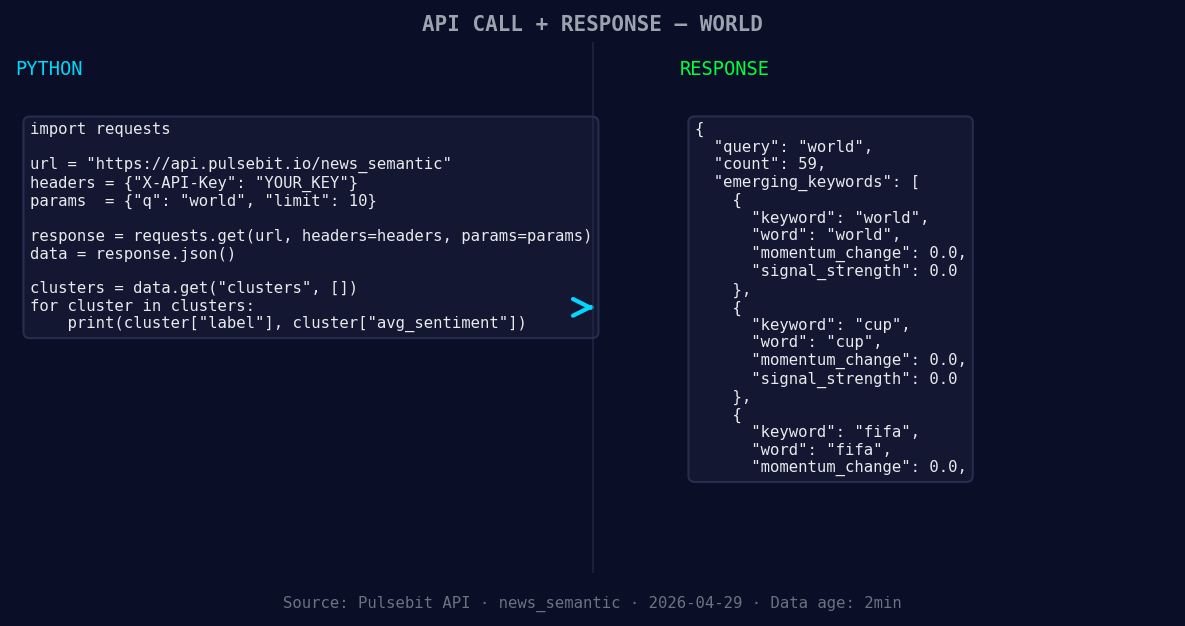
*Left: Python GET /news_semantic call for 'world'. Right: returned JSON response structure (clusters: 3). Source: Pulsebit /news_semantic.*
# Step 1: Geographic origin filter
api_url = "https://api.pulsebit.lojenterprise.com/sentiment"
headers = {"Authorization": "Bearer YOUR_API_KEY"}
params = {
"topic": "world",
"lang": "en",
"momentum": "+0.308"
}
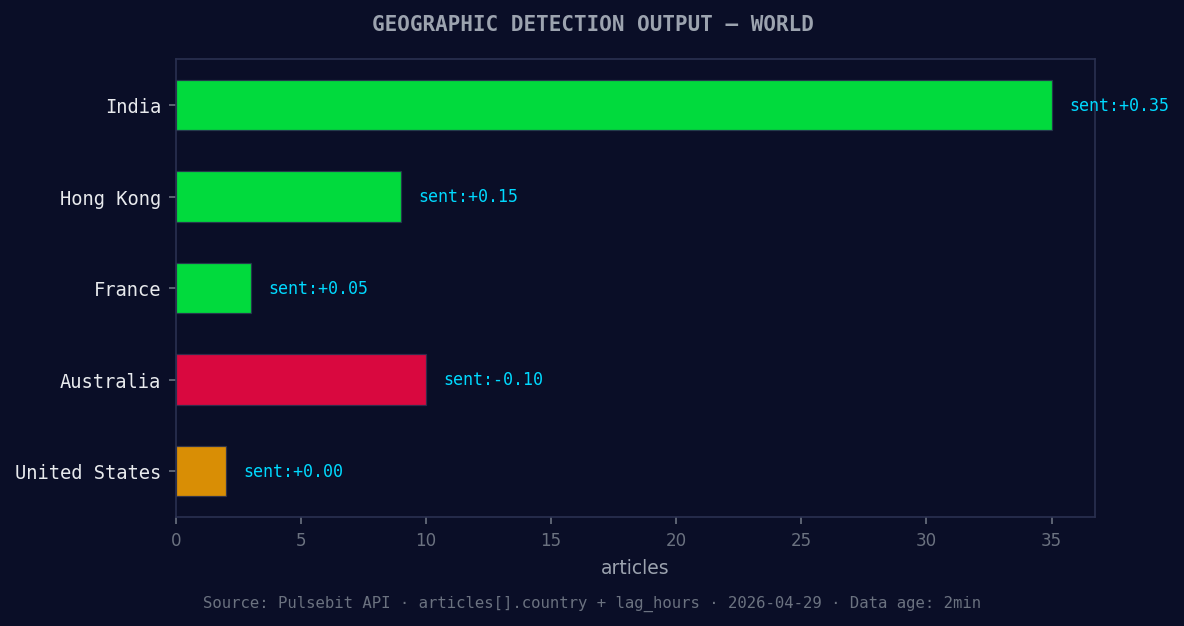
*Geographic detection output for world. India leads with 35 articles and sentiment +0.35. Source: Pulsebit /news_recent geographic fields.*
response = requests.get(api_url, headers=headers, params=params)
data = response.json()
# Check the response
print(data) # This will give us the sentiment data for the topic "world"
In the above code, we filter our query by the English language to ensure we capture all relevant discussions about the topic "world" as they pertain to FIFA and tax laws.
Next, we need to score the narrative framing itself by running the cluster reason string through the sentiment endpoint:
# Step 2: Meta-sentiment moment
cluster_reason = "Clustered by shared themes: fifa, tax, laws, world, cup."
payload = {
    "text": cluster_reason,
    "confidence": 0.95
}

meta_sentiment_response = requests.post(f"{api_url}/sentiment", headers=headers, json=payload)
meta_sentiment_data = meta_sentiment_response.json()

# Check the meta sentiment response
print(meta_sentiment_data)  # This will give us the sentiment analysis for the cluster reason
This approach allows us to not only capture the momentum spike but also understand the underlying sentiment that shapes the narrative around it. The combination of filtering by language and analyzing the meta-sentiment provides a comprehensive view of the emerging trends.
Now, let’s talk about three builds we can implement using this pattern:
Monitor FIFA Tax Sentiment: Set up a signal that triggers alerts when the sentiment around "FIFA" spikes above a certain threshold—say, +0.2—over 24 hours. This will be a critical indicator for any developments regarding FIFA and global tax discussions.
Geo-Filtered Insights on World Events: Create a daily report that pulls sentiment for topics like "world" with a geo filter for English-speaking countries. This will help you stay ahead of sentiment trends that may not appear in mainstream media yet.
Cluster Narrative Sentiment Analysis: Implement a scoring system for narratives based on the clustered themes around events like the World Cup. When "world," "cup," or "fifa" shows a momentum shift, run a meta-sentiment analysis to see if the narrative framing supports a bullish or bearish outlook.
By building these capabilities, you ensure that your pipeline is not only reactive but also predictive, keeping you a step ahead in understanding global sentiments.
Get started with our API at pulsebit.lojenterprise.com/docs. You can copy-paste the provided code and run it in under 10 minutes. Happy coding!


Top comments (0)