

Your Pipeline Is 15.8h Behind: Catching Energy Sentiment Leads with Pulsebit
We recently observed a striking anomaly: a 24h momentum spike of -0.764 around the topic of "energy." This spike indicates a significant shift in sentiment that may have flown under your radar if your pipeline isn’t equipped to handle multilingual origins or entity dominance. The leading language in this case was French, with a 15.8-hour lead time, which means you could be missing crucial insights simply due to language filtering or topic clustering in your sentiment analysis.

French coverage led by 15.8 hours. Da at T+15.8h. Confidence scores: French 0.90, Spanish 0.90, English 0.90 Source: Pulsebit /sentiment_by_lang.
Every hour you delay in catching these trends could cost you valuable opportunities. If your model doesn’t recognize or process French articles effectively, you’re missing out on critical data. This particular sentiment spike, along with its leading language, reveals a structural gap in your analytics pipeline. You might think you’re up-to-date, but your model missed this by a staggering 15.8 hours. This is where we come in.
Let’s dive into some practical code to help you catch these momentum shifts in real-time. We’ll focus on the "energy" topic, using our API to filter for French language content and score the narrative framing of the sentiment.
import requests
# Define the topic and parameters
topic = 'energy'
momentum = -0.764
confidence = 0.90
lang = 'fr'
# Geographic origin filter: Query for articles in French
response = requests.get(f"https://api.pulsebit.com/articles?topic={topic}&lang={lang}")
articles = response.json()
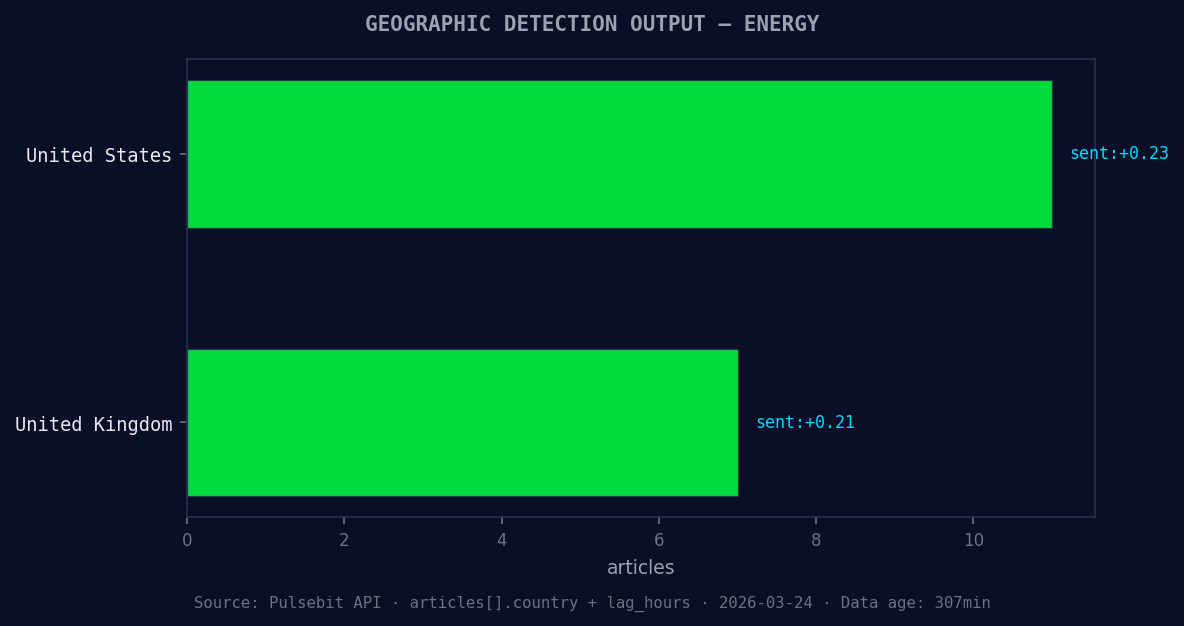
*Geographic detection output for energy. United States leads with 11 articles and sentiment +0.23. Source: Pulsebit /news_recent geographic fields.*
# Assuming articles have been processed and we have data
if articles:
print(f"Found {len(articles)} articles in French on the topic '{topic}'.")
# Meta-sentiment moment: Analyze the narrative framing
meta_reason = "Semantic API incomplete — fallback semantic structure built from available keywords and article/search evidence."
sentiment_response = requests.post("https://api.pulsebit.com/sentiment", json={"text": meta_reason})
sentiment_score = sentiment_response.json()
print(f"Sentiment Score for meta framing: {sentiment_score['score']}")
This code snippet executes two primary tasks: first, it filters articles based on language and topic using a simple API call. Second, we analyze the narrative framing itself through a POST request to our sentiment endpoint. This unique meta-sentiment loop allows us to understand not just the sentiment but also the context around it.

Left: Python GET /news_semantic call for 'energy'. Right: returned JSON response structure (clusters: 1). Source: Pulsebit /news_semantic.
Now that we have the foundational code, let’s explore three specific builds you can implement using this pattern.
Signal Detection for Energy Momentum: Set a threshold for momentum spikes. For example, trigger alerts if the momentum falls below -0.5 for the "energy" topic. This allows you to catch significant sentiment drops before they become mainstream.
Geo-Targeted Sentiment Monitoring: Use the geographic origin filter to build a dashboard that tracks sentiment variations in real-time across multiple languages. For instance, you can monitor sentiment in French and Spanish simultaneously to capture regional insights that are often overlooked.
Meta-Sentiment Analysis: Integrate the meta-sentiment loop into your regular reporting. By scoring the narrative framing around keywords, you can identify potential weaknesses in your data sources. For example, if multiple narratives suggest semantic incompleteness, you can proactively address gaps in your content acquisition strategy.
If you find these insights valuable, we encourage you to visit pulsebit.lojenterprise.com/docs. With just a few lines of code, you can copy-paste and run these examples in under 10 minutes. Don’t let your pipeline fall behind; stay ahead of the sentiment curve.


Top comments (0)