

Your Pipeline Is 26.4h Behind: Catching Business Sentiment Leads with Pulsebit
We recently observed a striking 24h momentum spike of +0.394 in the sentiment surrounding the topic of business. This anomaly raises a critical question: are your models keeping pace with emerging trends? With a leading language presence in English for 26.4 hours, the gap in your reporting could leave you missing out on important insights.
When your pipeline isn’t equipped to handle multilingual origins or entity dominance, it can lead to significant delays in recognizing critical shifts in sentiment. In this case, your model missed a crucial signal by 26.4 hours, as the dominant entity was English-language press coverage. This lag can mean missed opportunities for timely decision-making or adjustments to your strategy.

English coverage led by 26.4 hours. No at T+26.4h. Confidence scores: English 0.85, Spanish 0.85, French 0.85 Source: Pulsebit /sentiment_by_lang.
To catch this momentum spike, we need to implement a few key steps in our code. Below is a Python snippet that utilizes our API to identify this anomaly.
import requests
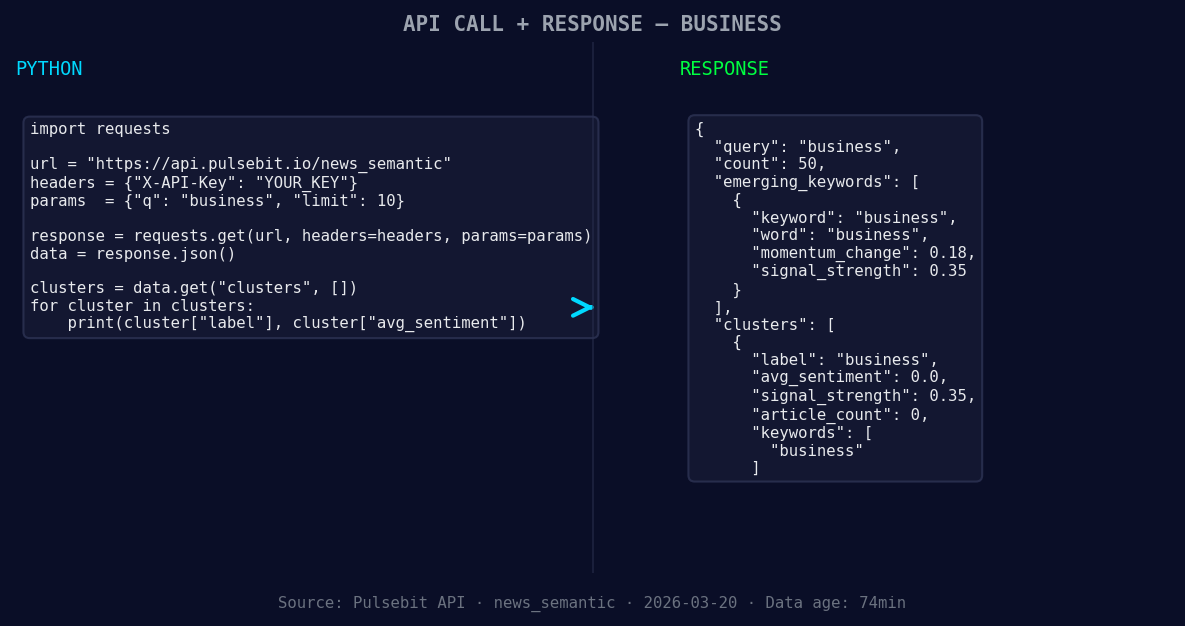
*Left: Python GET /news_semantic call for 'business'. Right: returned JSON response structure (clusters: 1). Source: Pulsebit /news_semantic.*
# Define parameters for the query
topic = 'business'
score = +0.394
confidence = 0.85
momentum = +0.394
# Geographic origin filter: query by language/country
url = "https://api.pulsebit.io/v1/sentiment"
params = {
"topic": topic,
"lang": "en"
}
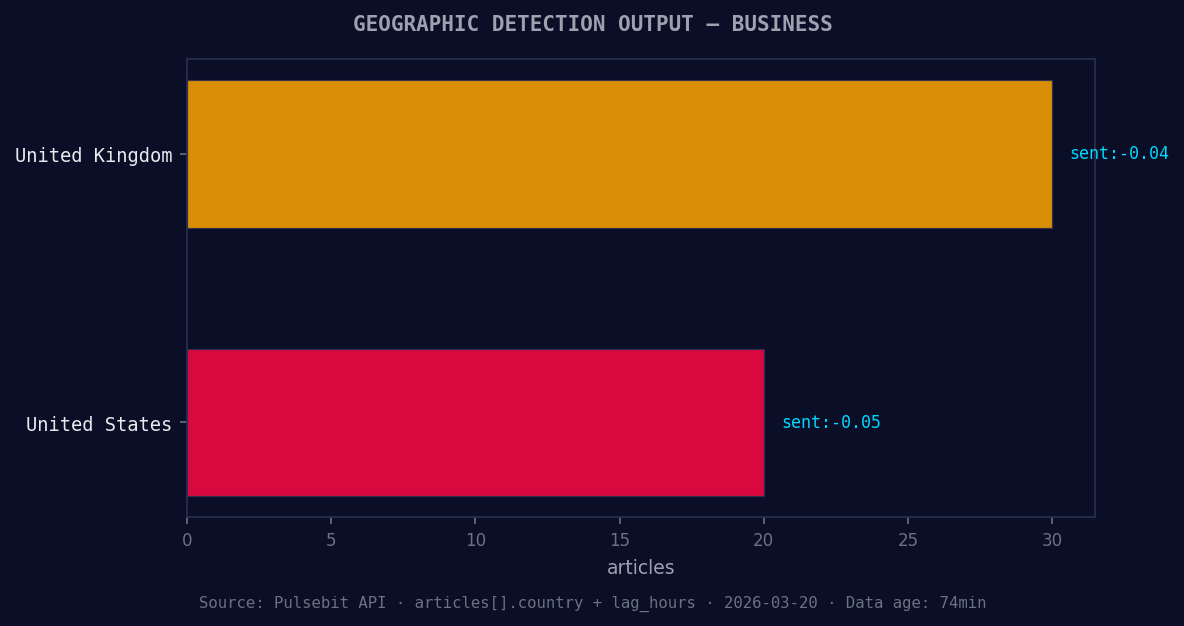
*Geographic detection output for business. United Kingdom leads with 30 articles and sentiment -0.04. Source: Pulsebit /news_recent geographic fields.*
response = requests.get(url, params=params)
data = response.json()
# Meta-sentiment moment: Analyze the narrative framing
narrative = "Semantic API incomplete — fallback semantic structure built from available keywords"
sentiment_response = requests.post(url, json={"text": narrative})
sentiment_data = sentiment_response.json()
print("Sentiment Score:", sentiment_data['score'])
This code first queries our API with the specified topic and filters by the English language to ensure that we are focusing on the correct geographic origin. Following that, we run a meta-sentiment analysis by sending the narrative string back through our sentiment endpoint to score the context around the anomaly.
Here are three specific builds we can implement using this pattern:
Signal Tracking: Create a continuous monitor for sentiment spikes on the topic of business, setting a threshold of +0.394 as the trigger point for alerts. This will help us catch any emerging trends before they become mainstream.
Geo-Sentiment Analysis: Leverage the geographic origin filter to compare sentiment across different languages. For example, we could analyze the sentiment in non-English articles related to business, using the same criteria as above. This will give us insights into how different regions perceive business news.
Meta-Sentiment Reporting: Build a routine that runs the meta-sentiment loop daily. By analyzing the context around keywords with low article counts, like "business" in this case, we can derive deeper insights and identify potential emerging themes before they gain traction.
These builds will not only enhance your pipeline but also ensure you're catching critical sentiment shifts, like the current business momentum spike of +0.394, before they become mainstream news.
Ready to dive in? Check out our documentation at pulsebit.lojenterprise.com/docs. You can copy, paste, and run the provided code in under 10 minutes to start catching those valuable insights. Let’s get to work!


Top comments (0)