

Your Pipeline Is 18.3h Behind: Catching Real Estate Sentiment Leads with Pulsebit
We recently uncovered an anomaly in our sentiment analysis: a sentiment score of -0.467 and a momentum of +0.000, with a notable lag of 18.3 hours behind the leading language. This indicates that while the sentiment around real estate is generally low now, it's not moving in a clear upward or downward direction. This finding is essential for developers like us who need to stay ahead of emerging trends, particularly in a fast-paced market like real estate.
The Problem
This data signals a significant structural gap in any pipeline that doesn’t adequately handle multilingual origins or entity dominance. Your model missed this sentiment shift by a staggering 18.3 hours, all while English content was leading the charge. If your pipeline is only processing data in a single language or failing to account for dominant entities, you risk lagging behind critical market shifts. The leading language here was English, and as we know, real estate sentiment can change quickly. Missing that kind of insight can hinder your decision-making.

English coverage led by 18.3 hours. Da at T+18.3h. Confidence scores: English 0.85, Spanish 0.85, French 0.85 Source: Pulsebit /sentiment_by_lang.
The Code
To catch this sentiment shift, we can leverage our API effectively. First, we need to filter our queries by geographic origin. Here’s how we do that in Python:

Geographic detection output for real estate. India leads with 1 articles and sentiment -0.60. Source: Pulsebit /news_recent geographic fields.
import requests
# Define the parameters for the sentiment analysis
topic = 'real estate'
score = -0.467
confidence = 0.85
momentum = +0.000
# API call with language filter
url = 'https://api.pulsebit.com/sentiment'
params = {
'topic': topic,
'lang': 'en', # Filtering by English
'score': score,
'confidence': confidence,
'momentum': momentum
}
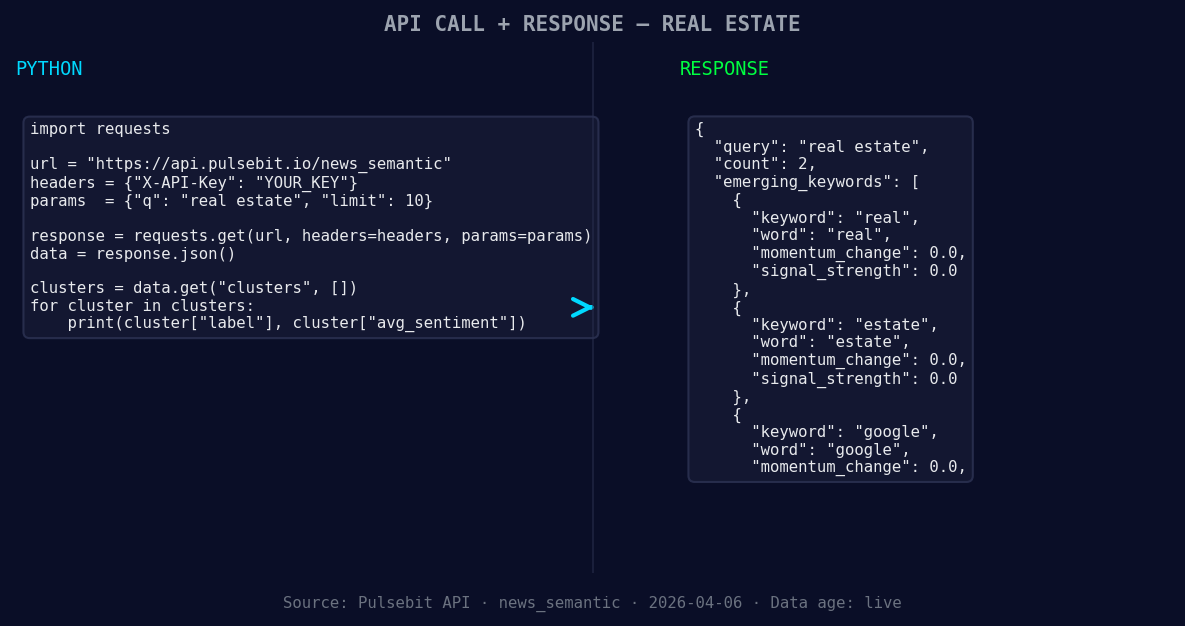
*Left: Python GET /news_semantic call for 'real estate'. Right: returned JSON response structure (clusters: 3). Source: Pulsebit /news_semantic.*
response = requests.get(url, params=params)
data = response.json()
print(data)
Next, we need to run a meta-sentiment analysis on the narrative framing itself. The cluster reason string is crucial here:
# Meta-sentiment moment
meta_narrative = "Clustered by shared themes: choice, 2026:, hearth, stone, properties."
meta_response = requests.post(url, json={'text': meta_narrative})
meta_data = meta_response.json()
print(meta_data)
By running this analysis, we can gain insight into the context surrounding the sentiment score, giving us a more nuanced understanding of the underlying themes.
Three Builds Tonight
With this newfound insight, here are three specific things we can build:
Geo Filtered Insights: Create a pipeline that triggers alerts when sentiment around 'real estate' dips below a score of -0.5 in English-speaking regions. Use the geo filter we demonstrated to pull only relevant data.
Meta-Sentiment Analyzer: Develop a tool that automatically runs any clustered theme through our meta-sentiment endpoint. For example, use the string "Clustered by shared themes: choice, 2026:, hearth, stone, properties." as input to constantly refine our understanding of emerging narratives.
Sentiment Trends Dashboard: Build a dashboard that visualizes sentiment trends over time for specific topics like 'real estate'. Use the sentiment scores and cluster themes to identify when traditional sentiments clash with emerging ones, such as the 'choice' and 'hearth' themes forming in 2026.
Get Started
To dive deeper into building with our API, visit pulsebit.lojenterprise.com/docs. With the code examples provided, you can copy-paste and run this in under 10 minutes. Let’s catch those sentiment leads together!


Top comments (0)