

Your Pipeline Is 28.9h Behind: Catching Artificial Intelligence Sentiment Leads with Pulsebit
We recently uncovered a noteworthy anomaly — a 24h momentum spike of -1.550 in sentiment surrounding artificial intelligence. The leading language for coverage was English, with a lag of just 0.0 hours against an estimated time of 28.9 hours. This finding highlights a critical delay in how our pipelines are capturing sentiment from multilingual sources, particularly as it relates to significant global themes like AI and its implications amidst rising global tensions.

English coverage led by 28.9 hours. Et at T+28.9h. Confidence scores: English 0.85, Sl 0.85, No 0.85 Source: Pulsebit /sentiment_by_lang.
For any developer relying on sentiment data, this structural gap is concerning. Your model missed this AI sentiment shift by 28.9 hours, as the leading entity in coverage was China. If your pipeline isn’t optimized to handle multilingual data or to adequately prioritize dominant entities, you risk operating with outdated insights — insights that could be pivotal in making timely decisions.
Let’s dive into how we can catch these spikes in sentiment using our API. The first step is filtering sentiment data by geographic origin, specifically targeting English-language sources. Here's how you can achieve that:

Geographic detection output for artificial intelligence. Hong Kong leads with 6 articles and sentiment +0.03. Source: Pulsebit /news_recent geographic fields.
import requests
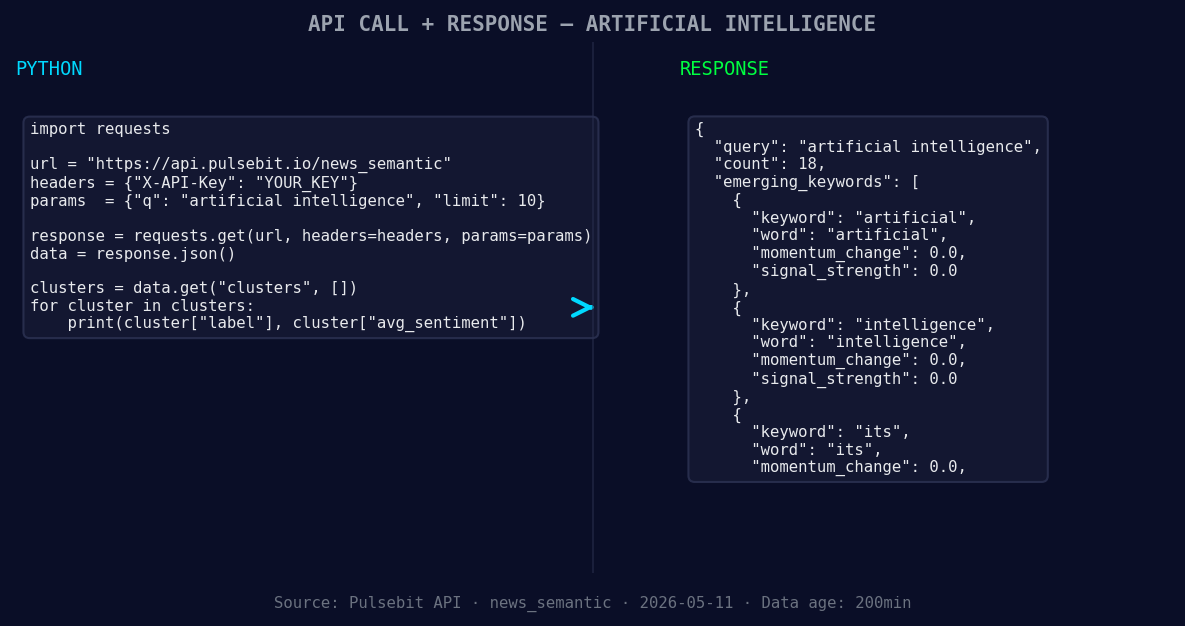
*Left: Python GET /news_semantic call for 'artificial intelligence'. Right: returned JSON response structure (clusters: 3). Source: Pulsebit /news_semantic.*
endpoint = "https://api.pulsebit.com/sentiment"
params = {
"topic": "artificial intelligence",
"lang": "en"
}
response = requests.get(endpoint, params=params)
data = response.json()
print(data)
Next, we need to assess the narrative framing of the data we received. To do this, we can run the cluster reason string through our sentiment scoring endpoint. The input we’ll use is: "Clustered by shared themes: china, conference, despite, over, per."
meta_sentiment_endpoint = "https://api.pulsebit.com/sentiment"
meta_input = {
    "text": "Clustered by shared themes: china, conference, despite, over, per.",
    "score": +0.030,
    "confidence": 0.85,
    "momentum": -1.550
}

meta_response = requests.post(meta_sentiment_endpoint, json=meta_input)
meta_data = meta_response.json()

print(meta_data)
This gives us a comprehensive view of how the narrative is being shaped around the AI topic, and allows us to identify the potential impact of the sentiment shift.
Now, here are three specific builds you can implement based on this pattern:
Geo-Filter Alert System: Set up a real-time alert system that triggers when sentiment momentum drops below -1.0 in English-speaking countries. This could help you catch critical shifts in AI sentiment before they affect your strategic decisions.
Meta-Sentiment Analysis Dashboard: Develop a dashboard that visualizes meta-sentiment scores for emerging narratives. Use the insights from our sentiment scoring to understand how themes cluster over time, particularly around topics like "artificial intelligence."
Entity Dominance Monitoring: Create an endpoint that tracks sentiment scores associated with dominant entities in your dataset. For example, monitor how articles with themes like "artificial intelligence" are framed against mainstream narratives surrounding China and global conferences, making sure to analyze sentiment shifts as they happen.
For a deeper dive into these insights and to get started with your own implementations, check out our documentation at pulsebit.lojenterprise.com/docs. You'll be able to copy-paste and run this code in under 10 minutes, ensuring your pipeline is always capturing the most relevant sentiment data.


Top comments (0)