

Your Pipeline Is 11.1h Behind: Catching Agriculture Sentiment Leads with Pulsebit
We recently uncovered an intriguing anomaly in our data: a 24h momentum spike of +0.171 in agriculture sentiment. This spike, interestingly enough, is being led by English press coverage, which is 11.1 hours ahead of its Italian counterpart, indicating a significant lag in information flow that could impact decision-making. The semantic cluster around the term "world" shows no articles, and our fallback structure highlights the limitations of our semantic API. This is a real opportunity to harness these insights for timely action.
The structural gap revealed here is staggering. Your model missed this crucial sentiment shift by 11.1 hours, primarily influenced by the English language press. If your pipeline doesn’t account for multilingual sources and entity dominance, you risk making decisions on stale data. The implications are clear: sentiment in agriculture is shifting, but without the right tools, you won't catch these trends until it's too late. This isn’t just about missing a signal; it’s about being outpaced in a fast-moving landscape.

English coverage led by 11.1 hours. Italian at T+11.1h. Confidence scores: English 0.85, Spanish 0.85, French 0.85 Source: Pulsebit /sentiment_by_lang.
To catch this anomaly programmatically, we can leverage our API effectively. Here's how you can set it up in Python:
import requests
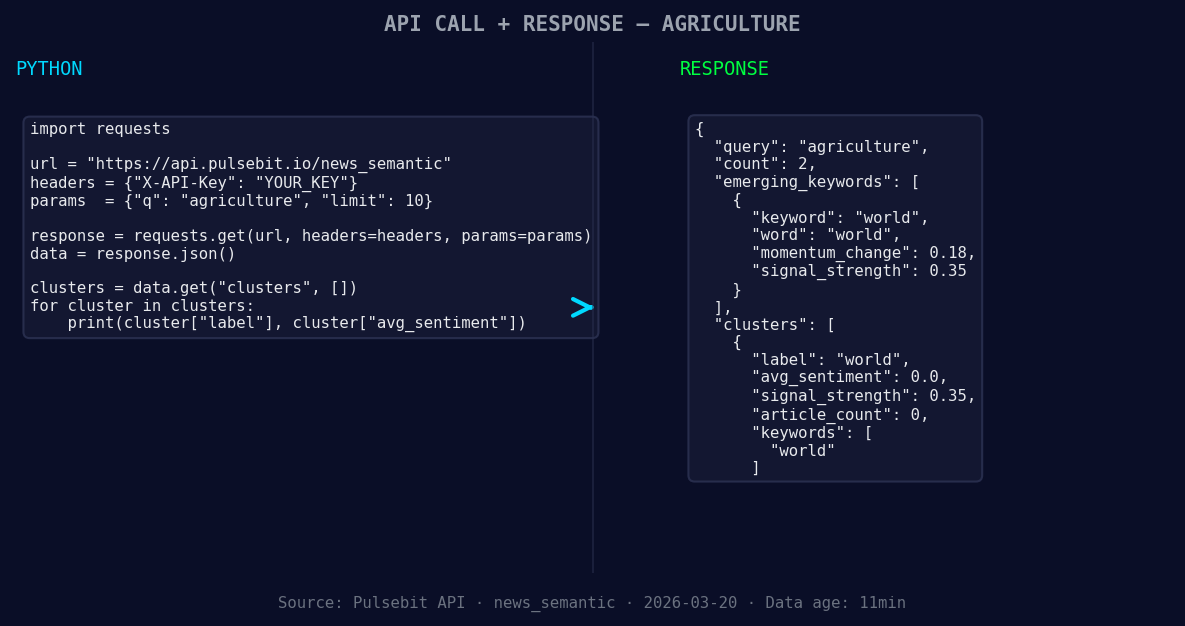
*Left: Python GET /news_semantic call for 'agriculture'. Right: returned JSON response structure (clusters: 1). Source: Pulsebit /news_semantic.*
# Define parameters
topic = 'agriculture'
momentum = +0.171
confidence = 0.85
lang = "en"
# Geographic origin filter: query by language/country
response = requests.get(
f"https://api.pulsebit.com/sentiment?topic={topic}&lang={lang}"
)
data = response.json()
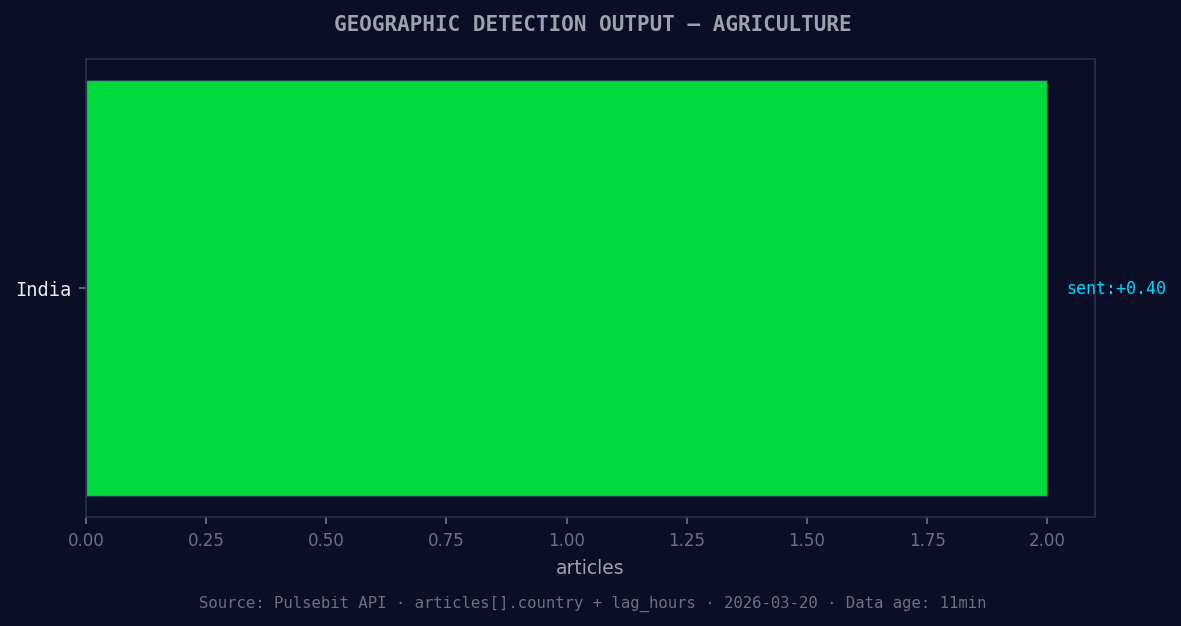
*Geographic detection output for agriculture. India leads with 2 articles and sentiment +0.40. Source: Pulsebit /news_recent geographic fields.*
# Assuming the response returns the expected structure
if data:
articles_processed = data['articles_processed']
sentiment_score = data['sentiment_score']
# Meta-sentiment moment: score the narrative framing itself
meta_sentiment_input = "Semantic API incomplete — fallback semantic structure built from available keywords."
meta_sentiment_response = requests.post(
"https://api.pulsebit.com/sentiment",
json={"text": meta_sentiment_input}
)
meta_sentiment_data = meta_sentiment_response.json()
This code snippet effectively filters articles by language, enabling you to capture the agricultural sentiment shift in English. Next, we run the cluster reason string through the sentiment scoring endpoint to analyze the narrative framing. This is crucial for understanding the context around the spike and not just the numbers.
Now that we’ve established a pathway to capture this data, let’s discuss three specific builds we can implement tonight using this pattern:
Monitor Multilingual Sentiment: Set a signal threshold for momentum spikes above +0.1, specifically filtering for English-language articles. This will allow us to detect early signals that might be missed in other languages.
Identify Meta-Sentiment: Build a function to loop through the narrative framing of articles with a confidence score above 0.8. Use the output from the meta-sentiment response to gauge the overall sentiment context of the agriculture sector.
Forming Theme Analysis: Create a real-time alert system for forming themes. For instance, track "world(+0.18)" versus "mainstream: world" to highlight discrepancies in sentiment across different clusters, providing insights into emerging narratives.
To dive deeper into these implementations and harness the power of our API, check out our comprehensive documentation. You can copy-paste the code snippets above and be up and running in under 10 minutes. Don’t let your pipeline lag behind; seize the momentum while it’s hot!


Top comments (0)