

Your Pipeline Is 15.4h Behind: Catching Startups Sentiment Leads with Pulsebit
We recently noticed an intriguing anomaly in our data: a 24h momentum spike of -0.255 for the topic of startups. This is significant, especially considering that the leading language for this spike is French, which peaked 15.4 hours ago. If you’re not accounting for multilingual sentiment in your data pipeline, you might find yourself missing critical insights like this one.

French coverage led by 15.4 hours. Da at T+15.4h. Confidence scores: French 0.90, English 0.90, Spanish 0.90 Source: Pulsebit /sentiment_by_lang.
The problem here is clear: your model likely missed this momentum shift by over 15 hours simply because it didn't handle different languages or entity dominance effectively. In this case, while the dominant language was French, your analysis may have been skewed toward English or other languages, missing the nuances in sentiment from other regions. This could lead to missed opportunities or delayed reactions to emerging trends in the startup ecosystem.
To help you catch these insights, here’s a simple Python snippet that utilizes our API to query for this specific anomaly. We’ll focus on the French language to filter the data effectively.
import requests
# Define parameters
topic = 'startups'
score = -0.255
confidence = 0.90
momentum = -0.255
# API call to fetch data based on language filter
url = "https://api.pulsebit.com/v1/sentiment"
params = {
"topic": topic,
"momentum": momentum,
"confidence": confidence,
"lang": "fr"
}
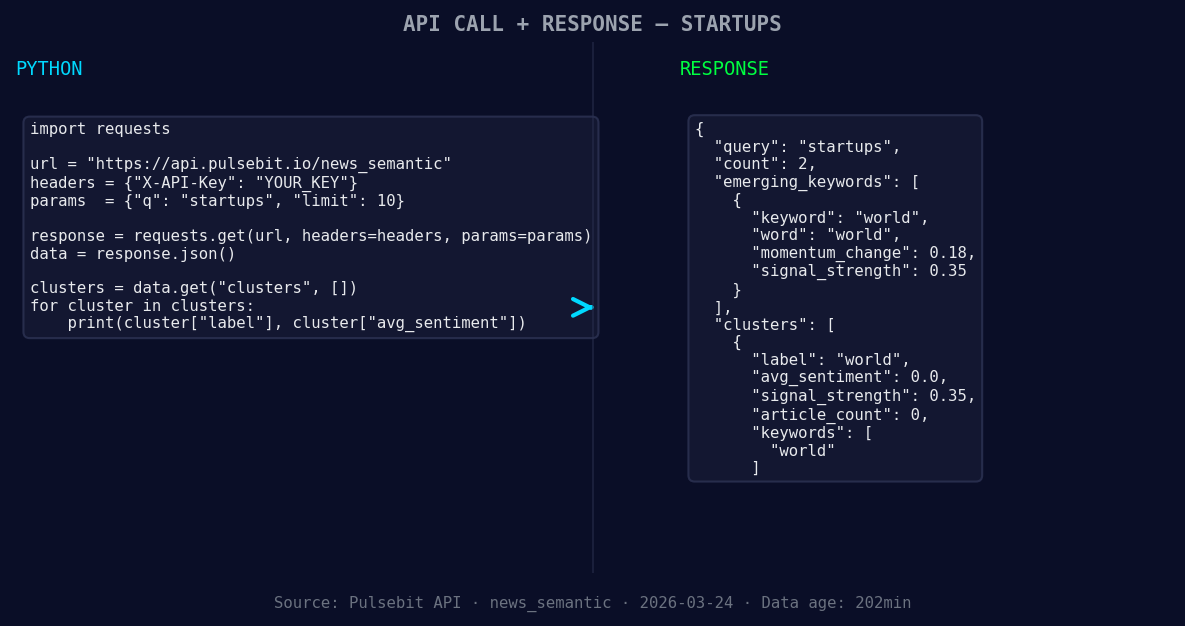
*Left: Python GET /news_semantic call for 'startups'. Right: returned JSON response structure (clusters: 1). Source: Pulsebit /news_semantic.*
response = requests.get(url, params=params)
data = response.json()
print(data)
Next, we need to run the cluster reason string through our sentiment scoring endpoint to assess the narrative framing itself. This is a crucial step because it allows us to evaluate the context surrounding this spike. Here’s how to do it:
# Meta-sentiment moment
meta_sentiment_input = "Semantic API incomplete — fallback semantic structure built from available keywords and article/search evidence."
meta_sentiment_url = "https://api.pulsebit.com/v1/sentiment"
meta_response = requests.post(meta_sentiment_url, json={"text": meta_sentiment_input})
meta_data = meta_response.json()
print(meta_data)
By applying these two steps, you ensure your pipeline is not just reacting but is proactive in identifying sentiment shifts across different languages.
Now, let's explore three specific builds you can implement with this pattern.
Geo-Sentiment Analysis: Use our API to capture sentiment data specifically in the French language. Set a threshold for momentum spikes over -0.2, allowing you to detect significant shifts in sentiment among French startups. This can provide early insights into trends before they hit mainstream channels.
Meta-Sentiment Scoring: Implement a routine that checks the framing of narratives around your topics. Set up a scheduled job that pulls in keywords with negative sentiment and runs them through the meta-sentiment loop. This will help you understand the reasons behind negativity, such as the one we observed: "Semantic API incomplete."
Cluster Analysis with Forming Themes: Create a clustering algorithm that compares forming themes like "world(+0.18)" against mainstream narratives. Use our API to pull in articles and cluster them based on sentiment, allowing you to identify emerging stories that are under the radar yet gaining traction in specific demographics.
We encourage you to get started with these insights. You can find our documentation here. With just a few lines of code, you can replicate these insights and run them in under 10 minutes.
This is just a glimpse of the potential you can unlock when you integrate multilingual sentiment into your analysis. Let’s stay ahead of the curve together!

Geographic detection output for startups. Hong Kong leads with 2 articles and sentiment +0.38. Source: Pulsebit /news_recent geographic fields.


Top comments (0)