

Your Pipeline Is 11.7h Behind: Catching Healthcare Sentiment Leads with Pulsebit
We’ve just uncovered something interesting: a sentiment score of -0.072 and momentum holding steady at +0.000. This is particularly striking when you consider the leading language is English, with a 11.7-hour lead time over German reporting. The cluster narrative is focused on "US Freezes Medicare Enrollment for New Providers," which provides a clear insight into emerging healthcare trends.
But here's the catch: If your pipeline doesn't effectively manage multilingual data or account for entity dominance, you could be missing critical insights. Your model missed this by 11.7 hours, meaning you might not have the full picture of the sentiment evolving around healthcare in the U.S. This lag could lead to missed opportunities or misinformed decisions based on outdated information.

English coverage led by 11.7 hours. German at T+11.7h. Confidence scores: English 0.90, Spanish 0.90, French 0.90 Source: Pulsebit /sentiment_by_lang.
Let’s dive into how we can catch this data spike using our API.
import requests
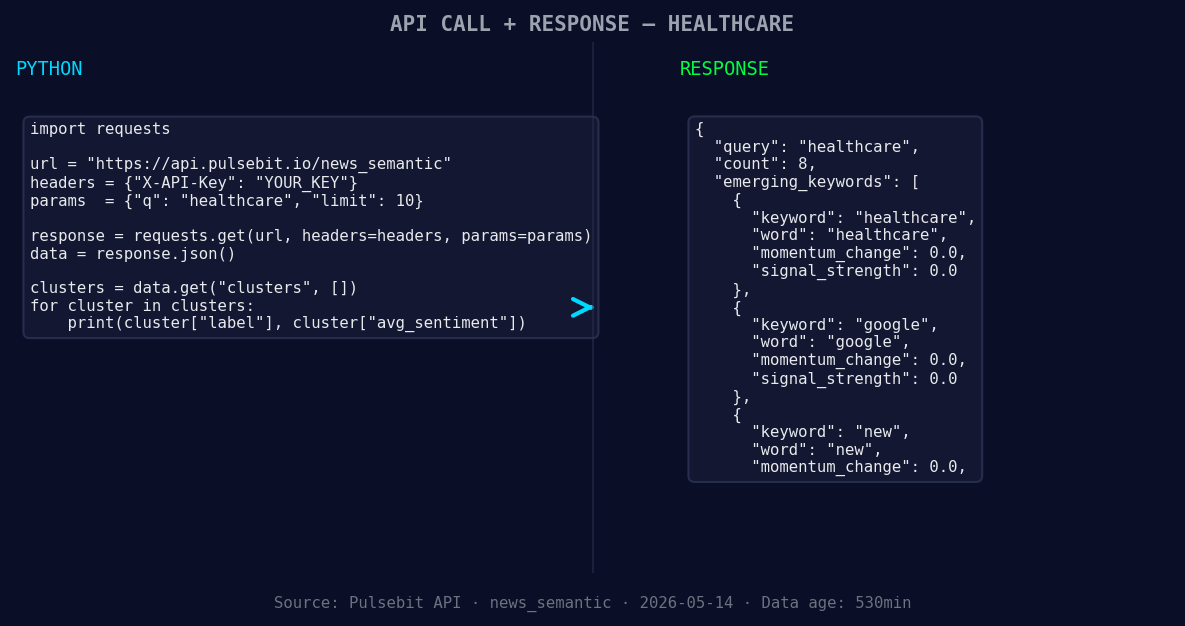
*Left: Python GET /news_semantic call for 'healthcare'. Right: returned JSON response structure (clusters: 3). Source: Pulsebit /news_semantic.*
# Step 1: Geographic Origin Filter
response = requests.get(
"https://api.pulsebit.com/v1/sentiment",
params={
"topic": "healthcare",
"lang": "en",
"score": -0.072,
"confidence": 0.90,
"momentum": +0.000
}
)
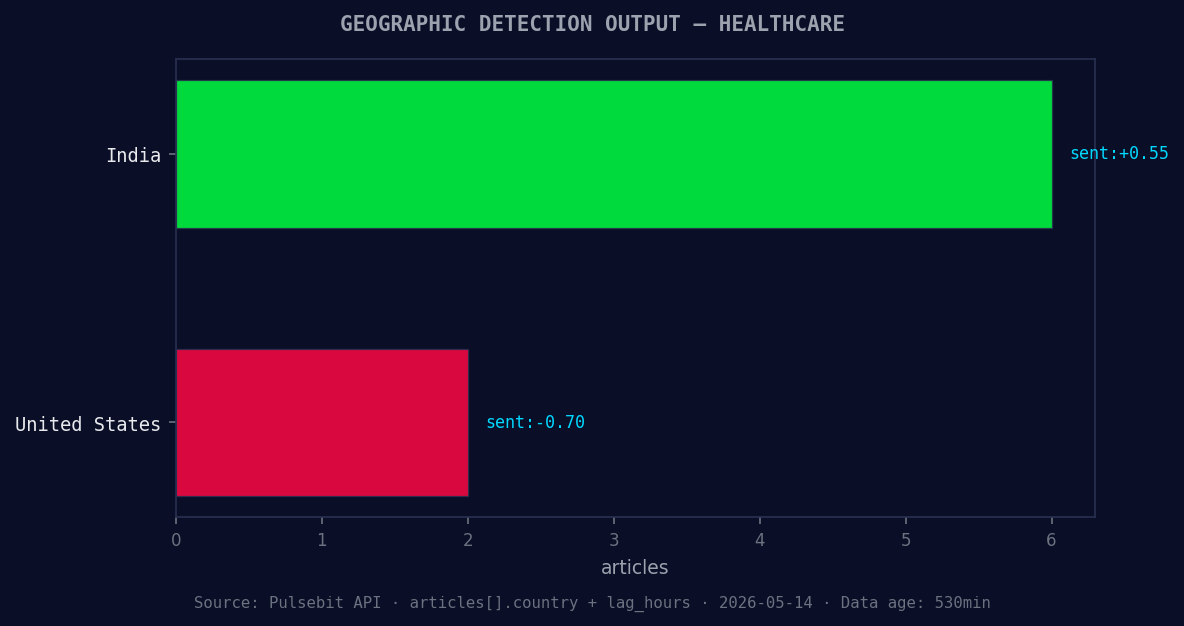
*Geographic detection output for healthcare. India leads with 6 articles and sentiment +0.55. Source: Pulsebit /news_recent geographic fields.*
print(response.json())
# Step 2: Meta-Sentiment Moment
cluster_reason = "Clustered by shared themes: stops, enrolling, new, hospices, home."
meta_sentiment_response = requests.post(
"https://api.pulsebit.com/v1/sentiment",
json={"text": cluster_reason}
)
print(meta_sentiment_response.json())
In the above code, we first fetch the sentiment data for the topic "healthcare," ensuring that we filter by the English language. The momentum and score parameters are set to reflect the anomaly we found. After bringing in the core sentiment data, we send the cluster reason string through another call to our sentiment endpoint, providing a deeper context for the emerging narrative.
Now, what can we build with this discovery? Here are three actionable ideas:
Geographic Sentiment Dashboard: Use the geo filter to create a real-time dashboard that visualizes sentiment trends in healthcare across different languages. You can set a threshold of a sentiment score below -0.05 to trigger alerts for potential market shifts.
Meta-Sentiment Analyzer: Build a tool that runs cluster narratives through our sentiment endpoint every hour. If the meta-sentiment score rises above +0.05, it could signal a shift in public perception that warrants immediate attention.
Thematic Alert System: Set up an alert system that monitors forming themes like "healthcare," "google," and "new." If sentiment around these themes changes direction (e.g., sentiment shifts from 0.00 to -0.05), trigger an alert for your team to investigate further.
With these insights, you could drastically improve your responsiveness to healthcare sentiment shifts and make more informed decisions based on timely data.
If you want to get started, check our documentation at pulsebit.lojenterprise.com/docs. You can copy-paste the above code and run it in under 10 minutes to start catching sentiment shifts right away.


Top comments (0)