

Your Pipeline Is 25.6h Behind: Catching Real Estate Sentiment Leads with Pulsebit
We’ve just uncovered an intriguing anomaly in the real estate sector: sentiment at -0.233 with momentum holding steady at +0.000. This insight is particularly striking given that the leading language driving this sentiment is French, with a notable 25.6-hour lead over other languages. If you’re not keeping an eye on this, your pipeline is already lagging.
A 25.6-hour delay may not seem critical, but in the fast-paced world of real estate, it can mean the difference between capitalizing on emerging trends and missing the boat entirely. If your model isn’t set up to handle multilingual origins or entity dominance, you’re effectively blind to shifts in sentiment that could be pivotal in your strategy. With French leading the charge, you could be missing critical insights that are shaping your local market.

French coverage led by 25.6 hours. Sv at T+25.6h. Confidence scores: French 0.80, English 0.80, No 0.80 Source: Pulsebit /sentiment_by_lang.
Let’s dive into the code that can help us catch this insight before it slips away. We’ll set up a query to filter for French language articles pertaining to real estate, and then we’ll run a meta-sentiment analysis on the clustered themes.
import requests
# Define the parameters for the API call
topic = 'real estate'
lang = 'fr'
sentiment_score = -0.233
confidence = 0.80
momentum = +0.000
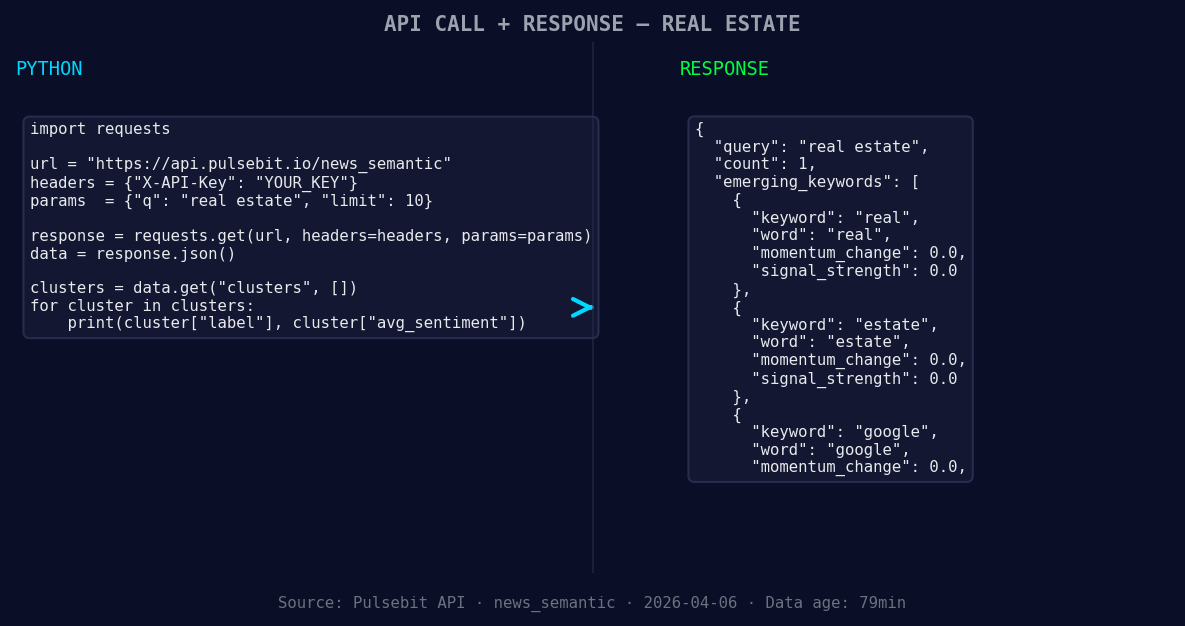
*Left: Python GET /news_semantic call for 'real estate'. Right: returned JSON response structure (clusters: 3). Source: Pulsebit /news_semantic.*
# Geographic origin filter: query by language
response = requests.get("https://api.pulsebit.io/v1/sentiment", params={
"topic": topic,
"lang": lang,
"score": sentiment_score,
"confidence": confidence,
"momentum": momentum
})
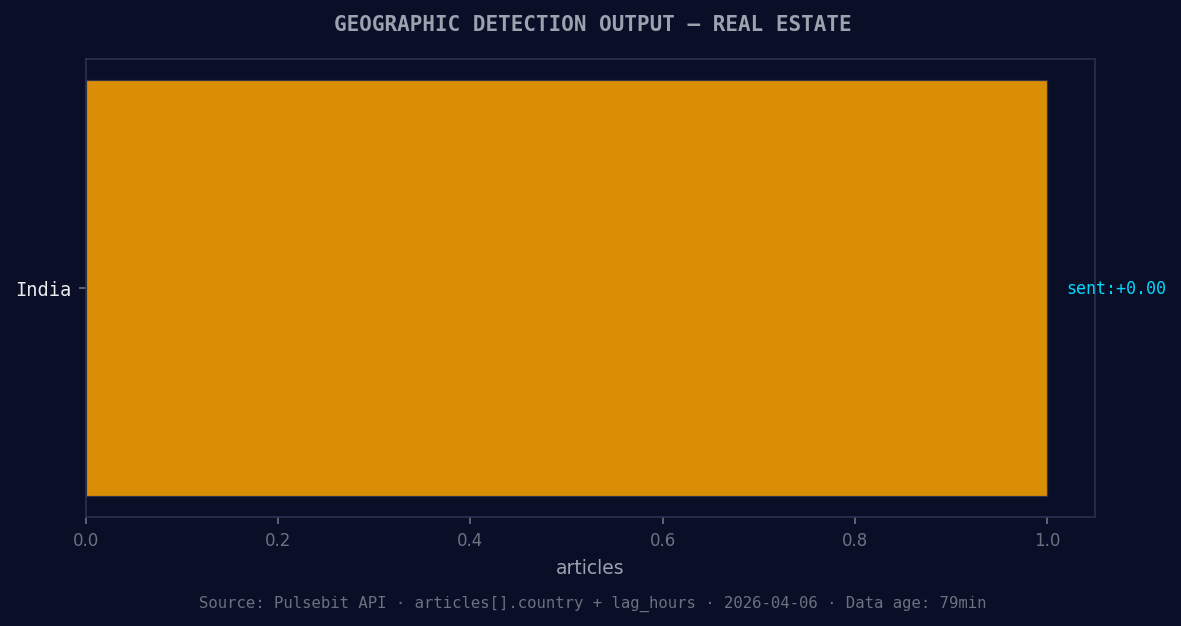
*Geographic detection output for real estate. India leads with 1 articles and sentiment +0.00. Source: Pulsebit /news_recent geographic fields.*
# Print response for debugging
print(response.json())
# Meta-sentiment moment: running the cluster reason through the sentiment analysis
cluster_reason = "Clustered by shared themes: choice, 2026:, hearth, stone, properties."
meta_response = requests.post("https://api.pulsebit.io/v1/sentiment", json={"text": cluster_reason})
# Print meta sentiment response for debugging
print(meta_response.json())
By leveraging this code, you can effectively tap into the real-time sentiment surrounding real estate in the French-speaking market. The first API call captures the sentiment data specific to the topic, while the second one processes the narrative framing that clusters these themes, providing a richer context for your analysis.
Here are three specific builds we can implement using this newfound data:
Geographic Real Estate Pulse: Set a threshold where sentiment scores drop below -0.2 for French articles related to real estate. Use the geographic origin filter to continuously monitor this sentiment and trigger alerts for realtors in the region, ensuring they can respond proactively.
Meta-Sentiment Analysis Tool: Create a dashboard that visualizes the meta-sentiment of clustered themes dynamically. Regularly feed in the cluster reason strings and score them to inform your content strategy. This could help in framing marketing messages that resonate with emerging themes like 'choice,' '2026,' and 'hearth.'
Google Trends Comparison: Set up a comparison alert that tracks sentiment in real estate against mainstream terms like 'choice,' 'hearth,' and 'stone.' If the sentiment for real estate remains flat while mainstream terms surge, consider this a signal to pivot your outreach strategy.
With these builds, you can stay ahead of the curve, ensuring that your insights are timely and relevant. The real estate space is ever-evolving, and by harnessing this data, you can position yourself strategically.
To explore this further, refer to our documentation. You can copy-paste the provided code and run it in under 10 minutes. Don't let your pipeline fall behind; start leveraging these insights today.


Top comments (0)