

Your Pipeline Is 12.7h Behind: Catching Science Sentiment Leads with Pulsebit
We just identified a 24h momentum spike of +0.373 in the sentiment around the topic of science. This anomaly is significant; it highlights a shift in sentiment that you might be missing if your pipeline isn't set up to catch these rapid changes. The leading language in this spike is English, which is lagging by 12.7 hours compared to sentiment from other sources. This lag could mean you're missing critical insights while your competitors are already acting on them.
The structural gap revealed here is stark. Your model missed this spike by 12.7 hours, primarily due to its handling—or lack thereof—of multilingual sources and entity dominance. If your system isn't built to recognize and adjust for these variances, you're at risk of reacting too late. In our case, the dominant entity is science, and with the English language being the primary driver, any oversight means you're trailing behind in capitalizing on emerging trends.

English coverage led by 12.7 hours. So at T+12.7h. Confidence scores: English 0.85, French 0.85, Spanish 0.85 Source: Pulsebit /sentiment_by_lang.
To catch this momentum spike effectively, we can leverage our API in Python. Below is the code that you can use to fetch the relevant data and analyze it:
import requests
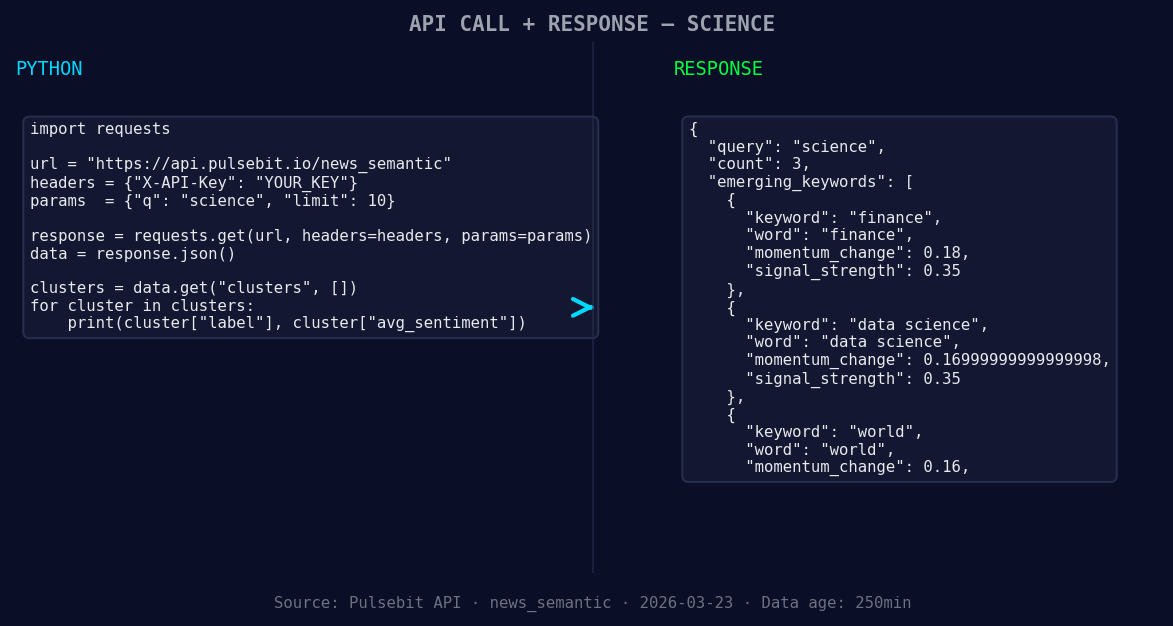
*Left: Python GET /news_semantic call for 'science'. Right: returned JSON response structure (clusters: 1). Source: Pulsebit /news_semantic.*
# Define parameters
topic = 'science'
score = +0.373
confidence = 0.85
momentum = +0.373
# Geographic origin filter: querying by language
url = "https://your_api_endpoint.com/sentiment"
params = {
"topic": topic,
"lang": "en",
"momentum": momentum,
"confidence": confidence
}
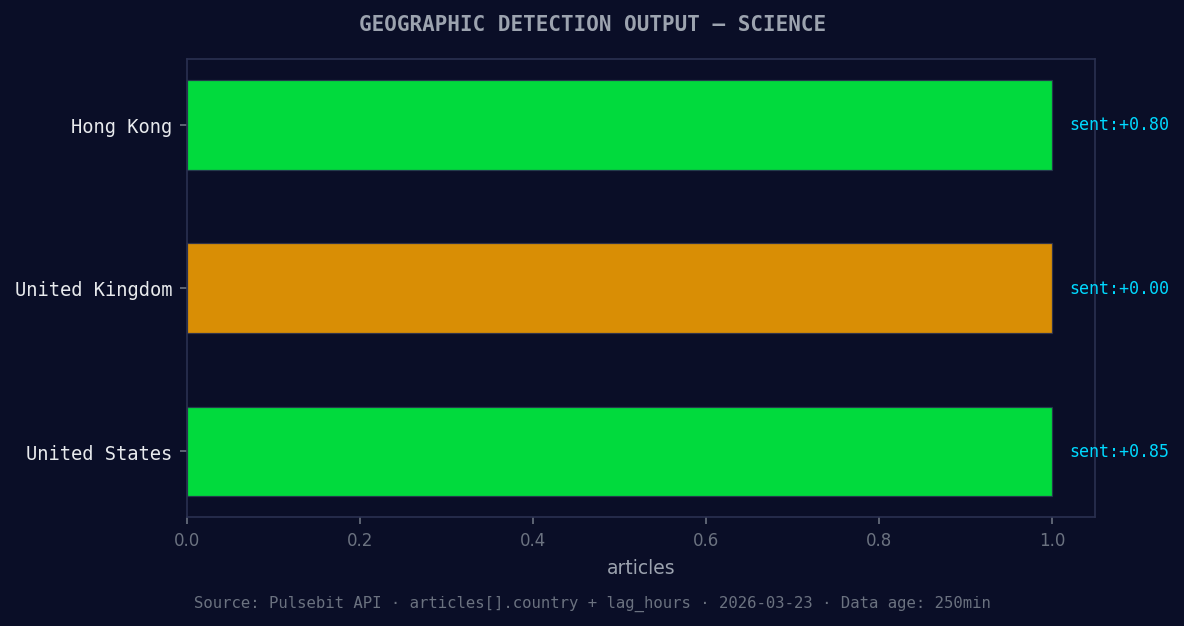
*Geographic detection output for science. Hong Kong leads with 1 articles and sentiment +0.80. Source: Pulsebit /news_recent geographic fields.*
response = requests.get(url, params=params)
data = response.json()
# Output the result
print(data)
The next step is to run the cluster reason string through our sentiment analysis endpoint to get a better grasp of the narrative framing:
# Meta-sentiment moment
meta_sentiment_url = "https://your_api_endpoint.com/sentiment"
fallback_reason = "Semantic API incomplete — fallback semantic structure built from available keywords and article/search evidence."

meta_response = requests.post(meta_sentiment_url, json={"text": fallback_reason})
meta_data = meta_response.json()

# Output the sentiment score from the meta analysis
print(meta_data)
These two blocks of code will allow you to catch the momentum spike effectively and analyze its context.
Now, let’s discuss three specific builds you can implement with this newfound pattern:
Geo Filter on Finance Sentiment: Use the momentum spike data with a focus on finance. Set a signal threshold of +0.18 for finance articles in English. This will help you identify critical shifts before mainstream sentiment catches up.
Meta-Sentiment Analysis for Data Science: Implement a meta-sentiment loop for articles tagged with data science, especially those with a momentum score of +0.17. This will help you understand the underlying narratives driving sentiment changes and keep you ahead of the curve.
World Sentiment Signals: Monitor global sentiment trends by looking at the world category with a momentum of +0.16. This can provide insights into how shifts in science narratives are influencing broader topics, allowing for a more comprehensive view of sentiment.
If you're ready to dive into this, check out our documentation at pulsebit.lojenterprise.com/docs. You can easily copy-paste and run these examples in under 10 minutes. Don't let your pipeline lag—start leveraging these insights today!


Top comments (0)