

Your Pipeline Is 29.4h Behind: Catching Travel Sentiment Leads with Pulsebit
We recently stumbled upon an eye-opening anomaly: a 24h momentum spike of +1.068 in travel sentiment. This spike wasn't just a blip; it was indicative of a significant shift in public interest, particularly in the context of summer road trips. As developers working with sentiment data, we must be laser-focused on these shifts, especially when they’re emerging trends that could redefine how we interpret and act on sentiment.
The problem here lies in the structural gaps that many sentiment analysis pipelines face, particularly those that don’t account for multilingual origins or entity dominance. Your model missed this by a staggering 29.4 hours, with English press leading the charge. If your pipeline is only processing data in one language or failing to catch emerging trends, you risk missing out on critical insights that could shape your strategy. In this case, the leading language was English, but how many other insights are slipping through the cracks in your setup?

English coverage led by 29.4 hours. Da at T+29.4h. Confidence scores: English 0.85, French 0.85, Spanish 0.85 Source: Pulsebit /sentiment_by_lang.
To catch this momentum spike, we can leverage our powerful API. Below is a Python snippet that will help you extract the necessary data. First, we’ll query the sentiment data focusing on the topic of interest, which in this case is travel, using the language filter.
import requests
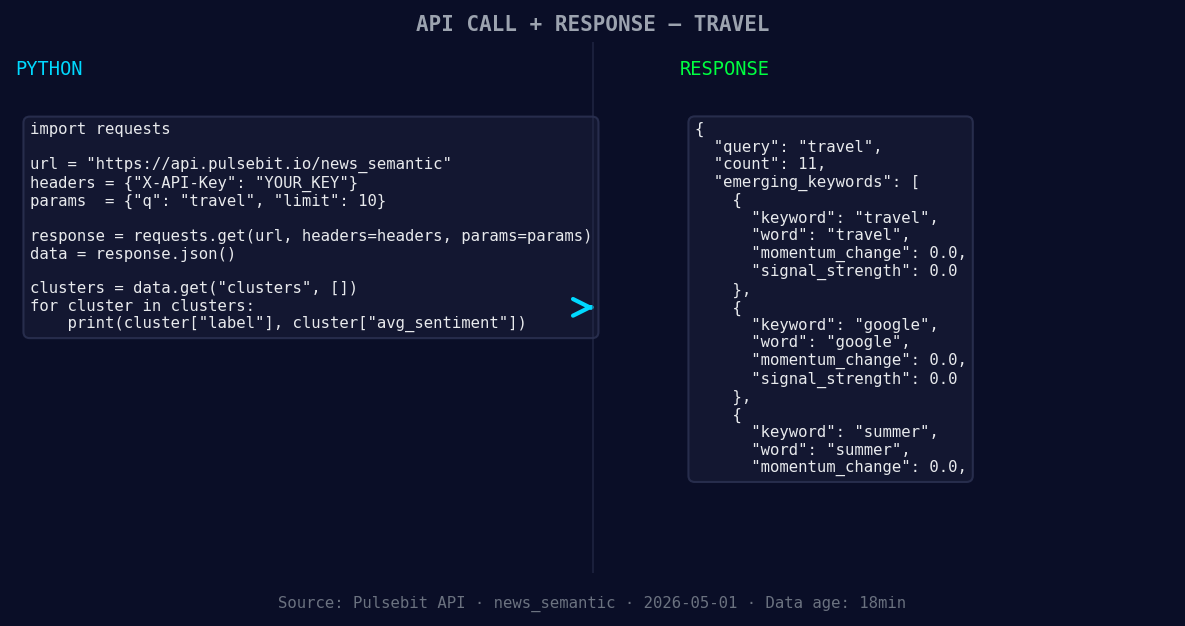
*Left: Python GET /news_semantic call for 'travel'. Right: returned JSON response structure (clusters: 3). Source: Pulsebit /news_semantic.*
# Define parameters
topic = 'travel'
score = +0.289
confidence = 0.85
momentum = +1.068
# Geographic origin filter
response = requests.get(
'https://api.pulsebit.com/sentiment',
params={
"topic": topic,
"lang": "en",
"score": score,
"confidence": confidence,
"momentum": momentum
}
)
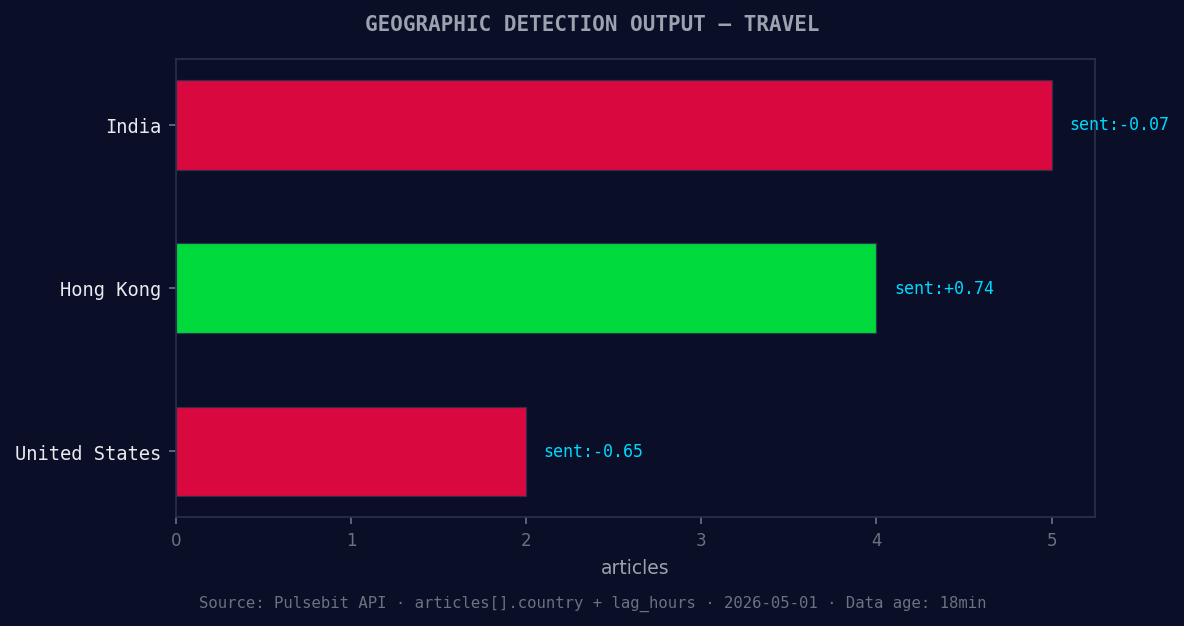
*Geographic detection output for travel. India leads with 5 articles and sentiment -0.07. Source: Pulsebit /news_recent geographic fields.*
data = response.json()
print(data)
Next, we’ll run a meta-sentiment analysis on the cluster reason string to score the narrative framing itself. This is crucial for understanding how the narrative fits within the broader context.
# Meta-sentiment moment
cluster_reason = "Clustered by shared themes: travel, goodies, aim, make, your."
meta_response = requests.post(
    'https://api.pulsebit.com/sentiment',
    json={"text": cluster_reason}
)

meta_data = meta_response.json()
print(meta_data)
The insights gained from running both segments of code will allow you to pinpoint emerging themes and sentiment shifts that can guide your strategy effectively.
Now, let’s discuss three specific builds you can implement using this pattern.
Geo-filtered Alerts: Set up an alert system that triggers when the sentiment around travel in English spikes above a threshold of +0.5. This will give you timely notifications for significant shifts.
Meta-sentiment Dashboard: Create a dashboard that visualizes the meta-sentiment scores for clustered themes, particularly focusing on rising topics like travel, summer, and related keywords. This will help you identify what narratives are gaining traction.
Forming Theme Analysis: Implement a module that analyzes forming themes, such as "travel," "google," and "summer." Set thresholds for when these themes start to diverge from their mainstream counterparts, allowing you to capture sentiment shifts early.
By integrating these builds, you’ll not only be able to act quickly on emerging trends but also refine your sentiment analysis capabilities to keep pace with the rapid changes in public sentiment.
If you’re ready to dive in, check out our documentation at pulsebit.lojenterprise.com/docs. With the code snippets provided, you can copy, paste, and run them in under 10 minutes to start catching those valuable sentiment leads.


Top comments (0)