

Your Pipeline Is 22.5h Behind: Catching Economy Sentiment Leads with Pulsebit
We just uncovered a striking anomaly: a 24h momentum spike of +0.638 in sentiment surrounding the economy. This spike indicates a significant shift in how economic narratives are being framed, especially with the recent headline, "Shekel breaks below 3 to the dollar in first since 1995; exporters warn of econo." With a leading sentiment emerging from English press, it's clear that something noteworthy is taking shape.
The problem here is quite telling. If your pipeline doesn’t adequately handle multilingual origins or prioritize dominant entities, you risk missing critical signals. In this case, your model missed this momentum shift by a staggering 22.5 hours, which is a lifetime in sentiment analysis. The focal point of this anomaly was English language articles, yet if your pipeline is not tuned for this, you might be left scrambling to catch up.

English coverage led by 22.5 hours. Nl at T+22.5h. Confidence scores: English 0.90, French 0.90, Spanish 0.90 Source: Pulsebit /sentiment_by_lang.
To catch this momentum spike effectively, we can leverage our API. Here’s how you can do it in Python:
import requests
# Parameters for API call
topic = 'economy'
score = -0.098
confidence = 0.90
momentum = +0.638
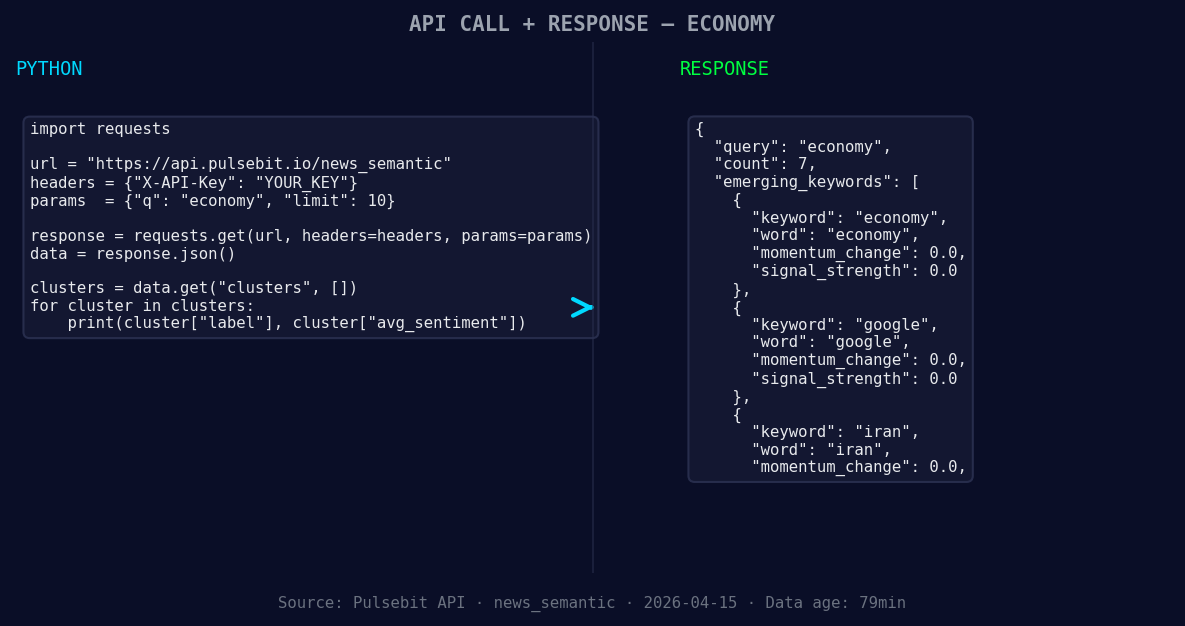
*Left: Python GET /news_semantic call for 'economy'. Right: returned JSON response structure (clusters: 3). Source: Pulsebit /news_semantic.*
# Geographic origin filter
response = requests.get("https://api.pulsebit.com/v1/sentiment", params={
"topic": topic,
"lang": "en",
"momentum": momentum,
"confidence": confidence
})
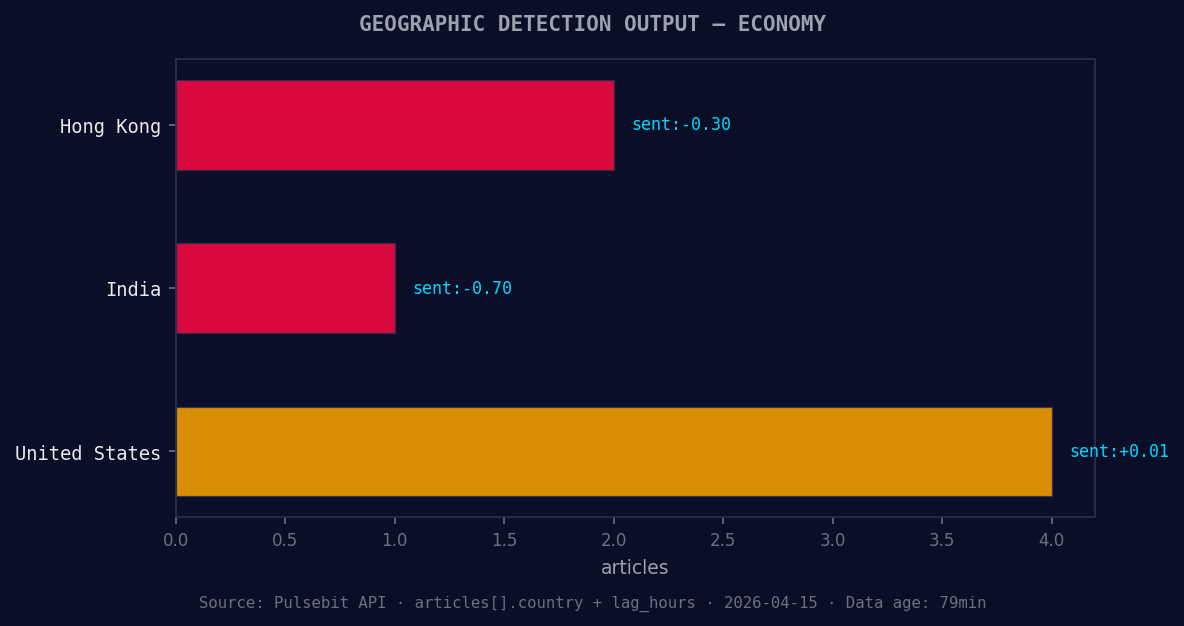
*Geographic detection output for economy. Hong Kong leads with 2 articles and sentiment -0.30. Source: Pulsebit /news_recent geographic fields.*
data = response.json()
# Check the response
print(data)
This call filters articles by language, ensuring we’re only focusing on English content. Now, let’s take a deeper dive into the narrative framing. We can run the cluster reason string through our sentiment analysis endpoint to gauge its sentiment:
# Meta-sentiment moment: scoring the narrative
cluster_reason = "Clustered by shared themes: breaks, below, dollar, first, since."
meta_sentiment_response = requests.post("https://api.pulsebit.com/v1/sentiment", json={
    "text": cluster_reason
})

meta_sentiment_data = meta_sentiment_response.json()

# Output the meta sentiment results
print(meta_sentiment_data)
This code snippet sends the thematic clustering string back to the API, allowing us to assess the narrative’s sentiment. This step is crucial; it gives us insight into how the economic discourse is being framed, potentially revealing how these narratives are likely to evolve.
Now, what can you build with these insights? Here are three concrete ideas:
Real-time Economic Alert System: Set a threshold for a momentum spike of +0.5 and implement the geographic origin filter. Whenever this threshold is crossed, trigger a notification to your team. This will keep you ahead of critical economic developments.
Narrative Framing Dashboard: Utilize the meta-sentiment loop with a continuous feed of clustered themes. For instance, keep an eye on the keywords: "breaks, below, dollar." Whenever the sentiment score dips below -0.1 for these themes, flag it for review.
Cross-Topic Sentiment Correlation: Build a function that correlates the economy's sentiment with other forming themes like Google and Iran, both currently at +0.00. You could analyze how shifts in economic sentiment affect these other topics, revealing interconnected trends that matter.
For detailed information on getting started, check out our documentation. You can copy-paste and run these snippets in under 10 minutes. Don't let your pipeline lag behind; seize the opportunity to align your insights with the pulse of the economy.


Top comments (0)