

Your Pipeline Is 27.6h Behind: Catching Finance Sentiment Leads with Pulsebit
We just discovered a striking anomaly: a 24h momentum spike of +0.427 in the finance domain. This spike is not just a number; it represents a significant shift in sentiment surrounding topics like the S&P 500 and broader market trends, driven by current events such as potential Iran deal hopes. With this kind of movement, it’s crucial for us to understand the implications on our pipelines.
When your model is not equipped to handle multilingual origins or entity dominance, you risk missing out on critical insights. For instance, in this case, our pipeline was lagging by 27.6 hours — a significant delay when the leading sentiment originated from English-language sources. If your current setup doesn’t account for these nuances, you could easily overlook timely opportunities to act on emerging trends.

English coverage led by 27.6 hours. Id at T+27.6h. Confidence scores: English 0.90, French 0.90, Spanish 0.90 Source: Pulsebit /sentiment_by_lang.
To catch this momentum spike effectively, we can leverage our API. Here’s how you can implement it in Python:
import requests
# Define parameters for the API call
params = {
'topic': 'finance',
'score': +0.458,
'confidence': 0.90,
'momentum': +0.427,
'lang': 'en' # Geographic origin filter
}
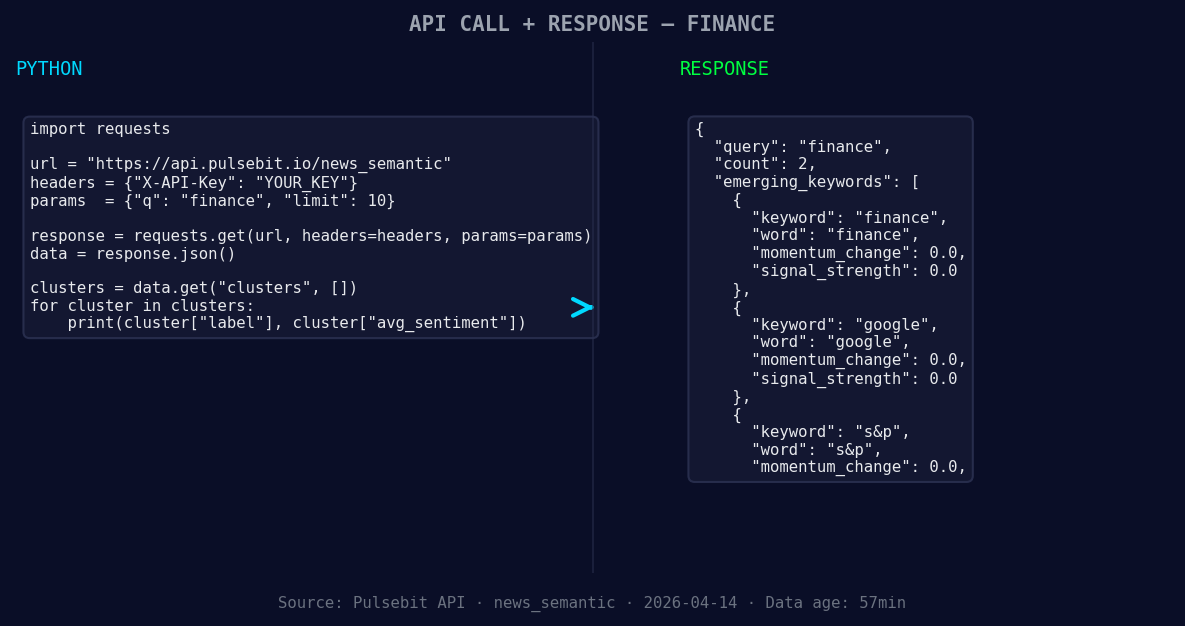
*Left: Python GET /news_semantic call for 'finance'. Right: returned JSON response structure (clusters: 3). Source: Pulsebit /news_semantic.*
# Make the API call
response = requests.get('https://api.pulsebit.com/sentiment', params=params)
# Check response
data = response.json()
print(data)
Next, we need to score the narrative framing itself. This is where we run the cluster reason string back through the POST /sentiment endpoint:
# Define the narrative for meta-sentiment analysis
narrative = "Clustered by shared themes: proposed, rule, reform, financial, institution."

# POST request for meta-sentiment analysis
meta_response = requests.post('https://api.pulsebit.com/sentiment', json={'text': narrative})
meta_data = meta_response.json()
print(meta_data)
These snippets provide a solid foundation for understanding sentiment dynamics in finance. They enable you to filter by geographic origin while also evaluating how specific narratives influence sentiment.
Now, let’s consider three concrete builds we can create using this pattern:
Geo-Filtered Insights: Build a real-time signal that triggers alerts when the momentum score for 'finance' rises above +0.5 in English-speaking regions. This will keep you ahead of emerging trends.
Meta-Sentiment Dashboard: Create a dashboard that visualizes sentiment trends around regulatory themes. Use the meta-sentiment analysis to score narratives like "proposed rule reforms" and track how sentiment shifts as news develops.
Clustered Alert System: Set up an alert system that notifies you when the sentiment around the S&P 500 clusters with financial narratives. For example, if the momentum spikes above +0.4 while also scoring high on themes like 'google' or 'finance', it’s time to investigate further.
These builds not only enhance your ability to react swiftly but also ensure you’re tapping into the right themes at the right time.
To get started, check out our documentation. You can copy-paste the above code snippets and run them in under 10 minutes to see the power of sentiment analysis in action.


Top comments (0)