

Your pipeline is now 15.4 hours behind, and here’s the anomaly that highlights this: a 24-hour momentum spike of -0.701 in sentiment around the topic of defence. This data point is not just a number; it’s a call to action. The Spanish press is leading this conversation, but your model is still catching up. The lack of timely, multilingual handling is leaving you exposed to crucial fluctuations in sentiment, especially when the dominant discussions are happening in other languages.

Spanish coverage led by 15.4 hours. Id at T+15.4h. Confidence scores: Spanish 0.75, English 0.75, French 0.75 Source: Pulsebit /sentiment_by_lang.
The structural gap here is stark. Your model missed this by 15.4 hours, which is a significant lag in sentiment analysis when it comes to global events. With the leading language being Spanish, this points to a critical oversight — if your pipeline isn’t configured to handle multilingual data and entity dominance, you’re operating with a blind spot. The key takeaway? You need to ensure your sentiment analysis pipeline accounts for the language of origin and the entities that dominate discussions.
Let’s look at how we can catch this spike effectively. We can use our API to filter articles by language and process sentiment in real-time. Below is the Python code that does just that:
import requests
# Define parameters for the API call
topic = 'defence'
score = -0.701
confidence = 0.75
momentum = -0.701
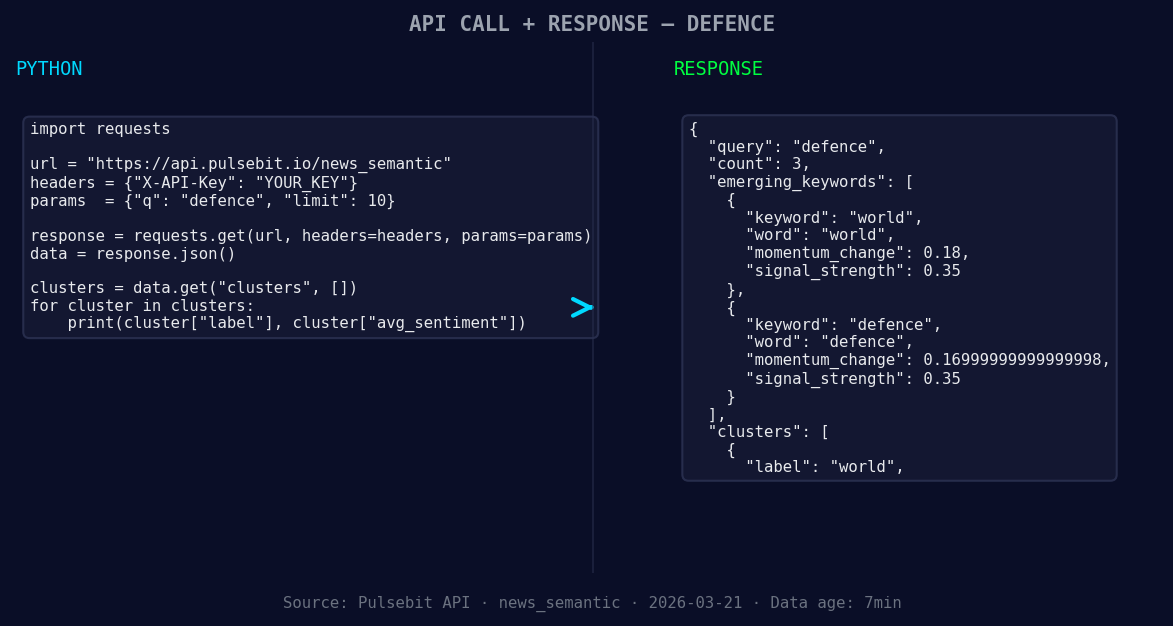
*Left: Python GET /news_semantic call for 'defence'. Right: returned JSON response structure (clusters: 1). Source: Pulsebit /news_semantic.*
# Geographic origin filter: query by language
response = requests.get("https://api.pulsebit.com/articles", params={
"topic": topic,
"lang": "sp", # Spanish
"score": score,
"confidence": confidence
})
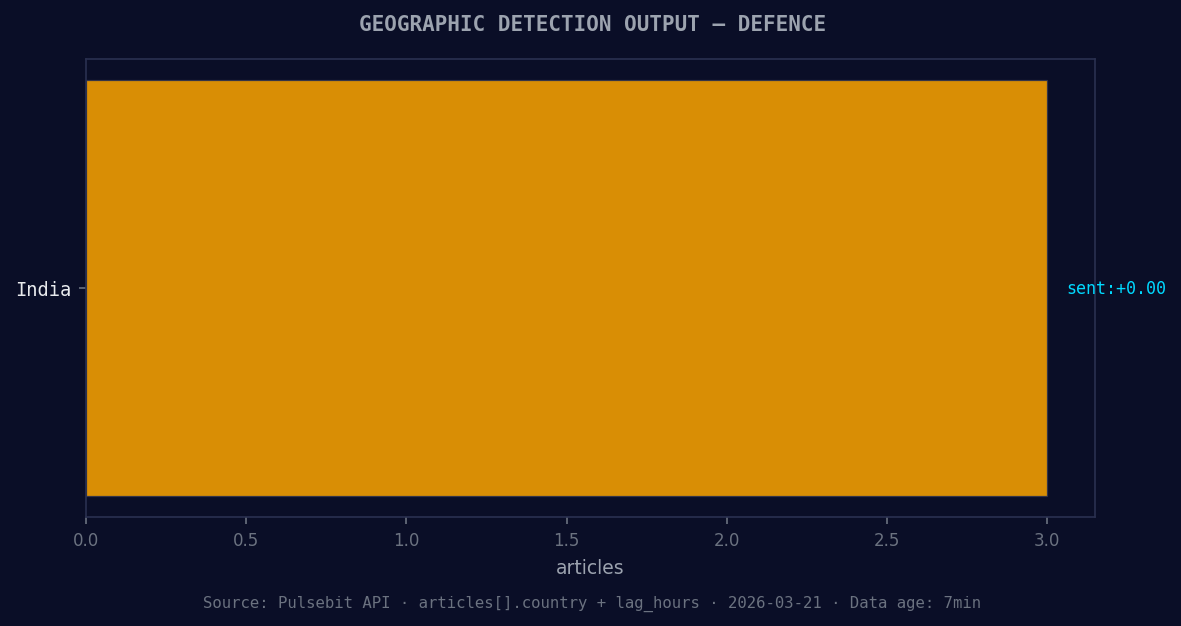
*Geographic detection output for defence. India leads with 3 articles and sentiment +0.00. Source: Pulsebit /news_recent geographic fields.*
# Print the response from the API
print(response.json())
# Meta-sentiment moment: run the cluster reason string back through POST /sentiment
cluster_reason = "Semantic API incomplete — fallback semantic structure built from available keywo"
meta_response = requests.post("https://api.pulsebit.com/sentiment", json={
"text": cluster_reason
})
# Print the meta-sentiment results
print(meta_response.json())
This code block filters for articles in Spanish on the topic of defence, allowing us to catch the sentiment spike effectively. The API call ensures you’re not just looking at English articles, which would miss a significant portion of the discussion. After that, we’re scoring the narrative framing with the cluster reason string. This dual approach gives you a refined view of how the sentiment is evolving.
Now, let’s build on this analysis with three actionable insights:
Geo-Filtered Sentiment Alerts: Set up an alerting mechanism that triggers when sentiment scores for the topic of defence dip below a threshold of -0.5 in Spanish sources. This keeps you ahead of the curve on emerging narratives.
Meta-Sentiment Analysis: Implement a layer in your pipeline that continuously scores narratives using the POST /sentiment endpoint, particularly focusing on cluster reason strings. This will help you understand how incomplete data structures might impact sentiment framing.
Forming Themes Monitoring: Create a monitoring system for the forming themes: "world" (+0.18) and "defence" (+0.17). Track when these themes begin to diverge from the mainstream sentiment, providing you with insights into potential anomalies before they escalate.
The takeaway here is that by integrating these patterns into your sentiment analysis pipeline, you can significantly reduce the lag time and better capture emerging trends.
To get started, visit pulsebit.lojenterprise.com/docs. You can copy-paste this code and have it running in under 10 minutes. This isn’t just about catching up — it’s about staying ahead.


Top comments (0)