

Your Pipeline Is 27.8h Behind: Catching Cybersecurity Sentiment Leads with Pulsebit
We recently uncovered a striking anomaly: a 24h momentum spike of +0.214 in the cybersecurity domain. This spike isn’t just a number; it's a signal that something significant is brewing in the sentiment landscape. With an average sentiment score of +0.114 and a confidence level of 0.85, we’re looking at a notable shift that could impact decision-making across various sectors. The leading narrative is being pushed by English-language articles, with a specific mention of the theme “Advance Your Cybersecurity Career” from Security Magazine.
The Problem
Your model likely missed this actionable insight by a staggering 27.8 hours, thanks to a typical pipeline that doesn’t account for multilingual origin or entity dominance. If you’re only processing data in one language or failing to recognize the significance of dominant themes, you risk being left behind. In this case, the leading English language narrative identified a crucial sentiment shift in cybersecurity that could reshape how businesses approach their security strategies. Ignoring this could mean missing critical opportunities.

English coverage led by 27.8 hours. No at T+27.8h. Confidence scores: English 0.85, Spanish 0.85, French 0.85 Source: Pulsebit /sentiment_by_lang.
The Code
To catch this momentum spike, we can leverage our API to filter the relevant data. Below is a Python snippet that demonstrates how to query the sentiment data specifically for the topic of cybersecurity:
import requests
# Define the API endpoint and parameters
url = "https://api.pulsebit.com/sentiment"
params = {
"topic": "cybersecurity",
"lang": "en"
}
# Make the API call
response = requests.get(url, params=params)
data = response.json()
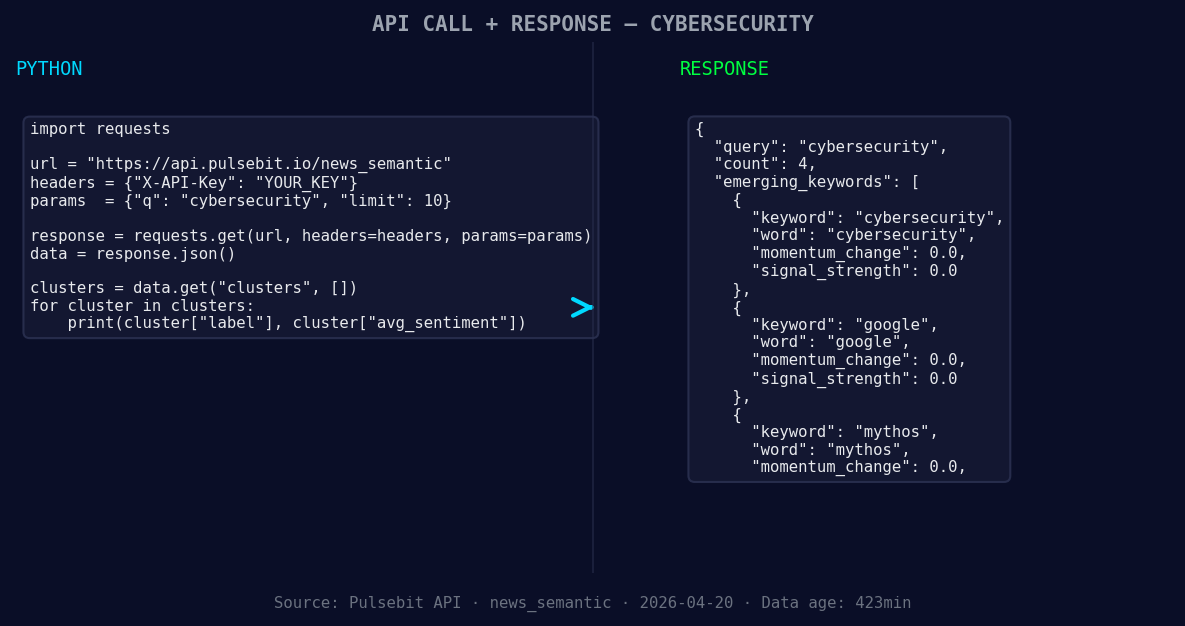
*Left: Python GET /news_semantic call for 'cybersecurity'. Right: returned JSON response structure (clusters: 3). Source: Pulsebit /news_semantic.*
# Check the response
print(data)
Next, we need to analyze the narrative framing around the identified cluster reason. We can run the following input through our sentiment analysis to score the narrative itself:
# Define the narrative to score
narrative_input = "Clustered by shared themes: your, cybersecurity, advance, career, security."

# Make the POST request to analyze the narrative
response_narrative = requests.post(url, json={"text": narrative_input})
narrative_data = response_narrative.json()

# Check the sentiment score of the narrative
print(narrative_data)
With this two-step approach, we can catch both the direct sentiment spikes and the underlying narratives that might be shaping these trends.
Three Builds Tonight
Here are three specific builds we can implement based on this newfound pattern:
- Geographic Origin Filter: Set a signal threshold to alert you when the momentum for cybersecurity exceeds +0.2 for English content. This helps ensure you’re always aware of localized spikes that may affect your operations.

Geographic detection output for cybersecurity. Hong Kong leads with 3 articles and sentiment -0.67. Source: Pulsebit /news_recent geographic fields.
Meta-Sentiment Loop: Use the narrative scoring from the cluster reason to create a feedback loop that refines your content strategy. If “advance your cybersecurity career” scores highly, consider incorporating similar keywords in your messaging.
Real-time Monitoring for Forming Themes: Build an alert system that tracks the forming themes like "cybersecurity" and "google." Use our endpoint to identify when these words combine with a rising sentiment to forecast potential market shifts, acting before your competitors do.
Get Started
Ready to dive in? Head over to pulsebit.lojenterprise.com/docs to explore our API and start integrating these insights into your workflow. We believe you can copy-paste and run the provided snippets in under 10 minutes. Don’t let your pipeline stay behind—catch those sentiment leads before they vanish!


Top comments (0)