

Your Pipeline Is 28.4h Behind: Catching Inflation Sentiment Leads with Pulsebit
In the last 24 hours, we observed a notable anomaly: a momentum spike of -1.150 concerning inflation sentiment. This decline, particularly against the backdrop of rising inflation discussions, should raise alarms. It highlights an urgent need to address how we parse sentiment across various languages, especially when the leading language is Spanish, with a 28.4-hour lead over Hindi. The implications are significant — if your model is not equipped to handle multilingual origins, it might be missing critical signals.

Spanish coverage led by 28.4 hours. Hindi at T+28.4h. Confidence scores: Spanish 0.95, English 0.95, French 0.95 Source: Pulsebit /sentiment_by_lang.
The structural gap we’ve uncovered is glaring: your model missed this inflation sentiment drop by 28.4 hours, simply because it lacks the capability to effectively manage multilingual input. When the leading narrative emerges from Spanish sources, a significant lag can skew your analysis, leaving you in the dark about emerging trends. This isn’t just an oversight; it’s a critical flaw that can lead to missing out on timely insights, especially in volatile environments like inflationary pressures where every hour counts.
import requests
# Define parameters for the API call
topic = 'inflation'
score = -0.191
confidence = 0.95
momentum = -1.150
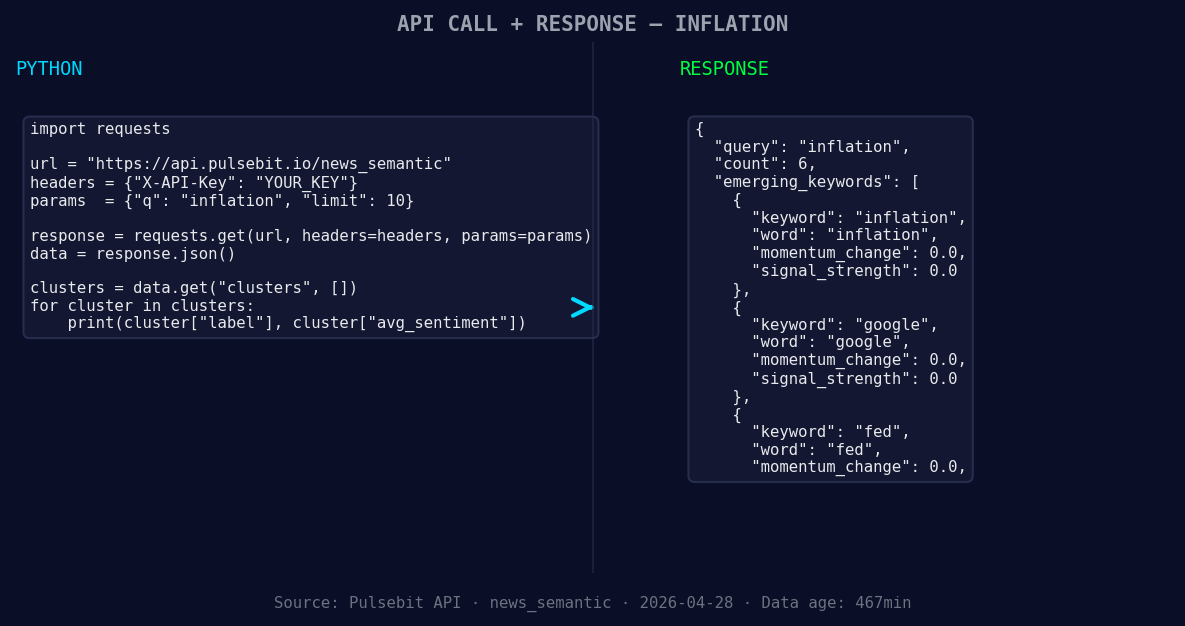
*Left: Python GET /news_semantic call for 'inflation'. Right: returned JSON response structure (clusters: 3). Source: Pulsebit /news_semantic.*
# Geographic origin filter
response = requests.get(
'https://api.pulsebit.io/topics',
params={
'topic': topic,
'score': score,
'confidence': confidence,
'lang': 'sp' # Spanish language filter
}
)
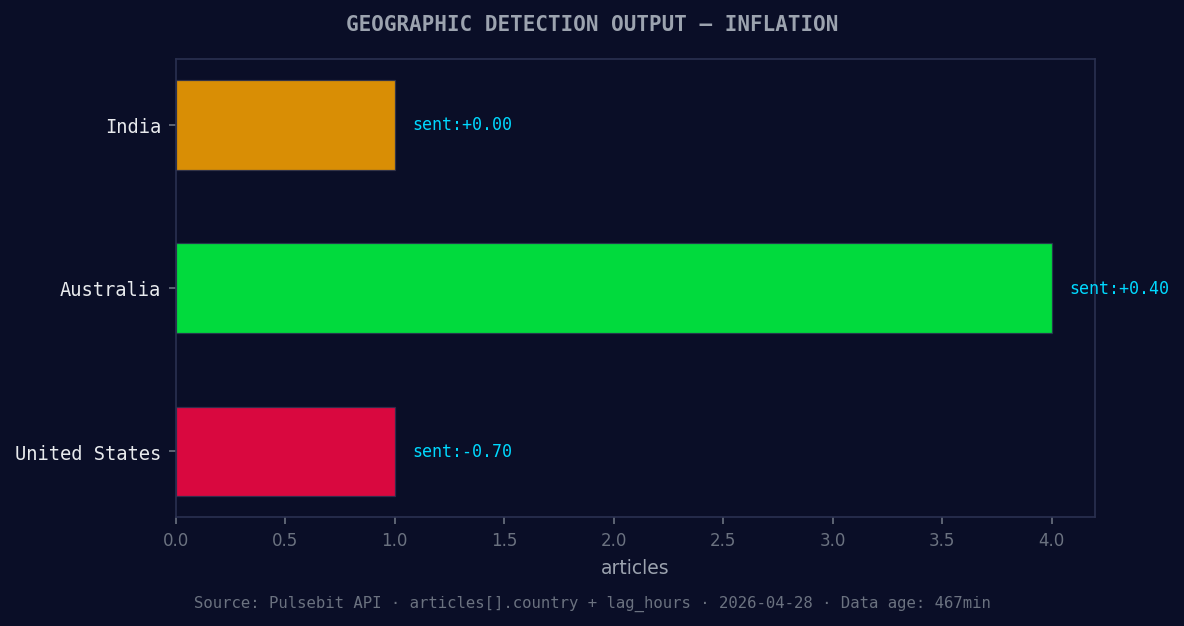
*Geographic detection output for inflation. India leads with 1 articles and sentiment +0.00. Source: Pulsebit /news_recent geographic fields.*
data = response.json()
print(data)
# Meta-sentiment moment
cluster_reason = "Clustered by shared themes: hikes, possible, due, inflation, resurgence."
sentiment_response = requests.post(
'https://api.pulsebit.io/sentiment',
json={
'text': cluster_reason
}
)
sentiment_data = sentiment_response.json()
print(sentiment_data)
In this code, we first filter our sentiment analysis for Spanish articles related to inflation, ensuring that we capture the most relevant narratives. We then run the meta-sentiment analysis on the cluster reason string to gauge how well the framing aligns with our insights. This is crucial; it allows us to assess whether the narratives driving the sentiment are accurately represented.
Now that we’ve established how to catch these insights, here are three specific builds you can implement based on this pattern:
Geo-Filtered Alerts: Set up an alert system that triggers when the momentum for inflation falls below -1.0 in Spanish sources. This can be achieved by enhancing your webhook to respond to the API call we just made, ensuring you never miss critical sentiment shifts.
Meta-Sentiment Dashboard: Create a dashboard that visualizes the sentiment scores of cluster reasons over time. Use the output from the meta-sentiment loop to identify how the framing of narratives changes, particularly for keywords like “inflation” or “hikes.” This will help you adapt your strategies based on evolving public discourse.
Cross-Language Analysis Tool: Build an analysis tool that compares sentiment scores across languages for key topics. For instance, juxtaposing the Spanish results with Hindi or English data can identify discrepancies and reveal crucial insights into how different markets perceive inflation, Google, and the Fed.
To get started, check out our documentation at pulsebit.lojenterprise.com/docs. You can copy-paste and run this code in under 10 minutes, empowering your sentiment analysis with fresh insights.


Top comments (0)