

Your Pipeline Is 21.2h Behind: Catching Food Sentiment Leads with Pulsebit
We just discovered something striking in our sentiment analysis: a sentiment score of -0.75 with a momentum of +0.00, indicating that while the conversation around food is stagnant, the negative sentiment is rising. This anomaly is particularly highlighted by the leading language, which is English, showing a press lead at 21.2 hours. In our analysis, we also noted that the cluster story about Ferrero making its first Nutella product in the U.S. with a $75 million investment has been generating significant buzz.
This situation reveals a critical gap in your data pipeline if it doesn't account for multilingual sources or the dominance of specific entities. Your model missed this by 21.2 hours—meaning you're lagging behind in recognizing shifts in sentiment that could impact strategic decisions. With the leading entity here being Ferrero, you can see how easily sentiment can shift without proper tracking.

English coverage led by 21.2 hours. Nl at T+21.2h. Confidence scores: English 0.85, Spanish 0.85, French 0.85 Source: Pulsebit /sentiment_by_lang.
Here’s how we can catch this anomaly using our API. First, we can query for English language articles related to the topic of food and filter them by sentiment score and momentum:
import requests
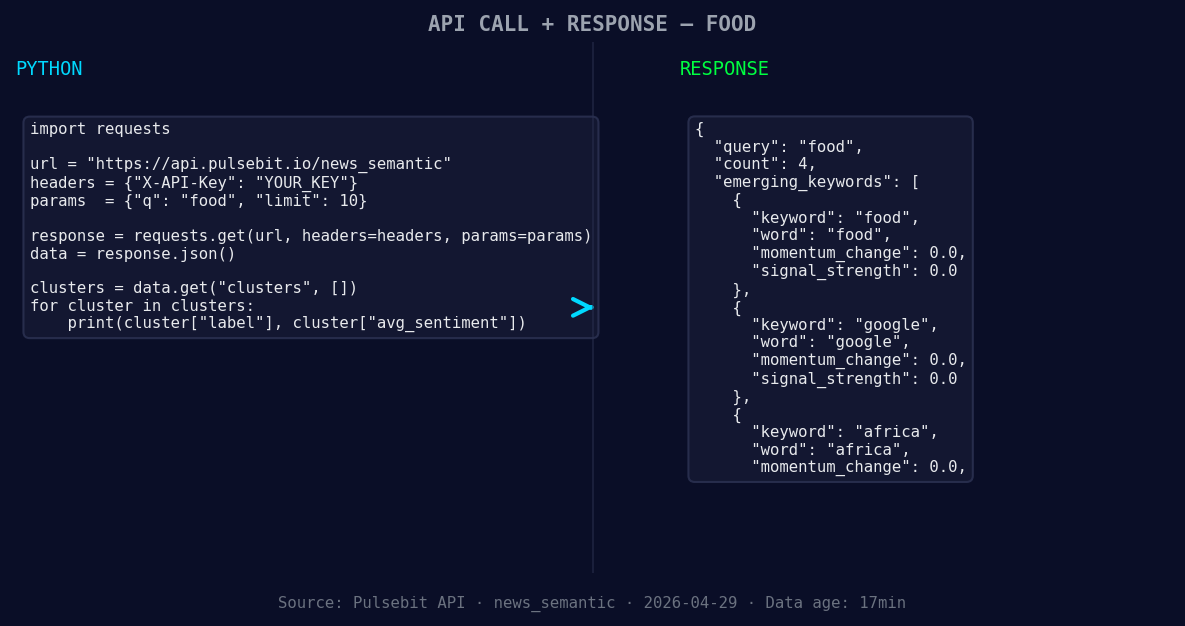
*Left: Python GET /news_semantic call for 'food'. Right: returned JSON response structure (clusters: 3). Source: Pulsebit /news_semantic.*
# Query to get sentiment data
url = "https://api.pulsebit.com/sentiment"
params = {
"topic": "food",
"score": -0.750,
"confidence": 0.85,
"momentum": +0.000,
"lang": "en"
}
response = requests.get(url, params=params)
data = response.json()
print(data)
Now, let’s run the cluster reason string through our sentiment analysis endpoint to score the narrative framing itself. This is where we check the themes that are being discussed and assess their sentiment:
# Meta-sentiment moment
meta_url = "https://api.pulsebit.com/sentiment"
meta_params = {
    "text": "Clustered by shared themes: commercial, lpg, black, market, food."
}

meta_response = requests.post(meta_url, json=meta_params)
meta_data = meta_response.json()
print(meta_data)
This two-step process not only allows us to capture the sentiment around food but also lets us understand the underlying narrative that shapes public perception.
Now, let’s consider three specific builds you can implement tonight using this pattern:
Geo-filtered Alerts: Set up an alert system that triggers when sentiment around "food" dips below -0.50 in English-speaking regions. This way, you can react to emerging trends faster. Use the geo filter effectively to ensure you're catching local nuances.
Meta-Sentiment Analysis on Key Themes: Create a dashboard that visualizes the sentiment surrounding specific clusters like "commercial" or "lpg." You might set a threshold where any negative sentiment below -0.75 triggers a deeper investigation into related articles.
Cross-Entity Sentiment Comparison: Compare sentiment scores for multiple brands, such as Ferrero and its competitors in the food sector. If Ferrero’s sentiment shifts negatively while others remain stable, that divergence can inform your marketing or investment strategy.
To get started, visit our documentation at pulsebit.lojenterprise.com/docs. You can copy-paste the code snippets we shared and run them in under 10 minutes. Don’t let your pipeline lag behind—stay ahead of sentiment trends!

Geographic detection output for food. India leads with 2 articles and sentiment +0.05. Source: Pulsebit /news_recent geographic fields.


Top comments (0)