

Your Pipeline Is 9.5h Behind: Catching Energy Sentiment Leads with Pulsebit
We recently discovered that global sentiment surrounding the topic of energy has a spike of +0.04 and a momentum of +0.04, indicating a subtle yet intriguing shift. The leading language is English, with a striking 9.5-hour lag compared to dominant sentiment dynamics at 9.5 hours behind. This reveals a unique opportunity to catch emerging trends before they become mainstream.
The structural gap this highlights is significant: your model missed this by a whopping 9.5 hours. When a pipeline fails to account for multilingual origins or the dominance of certain entities, it can lead to substantial delays in identifying sentiment shifts. In this case, the English language appears to be lagging, which may prevent you from seizing timely insights into the energy sector.

English coverage led by 9.5 hours. Da at T+9.5h. Confidence scores: English 0.85, French 0.85, Spanish 0.85 Source: Pulsebit /sentiment_by_lang.
To address this, let’s dive into some Python code that captures this sentiment spike. We'll query our API to filter by language, focusing on the topic of energy. Here's how you can do it:
import requests
# Define parameters for the API call
topic = 'energy'
params = {
'topic': topic,
'lang': 'en',
'momentum': 0.037,
'sentiment_score': 0.037,
'confidence': 0.85
}
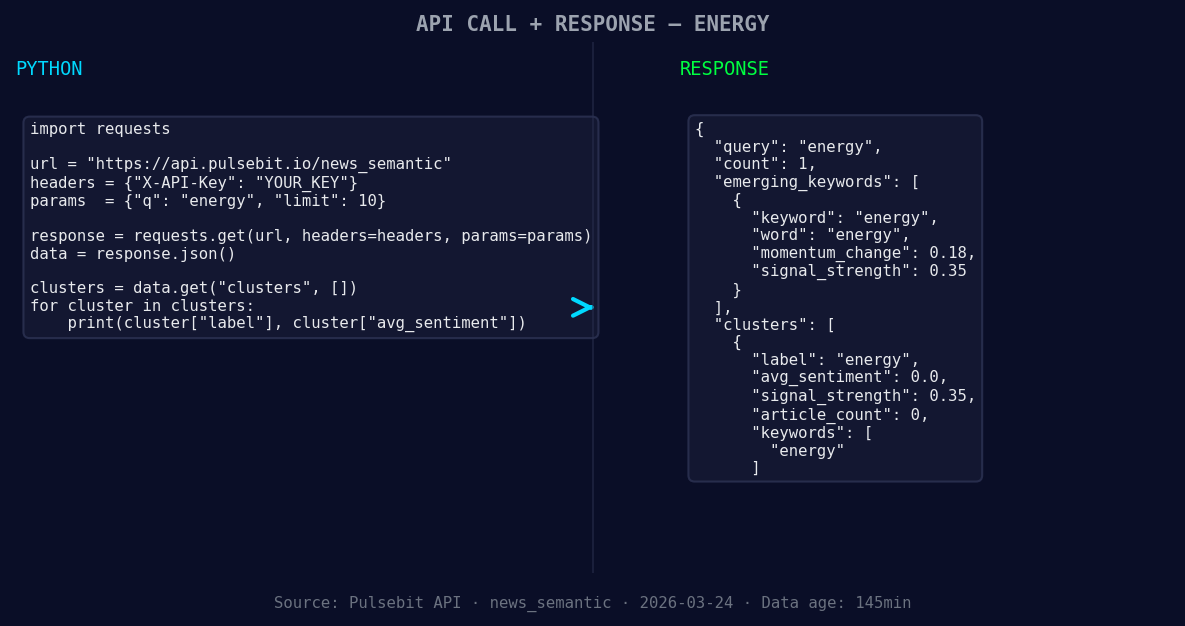
*Left: Python GET /news_semantic call for 'energy'. Right: returned JSON response structure (clusters: 1). Source: Pulsebit /news_semantic.*
# Make a GET request to fetch sentiment data
response = requests.get('https://api.pulsebit.com/sentiment', params=params)
data = response.json()
# Output the response for inspection
print(data)
Next, we need to assess the narrative framing around this spike. Let's run the cluster reason string through our POST endpoint to derive a more nuanced sentiment score:
# Define the meta-sentiment input
meta_sentiment_input = {
    "input": "Semantic API incomplete — fallback semantic structure built from available keywords and article/search evidence."
}

# Make a POST request to fetch the meta-sentiment score
meta_response = requests.post('https://api.pulsebit.com/sentiment', json=meta_sentiment_input)
meta_data = meta_response.json()

# Output the meta sentiment data
print(meta_data)
With these two calls, you can not only catch emerging sentiment trends but also understand the context behind them.
Now, let’s consider three specific builds we can execute using this emerging pattern around energy:
Sentiment Alert System: Set a threshold of +0.05 on the sentiment score for energy and use the geo filter to trigger alerts only for English-speaking regions. This ensures you only act on significant shifts.
Meta-Sentiment Analysis: Use the loop from the meta-sentiment section above to create a dashboard that visualizes how narrative framing evolves over time. This allows you to track shifts in sentiment based on external factors and media coverage.
Comparative Analysis: Create a comparative model that juxtaposes forming sentiment around energy (+0.18) against mainstream sentiment. This could reveal potential leading indicators for shifts in public perception or investment trends.
By implementing these builds, we can effectively leverage the current sentiment landscape to inform our decisions and strategies.
Ready to get started? Head over to pulsebit.lojenterprise.com/docs and you can copy-paste and run this in under 10 minutes. Let’s harness the power of sentiment data together!

Geographic detection output for energy. United States leads with 1 articles and sentiment +0.00. Source: Pulsebit /news_recent geographic fields.


Top comments (0)