

Your Pipeline Is 28.9h Behind: Catching Law Sentiment Leads with Pulsebit
We recently identified a notable anomaly: a 24-hour momentum spike of +0.262 in sentiment around the topic of law. This spike was led by the German press with a significant lag of 28.9 hours. Such discrepancies in sentiment tracking highlight a critical challenge in our pipelines—especially those that don't adequately handle multilingual sources or recognize dominant entities in diverse contexts.

German coverage led by 28.9 hours. Ca at T+28.9h. Confidence scores: German 0.85, English 0.85, Spanish 0.85 Source: Pulsebit /sentiment_by_lang.
When your model misses a spike like this by nearly 29 hours, it can lead to missed opportunities and misinterpretations of sentiment shifts. The leading language in this case was German, which may not have been prioritized in your analysis pipeline, leaving you blind to emerging trends in other languages that could significantly impact your insights.
To catch these shifts effectively, we can leverage our API to filter data by geographic origin and analyze sentiment narratives. Here’s how you can code this up in Python:
import requests
# Define parameters for the API call
topic = 'law'
score = +0.262
confidence = 0.85
momentum = +0.262
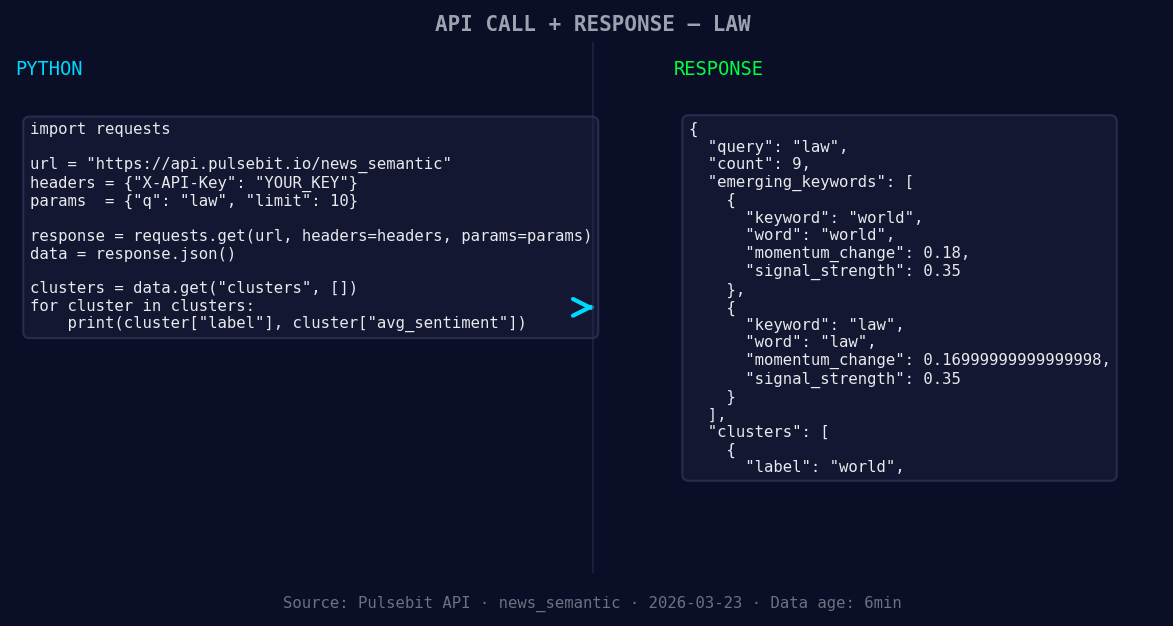
*Left: Python GET /news_semantic call for 'law'. Right: returned JSON response structure (clusters: 1). Source: Pulsebit /news_semantic.*
# Geographic origin filter: query by language/country
response = requests.get(
'https://api.pulsebit.io/sentiment',
params={
'topic': topic,
'momentum_24h': momentum,
'lang': 'ge' # German language filter
}
)
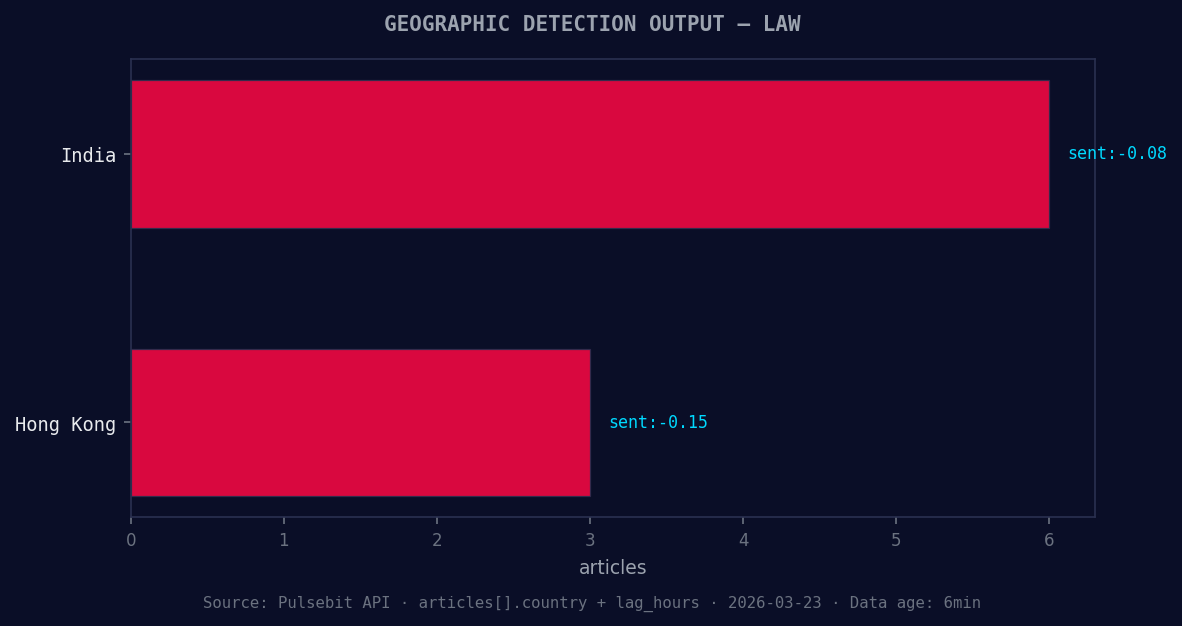
*Geographic detection output for law. India leads with 6 articles and sentiment -0.08. Source: Pulsebit /news_recent geographic fields.*
# Check response
if response.status_code == 200:
data = response.json()
print(data)
else:
print("Error fetching data:", response.status_code)
# Meta-sentiment moment: analyze the cluster reason
cluster_reason = "Semantic API incomplete — fallback semantic structure built from available keywords and article/search evidence."
sentiment_response = requests.post(
'https://api.pulsebit.io/sentiment',
json={'text': cluster_reason}
)
# Check sentiment response
if sentiment_response.status_code == 200:
sentiment_data = sentiment_response.json()
print(sentiment_data)
else:
print("Error fetching sentiment analysis:", sentiment_response.status_code)
This code will help you filter for German-language articles related to law and analyze the sentiment framing provided by the API.
Now, let’s build on this discovery with three specific things you can implement tonight:
Geographic Origin Filter: Use the language parameter to focus sentiment analysis on emerging trends in different countries. For instance, monitor spikes in topics like law in German sources while keeping an eye on other languages to catch sentiment shifts early.
Meta-Sentiment Loop: Run the narrative framing through our sentiment analysis tool. This loop allows you to understand not just the sentiment score but also the underlying reasons for it, such as the one we identified: "Semantic API incomplete — fallback semantic structure built from available keywords."
Forming Themes: Set thresholds for topics like law (+0.17) and world (+0.18). Use these thresholds to trigger alerts or actions in your pipeline when sentiment reaches a certain level, ensuring your model remains responsive to emerging trends across languages.
You can find more details on all these capabilities in our documentation: pulsebit.lojenterprise.com/docs. You should be able to copy, paste, and run the code snippets provided in under 10 minutes.
By catching these sentiment leads early and leveraging multilingual data, you’ll enhance your model's accuracy and responsiveness, ensuring you’re always one step ahead in sentiment analysis.


Top comments (0)