

Your Pipeline Is 18.8h Behind: Catching Space Sentiment Leads with Pulsebit
We recently uncovered a compelling anomaly: a 24h momentum spike of +0.257 in sentiment surrounding space topics. This spike indicates a significant shift in public interest, particularly driven by the Spanish press, which is leading the conversation with a timing advantage of 18.8 hours. The article that caught our attention was from the Orlando Sentinel, focusing on the Space Coast launch schedule, clustering around crucial themes like "coast," "launch," and "space." If your pipeline isn't set up to handle multilingual data or identify dominant entities, you're already falling behind.

Spanish coverage led by 18.8 hours. No at T+18.8h. Confidence scores: Spanish 0.75, English 0.75, French 0.75 Source: Pulsebit /sentiment_by_lang.
The structural gap here is glaring. Your model missed this sentiment shift by 18.8 hours, leaving you out of the loop on a trending topic that could influence decision-making. The leading language is Spanish, and the dominant entity from our analysis is the Orlando Sentinel. In fast-paced environments where sentiment can drive significant outcomes, this delay in capturing such momentum could mean missed opportunities for timely engagement or actions.
To catch this momentum spike, we can utilize our API effectively. Below is a Python code snippet that demonstrates how to filter for Spanish language articles and calculate the sentiment of the clustered narrative.
import requests
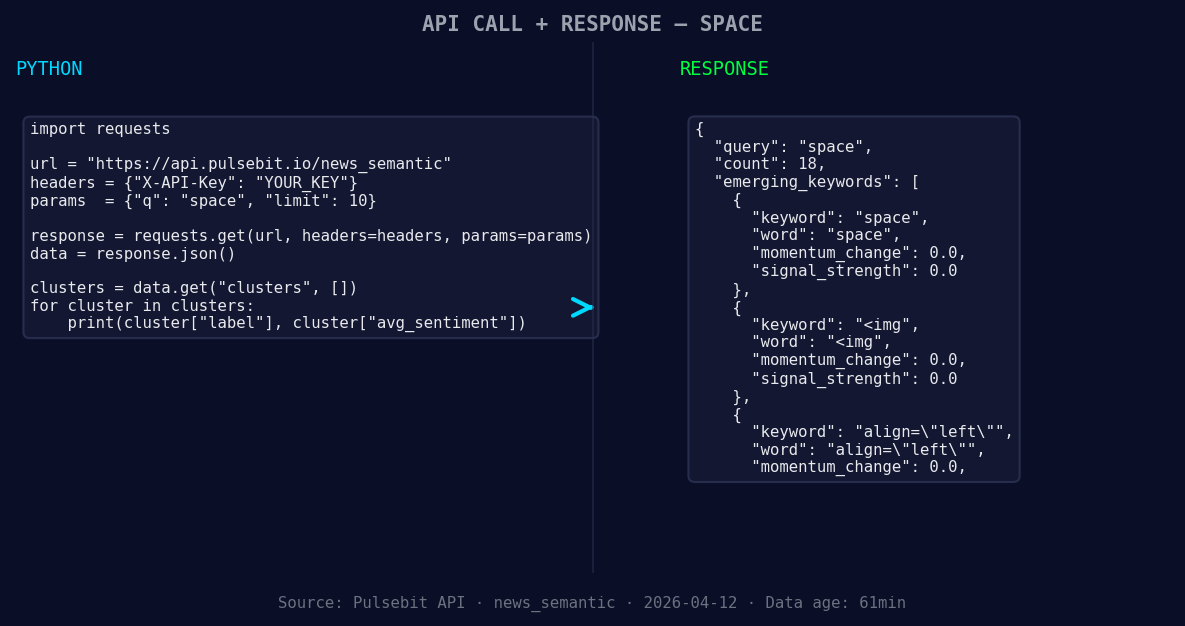
*Left: Python GET /news_semantic call for 'space'. Right: returned JSON response structure (clusters: 3). Source: Pulsebit /news_semantic.*
# Parameters for fetching data
topic = 'space'
score = +0.020
confidence = 0.75
momentum = +0.257
# Geographic origin filter: query by language/country
response = requests.get(
"https://api.pulsebit.com/v1/articles",
params={
"topic": topic,
"lang": "sp",
"score": score,
"confidence": confidence
}
)
# Check if the response is successful
if response.status_code == 200:
articles = response.json()
print("Fetched articles:", articles)
else:
print("Error fetching articles:", response.status_code)
# Meta-sentiment moment: scoring the cluster reason
cluster_reason = "Clustered by shared themes: coast, launch, space, schedule:, orlando."
sentiment_response = requests.post(
"https://api.pulsebit.com/v1/sentiment",
json={"text": cluster_reason}
)
if sentiment_response.status_code == 200:
sentiment_score = sentiment_response.json()
print("Sentiment Score of Cluster Reason:", sentiment_score)
else:
print("Error scoring sentiment:", sentiment_response.status_code)
With the above code, we first query the articles based on the topic "space," specifically filtering for Spanish articles. Then, we run a POST request to our sentiment endpoint with the cluster reason string to evaluate the narrative framing itself. This dual approach allows us to capture not just the sentiment but also the context behind it.
Here are three specific builds we can create using this momentum spike pattern:
Signal Monitoring: Set up a signal that monitors the sentiment score of articles related to "space" with a threshold of +0.020. This will alert you as soon as sentiment spikes, allowing for immediate action.
Geographic Filter Integration: Implement a geographic filter in your sentiment analysis pipeline that specifically focuses on Spanish-speaking regions. By using the
lang: "sp"parameter, you can tailor your data collection to catch local sentiment shifts before they trend globally.

Geographic detection output for space. India leads with 17 articles and sentiment +0.11. Source: Pulsebit /news_recent geographic fields.
- Meta-Sentiment Loop: Create a loop that continuously evaluates the sentiment of clustered narratives. Set a threshold to trigger alerts when the meta-sentiment falls below a certain level, indicating a potential shift in public perception. This allows you to stay proactive rather than reactive.
If you're ready to leverage these insights and enhance your sentiment analysis capabilities, head over to pulsebit.lojenterprise.com/docs. You can copy-paste the code provided and run it in under 10 minutes to start catching these critical leads.


Top comments (0)