

Your Pipeline Is 26.7h Behind: Catching Education Sentiment Leads with Pulsebit
We just uncovered a significant anomaly: a 24-hour momentum spike of +0.954. This spike indicates a rising interest in educational policies, particularly around mental health in Tamil Nadu, as seen in the cluster story about the region's mental health policy for educational institutions. It's a clear signal that the conversation around education is evolving, and we need to pay attention.
However, if your pipeline doesn't account for multilingual origins or entity dominance, you might have missed this shift by 26.7 hours. The leading language here is English, but the relevant context is deeply rooted in Tamil Nadu's local issues. If you’re not capturing these nuances, you risk falling behind in understanding sentiment trends that matter.

English coverage led by 26.7 hours. Et at T+26.7h. Confidence scores: English 0.85, Spanish 0.85, Id 0.85 Source: Pulsebit /sentiment_by_lang.
Let’s dive into how we can catch this spike programmatically. Here’s a quick Python snippet to filter for relevant articles and assess the sentiment:
import requests
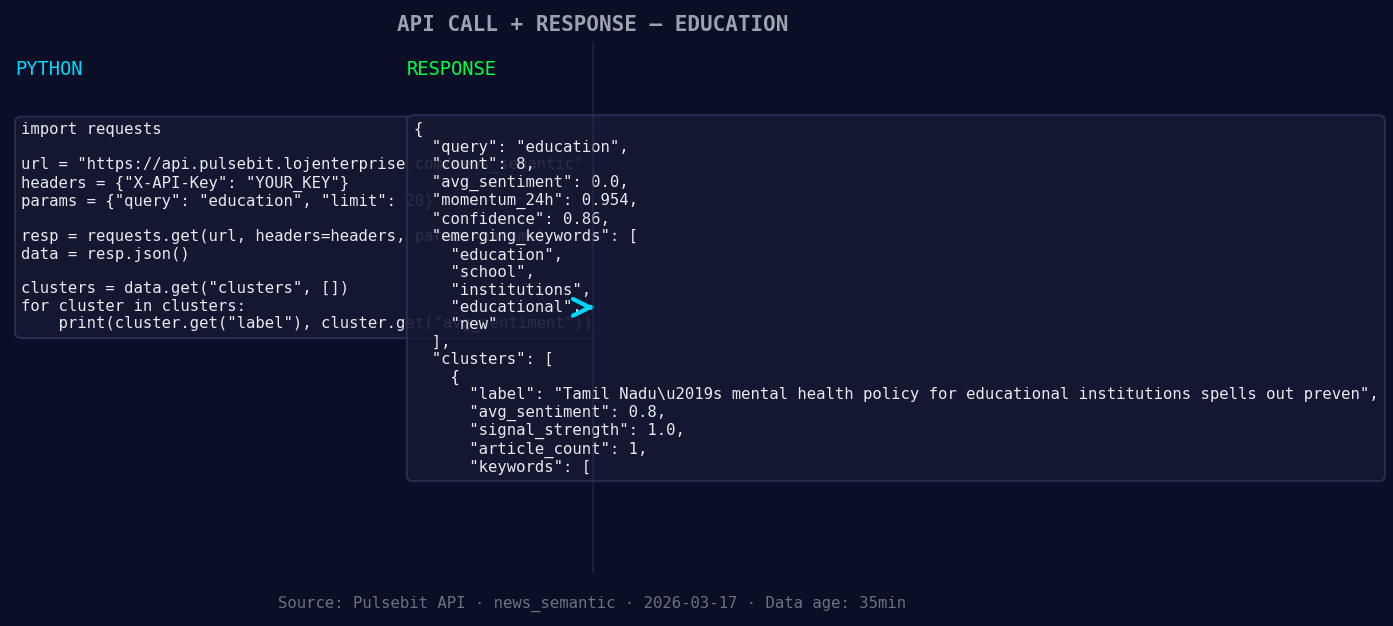
*Left: Python GET /news_semantic call for 'education'. Right: returned JSON response structure (clusters: 3). Source: Pulsebit /news_semantic.*
# Define the topic and parameters
topic = 'education'
score = +0.000
confidence = 0.86
momentum = +0.954
# Geographic origin filter: query by language/country
response = requests.get(
'https://api.pulsebit.io/v1/articles',
params={
'topic': topic,
'lang': 'en',
'momentum': momentum
}
)
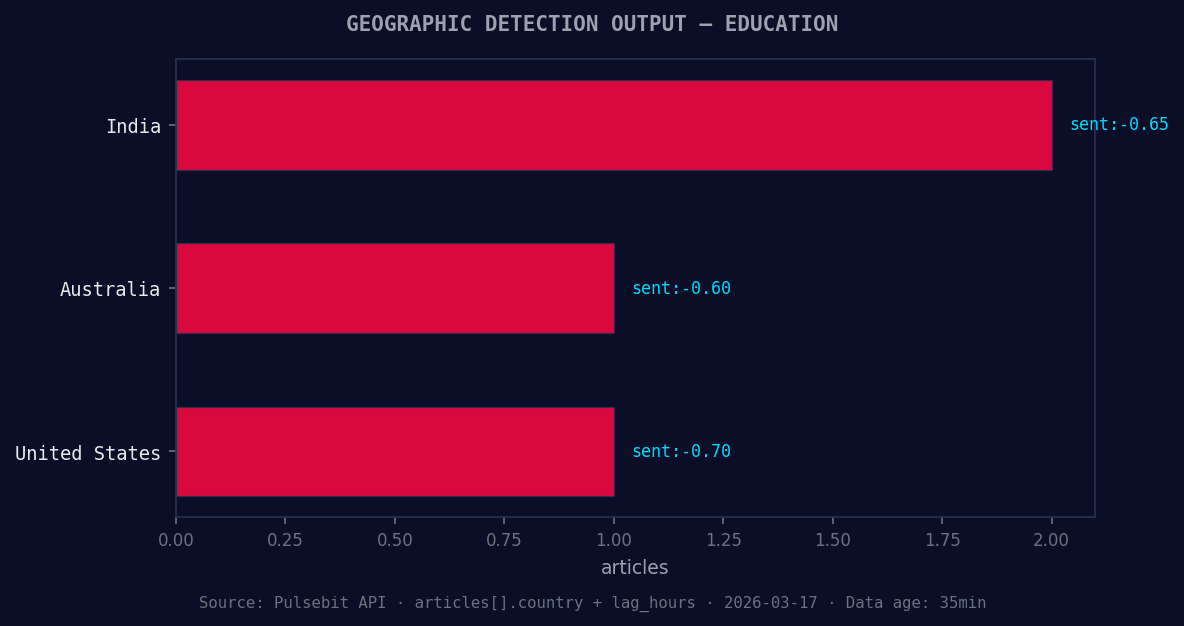
*Geographic detection output for education. India leads with 2 articles and sentiment -0.65. Source: Pulsebit /news_recent geographic fields.*
articles = response.json()
# Meta-sentiment moment: analyze the cluster reason string
cluster_reason = "Clustered by shared themes: mental, health, policy, tamil, nadu’s."
sentiment_response = requests.post(
'https://api.pulsebit.io/v1/sentiment',
json={'text': cluster_reason}
)
sentiment_result = sentiment_response.json()
print(sentiment_result)
In this code, we first filter articles by the topic "education" and the language "en" to ensure we’re capturing the English-language discussions around the recent spike. Then, we pass the cluster reason string back through our sentiment analysis endpoint to understand how the narrative is being framed. This dual approach allows us to align our content with the most relevant discussions happening right now.
So, what can we build with this newfound insight? Here are three concrete developments to consider:
Geo-targeted Alerts: Set up a signal that triggers when momentum for "education" topics in Tamil Nadu exceeds a certain threshold, like +0.75. Use the geographic origin filter to ensure you're only capturing relevant regional spikes.
Meta-Sentiment Dashboard: Build a dashboard that pulls in cluster reason strings and sentiment scores, specifically for topics like "education," "mental health," and "policy." This will help visualize how narratives evolve and shift over time.
Comparative Analysis Tool: Create a tool that compares sentiment trends across different regions. For instance, analyze how "education" conversations in Tamil Nadu differ from those in other states, focusing on sentiment scores and momentum changes. Use our sentiment endpoint to score and visualize these themes against mainstream conversations about "mental health" and "policy."
These builds provide a clear strategy to leverage the momentum spike and fill the gap in your pipeline.
If you want to dive deeper, check out our documentation at pulsebit.lojenterprise.com/docs. You can copy-paste the code above and run it in under 10 minutes. Let’s stay ahead of the curve!


Top comments (0)