

Your Pipeline Is 29.3h Behind: Catching Sustainability Sentiment Leads with Pulsebit
We recently observed a notable anomaly: a 24-hour momentum spike of +0.336 in sustainability sentiment. This spike indicates a significant uptick in interest and engagement surrounding sustainability themes, which could lead to valuable insights for your projects. However, there's more to this spike than meets the eye, especially concerning how we interpret multilingual data and dominant entities in our analyses.

English coverage led by 29.3 hours. Et at T+29.3h. Confidence scores: English 0.90, Spanish 0.90, French 0.90 Source: Pulsebit /sentiment_by_lang.
The Problem
This spike reveals a structural gap in any pipeline that fails to account for multilingual origin or entity dominance. If your model isn't configured to handle these aspects, you might find yourself lagging behind. In this case, your model missed this momentum shift by a staggering 29.3 hours, primarily driven by English-language content. This delay could mean the difference between capitalizing on a trend and watching opportunities slip away.
The Code
To catch this momentum spike effectively, we can leverage our API to query relevant data. Here’s how we can do it:
import requests
# Setting parameters for the API call
topic = 'sustainability'
score = +0.000
confidence = 0.90
momentum = +0.336
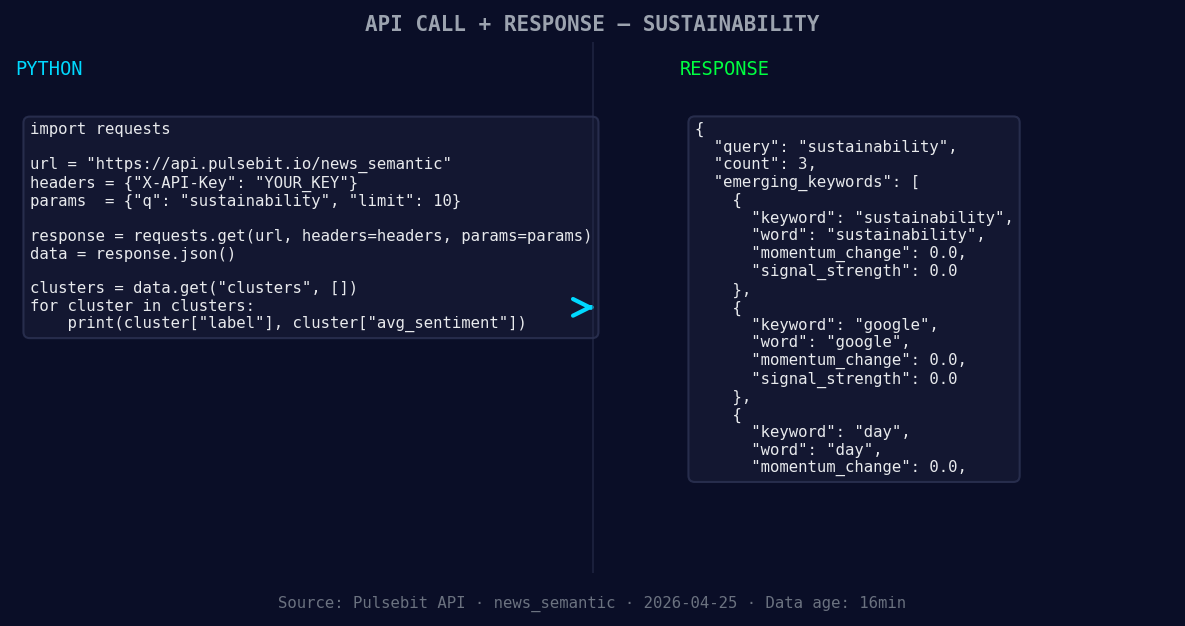
*Left: Python GET /news_semantic call for 'sustainability'. Right: returned JSON response structure (clusters: 3). Source: Pulsebit /news_semantic.*
# Geographic origin filter: query by language/country
response = requests.get('https://api.pulsebit.com/v1/sentiment', params={
'topic': topic,
'lang': 'en',
'score': score,
'confidence': confidence,
'momentum': momentum
})
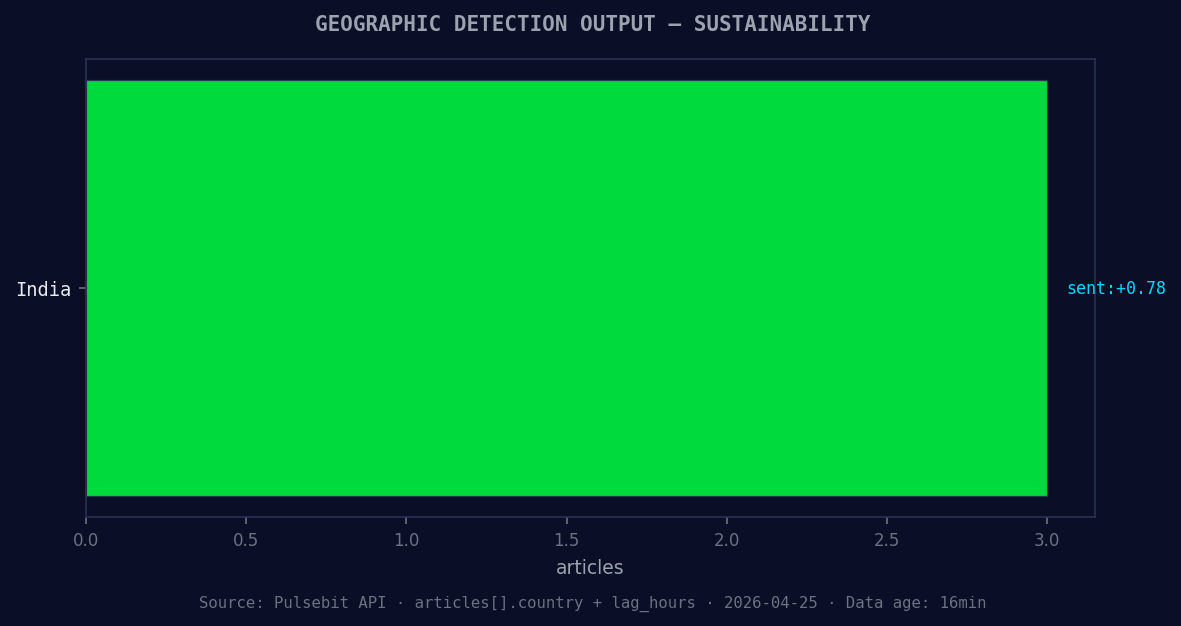
*Geographic detection output for sustainability. India leads with 3 articles and sentiment +0.78. Source: Pulsebit /news_recent geographic fields.*
data = response.json()
print(data)
Next, we need to run the cluster reason string back through our sentiment analysis endpoint to score the narrative framing itself. Here's how to do that:
# Meta-sentiment moment: score the narrative framing
cluster_reason = "Clustered by shared themes: takes, center, stage, informa’s, flagship."
sentiment_response = requests.post('https://api.pulsebit.com/v1/sentiment', json={
    'text': cluster_reason
})

sentiment_data = sentiment_response.json()
print(sentiment_data)
This two-step process allows us to not only capture the momentum spike but also understand the underlying narrative driving this sentiment.
Three Builds Tonight
Here are three specific builds we can implement using this momentum spike:
Geo-Filtered Sentiment Dashboard: Create a dashboard that visualizes sentiment trends for sustainability topics specifically in English-speaking countries. Use the geographic origin filter to pinpoint regions where this spike is most pronounced.
Meta-Sentiment Analysis Tool: Build a tool that runs cluster reason strings through our sentiment endpoint to evaluate narrative frameworks. By scoring these narratives, you can refine your marketing messages or content strategies based on their emotional resonance.
Forming Gap Tracker: Develop an alert system that monitors emerging themes like sustainability, Google, and current-day events compared to mainstream narratives (takes, center, stage). Set a threshold for sentiment changes to notify you when significant shifts occur.
Get Started
Ready to dive in? Check out our documentation at pulsebit.lojenterprise.com/docs. You can copy-paste and run these examples in under 10 minutes, giving you a head start on capturing sentiment trends effectively.


Top comments (0)