

Your Pipeline Is 28.3h Behind: Catching Investing Sentiment Leads with Pulsebit
We recently encountered a fascinating anomaly: a 24h momentum spike of -0.226 in the investing sentiment. This decline might seem trivial at first, but it reveals a more profound insight into our content pipelines, especially when considering the leading language of discourse is French, with a 28.3-hour lead—right on the cusp of the German lag. This is not just a data point; it's a signal that your models may be missing critical shifts in sentiment while they are busy processing.
The Problem
This 28.3-hour gap highlights a structural issue in any pipeline that doesn't account for multilingual sources or the dominance of specific entities in the conversation. If your model isn't equipped to handle these nuances, you're essentially missing the boat on crucial sentiment trends. In this case, your pipeline missed the sentiment shift by a full 28.3 hours, while the French press was already picking up on the mood surrounding investing in early childhood mental health support systems. If your model was solely focused on English-language content, you'd be blind to this emerging narrative.

French coverage led by 28.3 hours. German at T+28.3h. Confidence scores: French 0.85, English 0.85, Spanish 0.85 Source: Pulsebit /sentiment_by_lang.
The Code
To catch this opportunity, we can leverage our API effectively. Let's start by querying for the relevant data, specifically filtering for French-language articles on investing. Here's how you can do that:
import requests
# Set the parameters for our API call
url = "https://api.pulsebit.com/articles"
params = {
"topic": "investing",
"lang": "fr", # Filtering for French articles
"score": +0.825,
"confidence": 0.85,
"momentum": -0.226
}
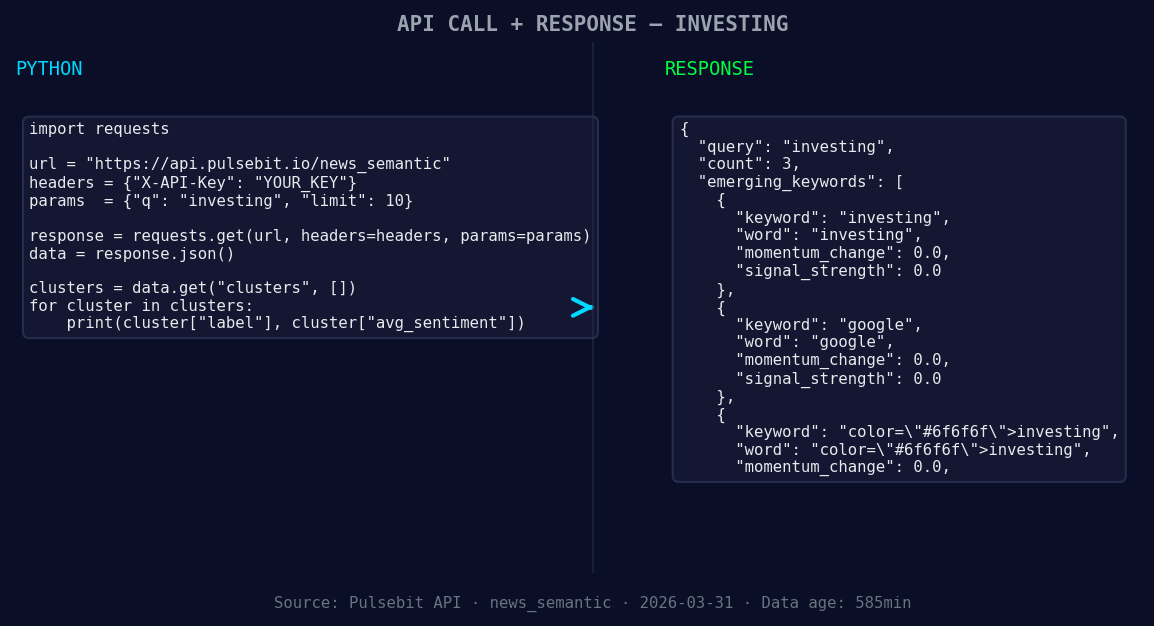
*Left: Python GET /news_semantic call for 'investing'. Right: returned JSON response structure (clusters: 3). Source: Pulsebit /news_semantic.*
# Make the API call
response = requests.get(url, params=params)
data = response.json()
print(data)
Next, we need to examine the narrative framing around this sentiment. We’ll run the cluster reason string through our sentiment analysis endpoint to score it. Here’s the code snippet for that:
# Meta-sentiment moment: score the narrative framing
sentiment_url = "https://api.pulsebit.com/sentiment"
cluster_reason = "Clustered by shared themes: investing, early, childhood, mental, health."

# POST request for sentiment analysis
sentiment_response = requests.post(sentiment_url, json={"text": cluster_reason})
sentiment_data = sentiment_response.json()
print(sentiment_data)
This approach not only gives you the raw data but also provides insight into the framing of the narrative, enabling more informed decision-making.
Three Builds Tonight
Now that we've established how to catch this lead, let's discuss three specific builds we can implement based on this pattern:
- Geographic Sentiment Tracker: Build a tracking system that alerts you when sentiment shifts in specific regions, particularly in French-speaking areas. Use the geo filter to catch any momentum changes in the investing topic with a threshold of -0.2, indicating a significant downturn.

Geographic detection output for investing. Hong Kong leads with 1 articles and sentiment +0.85. Source: Pulsebit /news_recent geographic fields.
Meta-Sentiment Analyzer: Develop a function that continuously feeds cluster reasons back through the sentiment endpoint. This should be automated to run every 12 hours, allowing you to capture shifts in sentiment narratives around early childhood investments, helping you frame your content strategy.
Forming Themes Dashboard: Create a dashboard that visualizes forming themes in real-time. For example, track the sentiment scores of "investing(+0.00)" vs. mainstream themes like "early" and "childhood." Set alerts for significant deviations in sentiment scores, particularly when they diverge from your baseline.
Get Started
Ready to dive in? Head over to our documentation at pulsebit.lojenterprise.com/docs. You can copy-paste and run these snippets in under 10 minutes, allowing you to catch these sentiment shifts before your competition does. Happy coding!


Top comments (0)