

Your pipeline just missed a significant 24h momentum spike of +0.750 in finance sentiment. This anomaly highlights a growing sentiment trend that you might have overlooked—one that could have implications for your trading or investment strategies. The leading language in this sentiment shift is English, with a clear focus on recent legislative developments in India, specifically around the Lok Sabha's amendments to insolvency laws. Understanding the context and timing of such spikes can provide a critical edge, helping you stay ahead of the curve.
The structural gap exposed here is alarming. If your pipeline doesn’t account for multilingual origins or the dominance of specific entities, you risk missing vital sentiment signals. In this case, your model fell behind by 13.1 hours, failing to recognize that the English press has been leading the narrative. This delay could mean the difference between capturing a profitable opportunity or watching it slip away.

English coverage led by 13.1 hours. Tl at T+13.1h. Confidence scores: English 0.95, Spanish 0.95, French 0.95 Source: Pulsebit /sentiment_by_lang.
Here’s how we can catch this momentum spike using Python and our API. First, let’s filter by language to focus on English articles:
import requests
# Define your parameters
topic = 'finance'
score = -0.050
confidence = 0.95
momentum = +0.750
# API call to get articles with a geographic origin filter
response = requests.get("https://api.pulsebit.com/v1/articles", params={
"topic": topic,
"lang": "en",
"score": score,
"confidence": confidence,
"momentum": momentum,
})
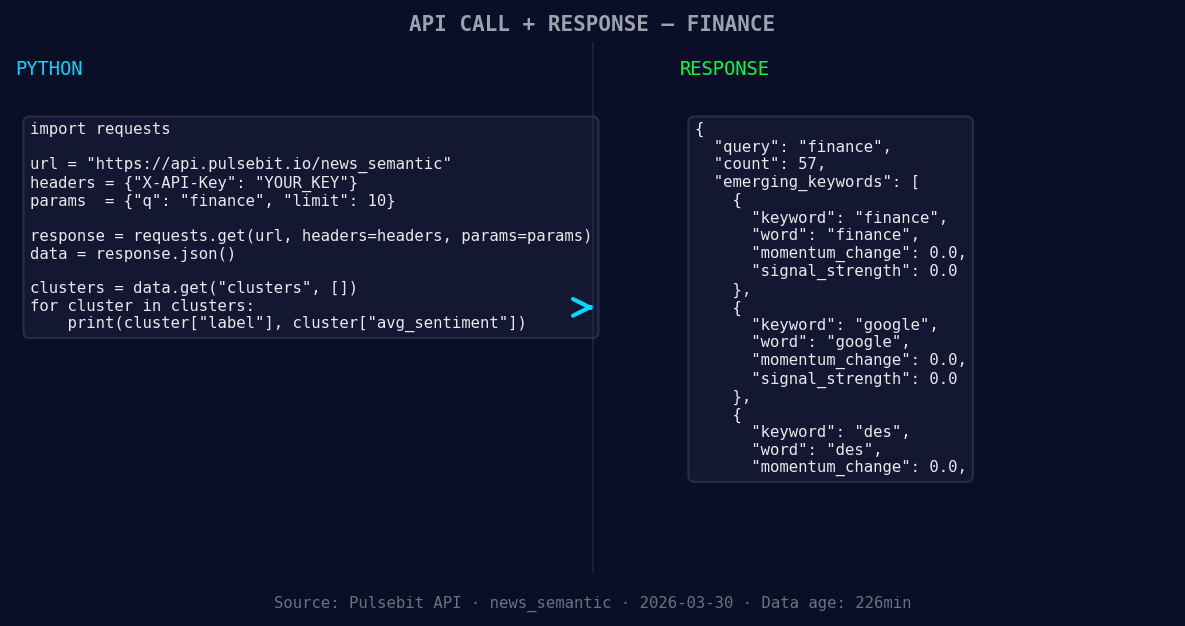
*Left: Python GET /news_semantic call for 'finance'. Right: returned JSON response structure (clusters: 3). Source: Pulsebit /news_semantic.*
articles = response.json()
print(articles)
Now, to validate the sentiment framing of the cluster story, we run the cluster reason string through our sentiment endpoint:
# Cluster reason string
cluster_reason = "Clustered by shared themes: lok, sabha, insolvency, bill, help."

# API call to score the narrative framing
sentiment_response = requests.post("https://api.pulsebit.com/v1/sentiment", json={
    "text": cluster_reason
})

sentiment_score = sentiment_response.json()
print(sentiment_score)
With these two calls, we can effectively track and validate sentiment shifts that are critical to our trading decisions.
Now that we’ve spotted the momentum spike and validated its framing, here are three builds we can leverage from this pattern:
Geo-Filtered Insights: Create an endpoint that alerts us when sentiment in English exceeds a certain threshold (e.g., +0.500) on topics related to finance. This will ensure we are constantly updated on relevant developments in key markets.
Meta-Sentiment Analysis: Develop a function that automatically processes cluster reason strings through our sentiment endpoint for any article that mentions legislative changes. This would provide quick validation for the narrative context and sentiment framing behind key news articles.
Thematic Gap Analysis: Set up a monitoring system that checks for forming gaps between emerging themes (like finance and insolvency) and mainstream narratives. If the sentiment in these emerging themes starts to diverge significantly, it could indicate a pending shift in market behavior.
To get started, visit pulsebit.lojenterprise.com/docs. You can copy-paste and run this in under 10 minutes, allowing you to integrate these insights into your own systems effectively.


Top comments (0)