

Your Pipeline Is 25.0h Behind: Catching Cloud Sentiment Leads with Pulsebit
We just noticed an intriguing anomaly: a 24h momentum spike of +0.175. This spike indicates a significant surge in sentiment around the topic of "cloud," driven by a specific cluster story titled "Weather Relief in Hyderabad: Rain and Hailstorm." The leading language for this sentiment is Indonesian, with a dominant entity lagging by 25.0 hours. If you're not tracking multilingual origin or entity dominance, your pipeline might be missing critical signals like this, leaving you trailing behind by a full day.

Id coverage led by 25.0 hours. Af at T+25.0h. Confidence scores: Id 0.85, Spanish 0.85, English 0.85 Source: Pulsebit /sentiment_by_lang.
Now, think about the implications: your model missed this spike by 25.0 hours. In a world where real-time insights can dictate strategic decisions, that’s a significant gap. The leading language of this spike is Indonesian, pointing to a critical need for systems that can handle multiple languages seamlessly.
Here's how we can catch this sentiment spike using our API. First, we'll apply a geographic origin filter to ensure we're capturing the right data. This means querying specifically for the Indonesian language. Below is the Python code to execute this:

Geographic detection output for cloud. Hong Kong leads with 4 articles and sentiment +0.23. Source: Pulsebit /news_recent geographic fields.
import requests
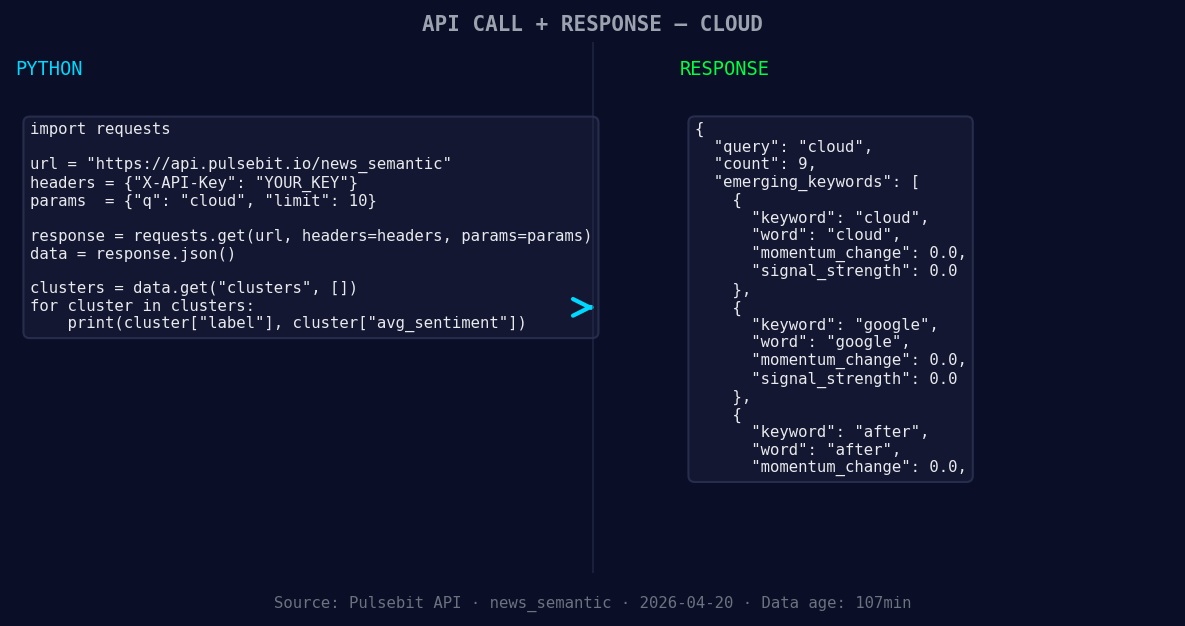
*Left: Python GET /news_semantic call for 'cloud'. Right: returned JSON response structure (clusters: 3). Source: Pulsebit /news_semantic.*
# Define parameters
params = {
'topic': 'cloud',
'lang': 'id', # Filtering for Indonesian language
}
response = requests.get('https://api.pulsebit.com/sentiment', params=params)
# Check response
data = response.json()
print(data)
Next, we want to run the cluster reason string through our sentiment endpoint to score the narrative itself. This is where we take the cluster story and assess its framing:
# Meta-sentiment moment
cluster_reason = "Clustered by shared themes: sudden, rain, hailstorm, bring, relief."
meta_sentiment_response = requests.post('https://api.pulsebit.com/sentiment', json={'text': cluster_reason})

# Check response
meta_sentiment_data = meta_sentiment_response.json()
print(meta_sentiment_data)
Now, with these two pieces in place, you can start to build actionable insights from this data spike.
Here are three specific builds to consider based on this pattern:
Geo-Filtered Alerts: Create an alerting system that triggers when sentiment around "cloud" in Indonesia exceeds a threshold score of +0.519. Use our API with the language filter to ensure you only catch relevant spikes.
Meta-Sentiment Analysis Dashboard: Build a dashboard that visualizes meta-sentiment scores for various clusters. Use the output from the POST request on the cluster reason to inform your visualizations and highlight narrative framing.
Comparative Analysis Tool: Develop a tool that compares current sentiment spikes with historical data. For instance, analyze "cloud" versus mainstream narratives like "sudden, rain, hailstorm" and flag any significant deviations or correlations.
Each of these builds leverages the unique insights provided by the geographic origin and meta-sentiment analysis, ensuring your pipeline stays ahead of the curve.
For more details on how to implement these ideas, visit our documentation at pulsebit.lojenterprise.com/docs. You can copy-paste and run the above code in under 10 minutes to start catching sentiment leads effectively.


Top comments (0)