

Your Pipeline Is 22.0h Behind: Catching Economy Sentiment Leads with Pulsebit
We just observed a striking anomaly: a 24-hour momentum spike of +0.881 surrounding the topic of the economy. This spike signals a significant shift in sentiment, and it’s one you should be paying attention to. The leading language for this spike is English, with a press focus led by a pivotal article titled, "The Economy Is on the Edge. What Could Tip It Over, or Help It Pull Through." This is a crucial moment that highlights the urgency of staying updated with real-time sentiment movements.
But here’s the catch: if your pipeline doesn’t handle multilingual origins or account for entity dominance, you might have missed this critical insight by a staggering 22 hours. That’s right—your model may have been oblivious to this shift, while the leading English press was already buzzing about it. The dominance of English in this context means you could be lagging behind when it comes to capturing real-time sentiment that influences market dynamics.

English coverage led by 22.0 hours. Id at T+22.0h. Confidence scores: English 0.85, French 0.85, Spanish 0.85 Source: Pulsebit /sentiment_by_lang.
To catch these insights, we can leverage our API. Here’s how you can set up a Python script to identify significant sentiment shifts like this one.
import requests
# Define parameters for the API call
topic = 'economy'
score = +0.233
confidence = 0.85
momentum = +0.881
lang = 'en'
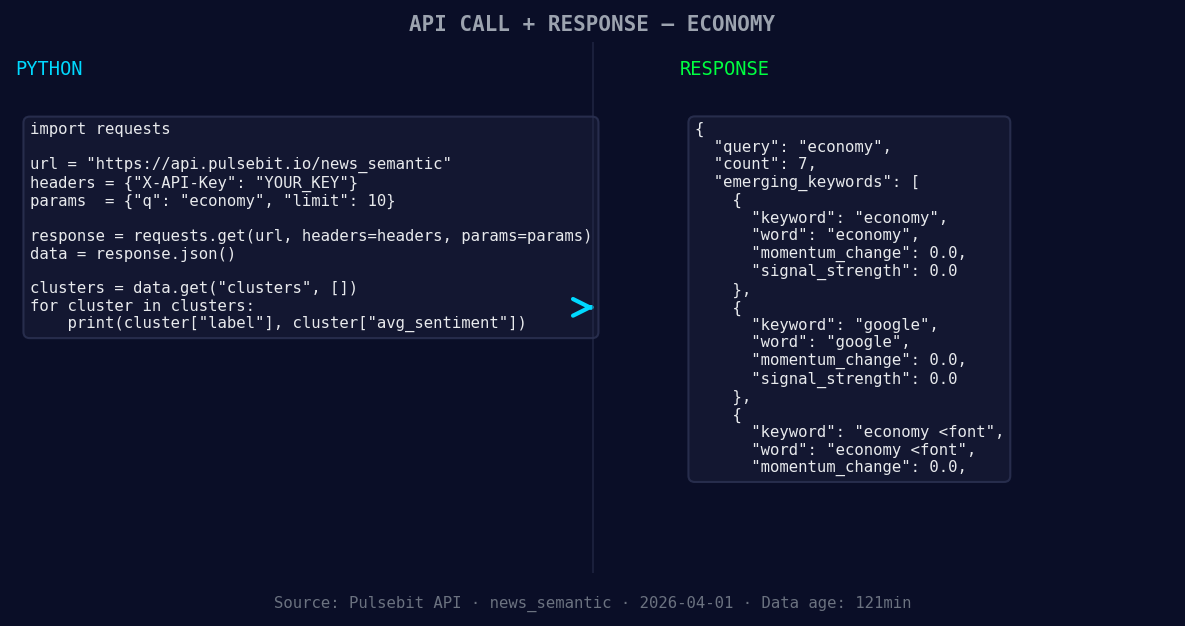
*Left: Python GET /news_semantic call for 'economy'. Right: returned JSON response structure (clusters: 3). Source: Pulsebit /news_semantic.*
# Geographic origin filter: query by language
url = f'https://api.pulsebit.com/v1/sentiment?topic={topic}&lang={lang}'
response = requests.get(url)
data = response.json()
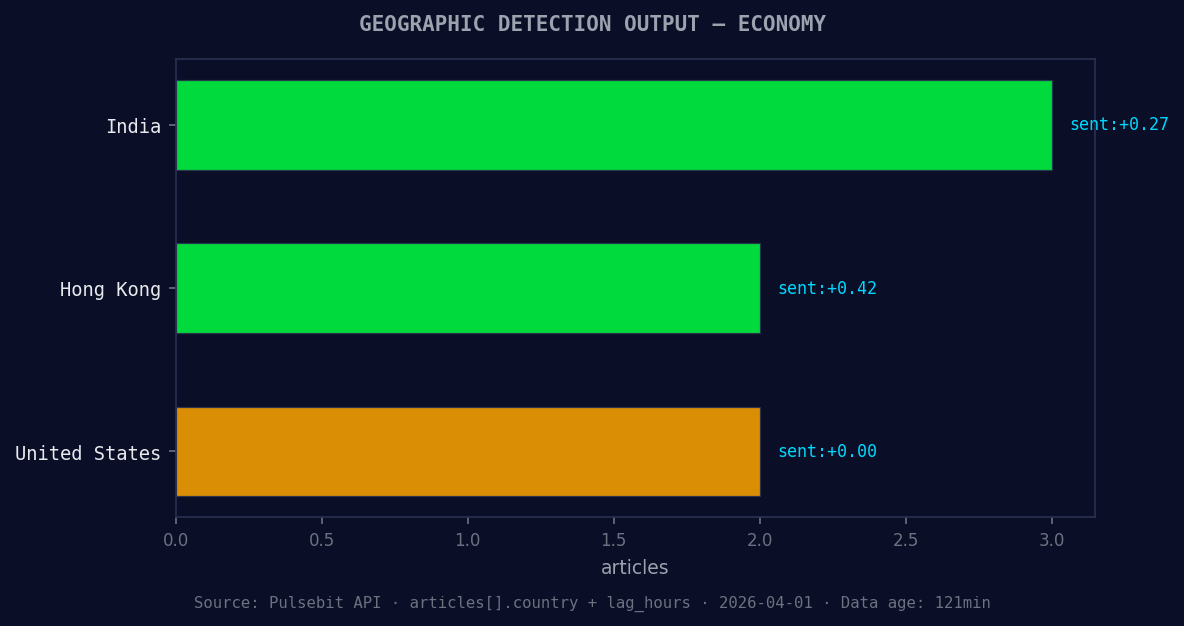
*Geographic detection output for economy. India leads with 3 articles and sentiment +0.27. Source: Pulsebit /news_recent geographic fields.*
# Print out the fetched data
print(data)
# Meta-sentiment moment: run cluster reason back through POST /sentiment
cluster_reason = "Clustered by shared themes: economy, edge, what, could, tip."
meta_sentiment_url = 'https://api.pulsebit.com/v1/sentiment'
meta_response = requests.post(meta_sentiment_url, json={"text": cluster_reason})
meta_sentiment_data = meta_response.json()
# Print out the meta sentiment data
print(meta_sentiment_data)
In this code, we first filter the sentiment data by the English language, specifically targeting the topic of the economy. This helps us catch sentiments that may be leading indicators of shifts in public opinion or market movements. Next, we take the narrative framing from our cluster and run it back through the sentiment analysis to score the narrative itself. This is where we can get a deep understanding of the themes shaping the conversation.
Now, let’s look at three specific builds you can create with this momentum spike:
Sentiment Alert System: Set a threshold for sentiment score changes (+0.5) and integrate a geo-filter by language. This will notify you instantly when significant shifts occur in specific regions, such as English-speaking countries.
Meta-Sentiment Analysis Tool: Develop a service that continuously loops through cluster reasons (like the one mentioned) and scores them using the meta-sentiment endpoint. This will give you insight into how narratives evolve within specific themes, offering a nuanced view of sentiment shifts.
Dynamic Theme Tracker: Build a dashboard that tracks forming themes like “economy”, “google”, and “what”. Use a combination of API calls that leverage both the geographic origin filter and the meta-sentiment loop to visualize how these themes are perceived over time.
With these builds, you can be proactive rather than reactive, ensuring you stay ahead of the curve in understanding sentiment around critical topics.
To get started, check out our documentation at pulsebit.lojenterprise.com/docs. You can copy, paste, and run the above code in under 10 minutes to start catching these valuable insights. This is your opportunity to refine your sentiment analysis pipeline and ensure you’re not missing out on the next big story.


Top comments (0)