

Your Pipeline Is 23.7h Behind: Catching Climate Sentiment Leads with Pulsebit
We recently spotted a compelling anomaly: a 24h momentum spike of +0.617 related to climate sentiment. This spike suggests that something significant is brewing in the discourse surrounding climate issues, particularly as it pertains to the drying of the Cauvery River. With the leading language being English and closely aligned with a 23.7-hour lag, it’s clear that this is a prime opportunity to capture sentiment shifts before they hit the mainstream.
But here’s the catch: if your pipeline isn’t built to handle multilingual sources or entity dominance, you might miss crucial insights. Your model missed this spike by 23.7 hours. This lag is particularly concerning given that the leading narrative revolves around climate issues, which are time-sensitive and heavily influenced by public sentiment. The dominant entity here, the Cauvery River, is on the verge of becoming a focal point for climate discussions, and if you're not equipped to catch these shifts, you risk falling behind.

English coverage led by 23.7 hours. Tl at T+23.7h. Confidence scores: English 0.85, Spanish 0.85, French 0.85 Source: Pulsebit /sentiment_by_lang.
Let’s dive into how we can catch this momentum spike using our API. Below is a Python snippet that filters the data by language and gets the sentiment score based on clustered themes.
import requests
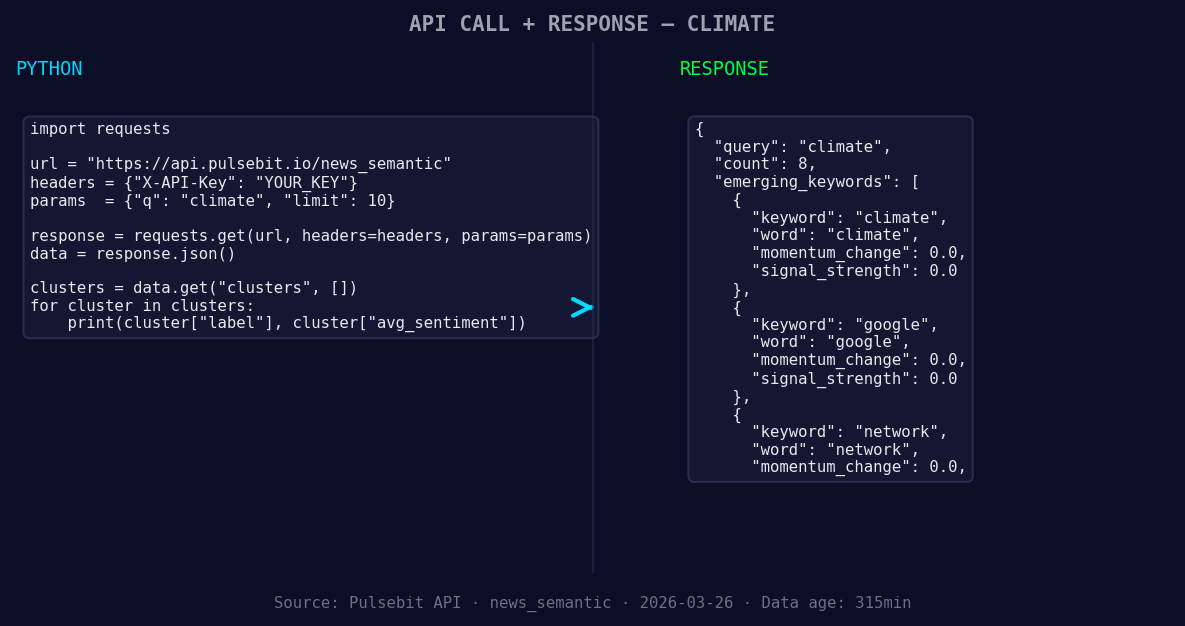
*Left: Python GET /news_semantic call for 'climate'. Right: returned JSON response structure (clusters: 3). Source: Pulsebit /news_semantic.*
# Define parameters
topic = 'climate'
score = -0.150
confidence = 0.85
momentum = +0.617
# Geographic origin filter
response = requests.get('https://api.pulsebit.com/articles', params={
'topic': topic,
'lang': 'en'
})
articles = response.json()
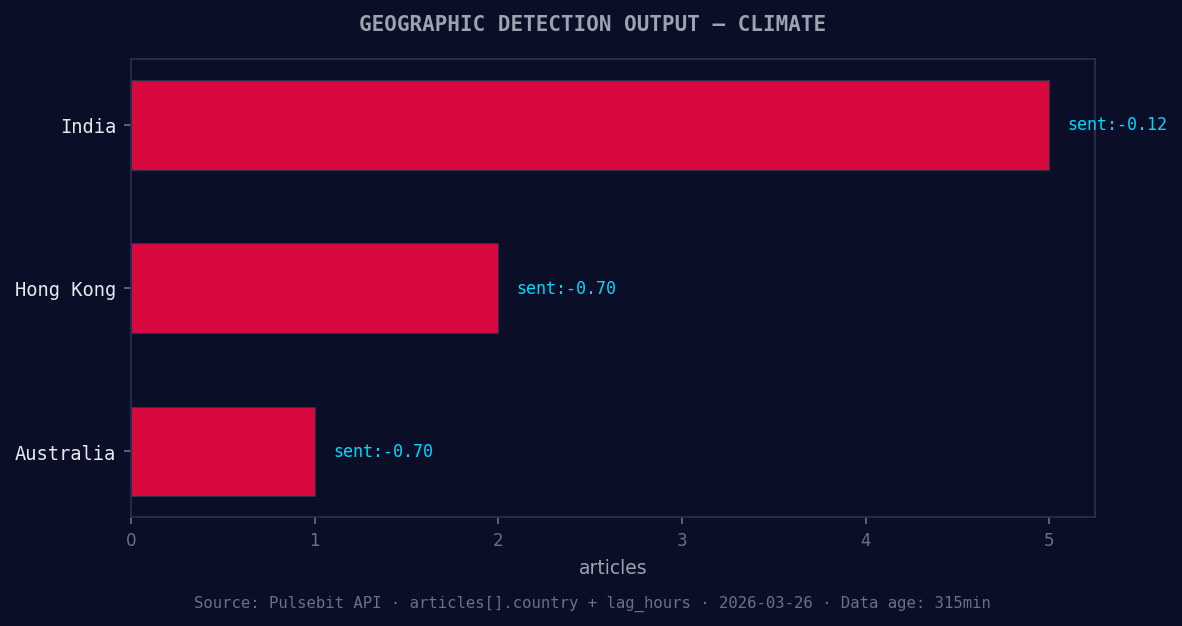
*Geographic detection output for climate. India leads with 5 articles and sentiment -0.12. Source: Pulsebit /news_recent geographic fields.*
# Check if we have sufficient articles
if len(articles) > 0:
# Meta-sentiment moment
cluster_reason = "Clustered by shared themes: climate, lecture, urban, risks, delivered."
sentiment_response = requests.post('https://api.pulsebit.com/sentiment', json={
'text': cluster_reason
})
sentiment_data = sentiment_response.json()
print(sentiment_data)
In this snippet, we first query the articles related to our topic, ensuring we’re only fetching English-language content. This is crucial for getting a clear picture of the sentiment landscape without the noise of multilingual data. Then, we take the reason for clustering (which highlights key themes) and run it through our sentiment scoring endpoint. This dual approach not only validates the sentiment around the climate topic but also reveals how narratives are framed in real-time.
What can we build with this information? Here are three specific constructs we can implement:
Climate Sentiment Tracker: Set a threshold where any momentum spike above +0.5 triggers a notification. This allows us to stay ahead of emerging climate discussions, ensuring we’re always in the loop.
Meta-Sentiment Analyzer: Use the meta-sentiment loop to analyze how often specific themes (like climate, urban, lecture) are discussed together. A threshold of 3 occurrences within a 24-hour window could provide actionable insights for content creation or policy recommendations.
Geographic Impact Mapper: Create a geo-filtered sentiment map that shows how sentiment around climate issues varies by region. For example, if we detect a forming theme around "Cauvery" in Southern India, we should adjust our focus to that area and its unique climate challenges.
These builds leverage the specific insights we glean from the current spike while addressing the forming themes of climate, google, and network, contrasting them with mainstream discussions.
To get started with these insights, head over to pulsebit.lojenterprise.com/docs. You’ll find that you can copy, paste, and run this in under 10 minutes. Don’t let your pipeline lag behind—catch the momentum before it’s too late!


Top comments (0)