

Your Pipeline Is 17.8h Behind: Catching Trade Sentiment Leads with Pulsebit
We recently discovered a striking anomaly: a 24-hour momentum spike of +0.438 in trade sentiment tied to a single narrative. The leading language for this spike was French, with a 17.8-hour lead compared to the Netherlands, which had zero lag. The cluster story revolved around "China rejects U.S. sanctions on refineries over Iran oil links." This highlights how crucial it is to capture sentiment in multiple languages and how quickly narratives can shift.
The Problem
If your model isn’t set up to handle multilingual origin or entity dominance, you could easily miss critical developments—like this one—by 17.8 hours. This delay can cost you insights that are essential for timely decision-making. In this case, a sentiment spike linked to trade was buried under the mainstream narratives of sanctions and international relations. If you’re relying solely on English-language data, you’re likely missing out on significant sentiment shifts occurring in other languages.

French coverage led by 17.8 hours. Nl at T+17.8h. Confidence scores: French 0.75, English 0.75, Spanish 0.75 Source: Pulsebit /sentiment_by_lang.
The Code
To catch this spike, we can use our API to filter for the French language and analyze sentiment based on the identified narrative. Here’s how you can do that in Python:
import requests
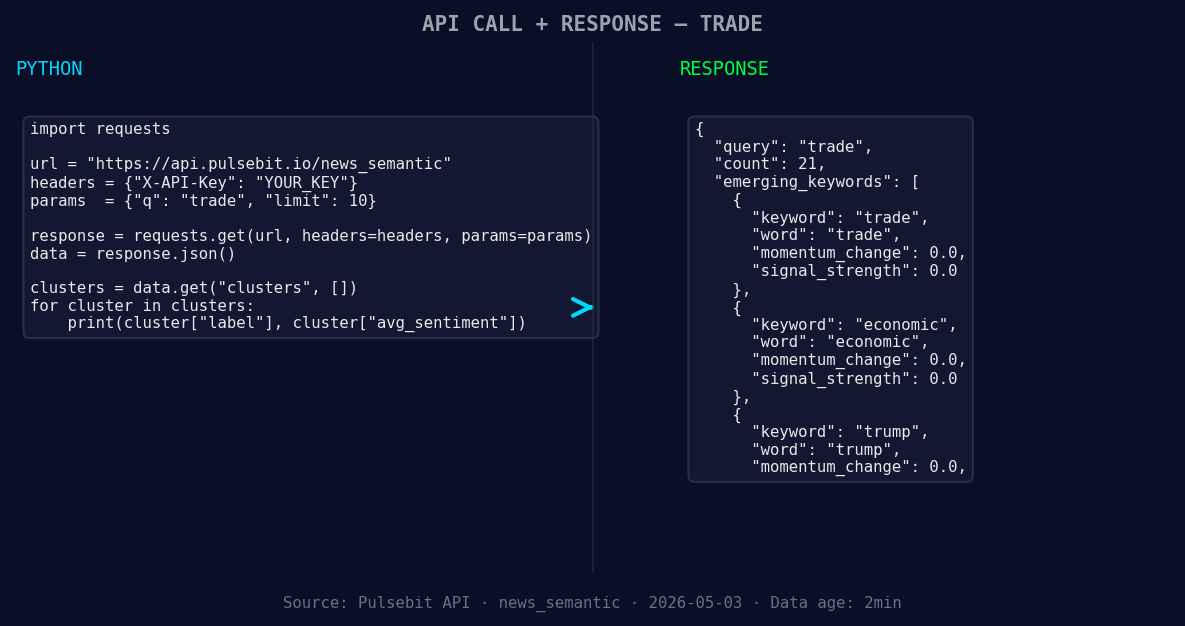
*Left: Python GET /news_semantic call for 'trade'. Right: returned JSON response structure (clusters: 3). Source: Pulsebit /news_semantic.*
# Define parameters
topic = 'trade'
score = +0.000
confidence = 0.75
momentum = +0.438
language = 'fr'
# Step 1: Geographic origin filter
response = requests.get(
f"https://api.pulsebit.com/v1/sentiment?topic={topic}&lang={language}&score={score}&confidence={confidence}&momentum={momentum}"
)
data = response.json()
print(data)
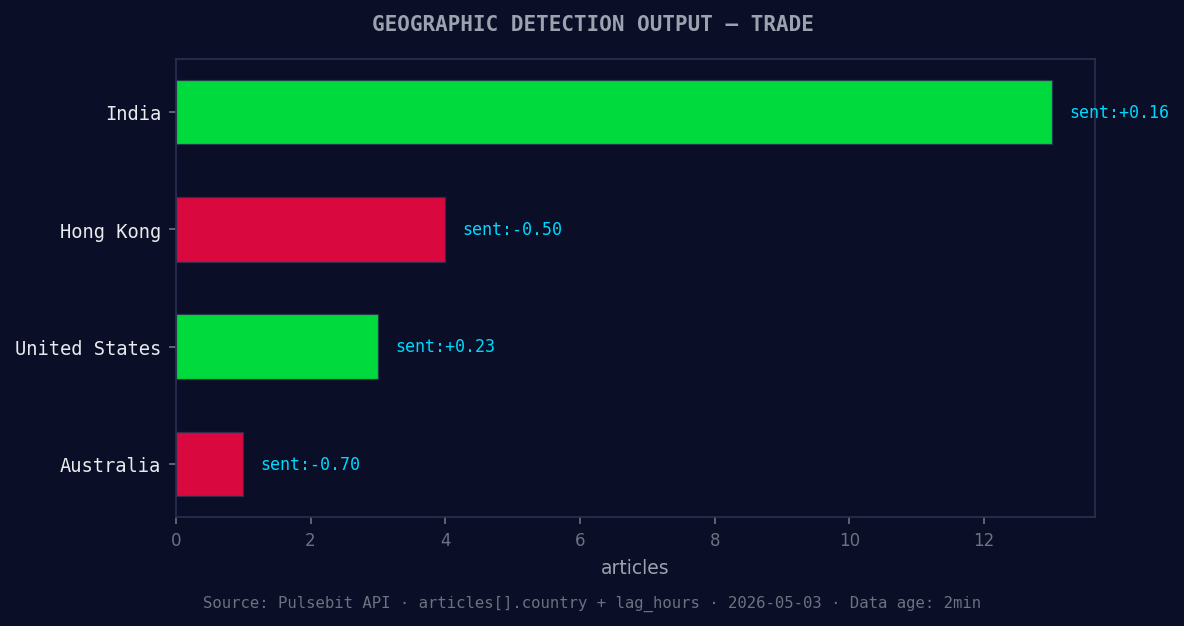
*Geographic detection output for trade. India leads with 13 articles and sentiment +0.16. Source: Pulsebit /news_recent geographic fields.*
# Step 2: Meta-sentiment moment
cluster_reason = "Clustered by shared themes: sanctions, international, china, rejects, refineris."
sentiment_response = requests.post(
"https://api.pulsebit.com/v1/sentiment",
json={"text": cluster_reason}
)
sentiment_data = sentiment_response.json()
print(sentiment_data)
In the first step, we filter our query to focus on French language articles related to trade, capturing the momentum and sentiment scores. In the second step, we run the cluster reason string through our sentiment analysis endpoint to evaluate how the narrative frames the overall sentiment. This dual approach gives us a comprehensive view of emerging themes.
Three Builds Tonight
Now that we’ve captured this sentiment, here are three specific builds that can help you harness this pattern:
Geo-Sentiment Index: Create an index that monitors sentiment by geographic origin. Set a signal threshold of +0.300 in French articles related to trade. This will allow you to capture early signals about potential shifts in sentiment before they hit the mainstream.
Cluster Sentiment Tracker: Utilize the meta-sentiment loop to track narratives surrounding sanctions and trade. Set a trigger to alert you if the sentiment score dips below +0.100, indicating a significant shift in sentiment that could influence market dynamics.
Dynamic Content Feed: Build a dynamic content feed that updates in real time based on sentiment spikes. Use the geo filter to prioritize articles in French and set a momentum threshold of +0.200 to surface relevant stories, like those concerning economic relations and trade policies.
Get Started
Ready to catch sentiment shifts before they impact your decisions? Check out our documentation at pulsebit.lojenterprise.com/docs. You can copy-paste and run the code provided in under 10 minutes, and start integrating multilingual sentiment analysis into your workflow.


Top comments (0)