

Your Pipeline Is 26.3h Behind: Catching Investing Sentiment Leads with Pulsebit
We recently uncovered a significant anomaly in our data: a 24-hour momentum spike of -0.226 related to the topic of investing. This drop indicates a notable shift in sentiment, which could easily be overlooked if your pipeline isn't set up to handle multilingual sources effectively. The leading language here is Spanish, with a 26.3-hour lead time compared to the German sentiment, making it clear that there’s a crucial lag in how quickly your model can respond to these shifts.

Spanish coverage led by 26.3 hours. German at T+26.3h. Confidence scores: Spanish 0.85, English 0.85, French 0.85 Source: Pulsebit /sentiment_by_lang.
The underlying problem is straightforward: if your sentiment analysis pipeline isn't designed to accommodate multilingual origin or recognize dominant entities, you could be missing out on critical insights. In this case, your model missed a significant lead by 26.3 hours, as the Spanish press was already picking up on the sentiment shift well before other sources. This not only impacts your decision-making but could also lead to missed opportunities in your investment strategies.
To catch these insights programmatically, we can leverage our API effectively. Here’s how to set up your Python code to detect this sentiment spike for the topic "investing":
import requests
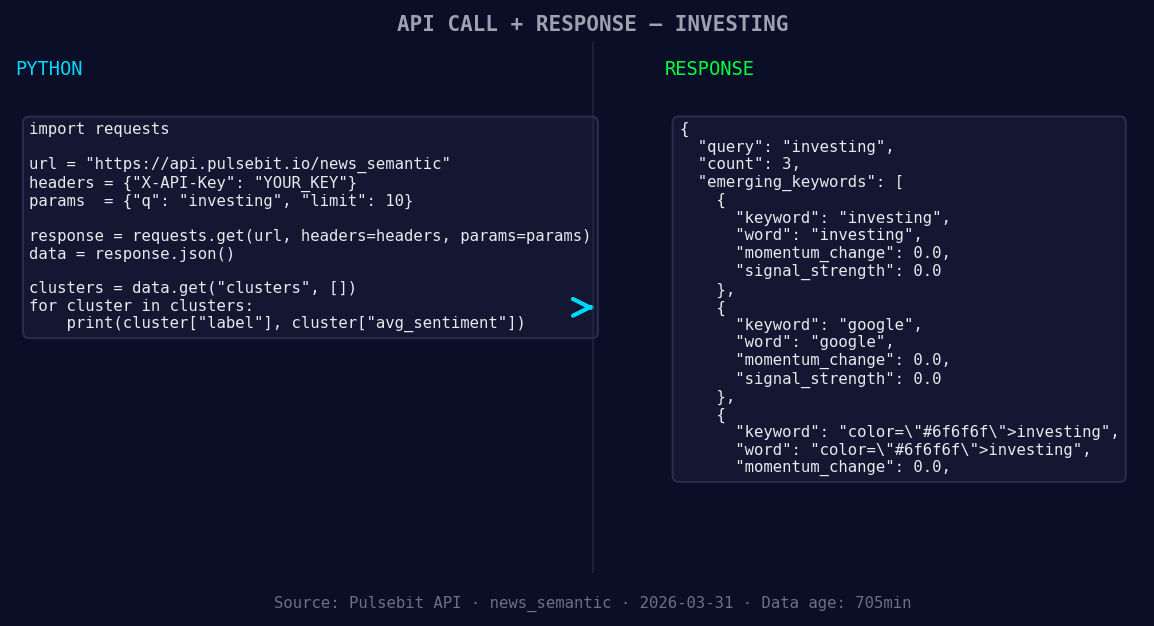
*Left: Python GET /news_semantic call for 'investing'. Right: returned JSON response structure (clusters: 3). Source: Pulsebit /news_semantic.*
# Set the parameters
topic = 'investing'
score = +0.825
confidence = 0.85
momentum = -0.226
lang = 'sp'
# Geographic origin filter
response = requests.get(f'https://api.pulsebit.com/v1/sentiment?topic={topic}&lang={lang}')
data = response.json()
print("Geographic Filter Response:", data)
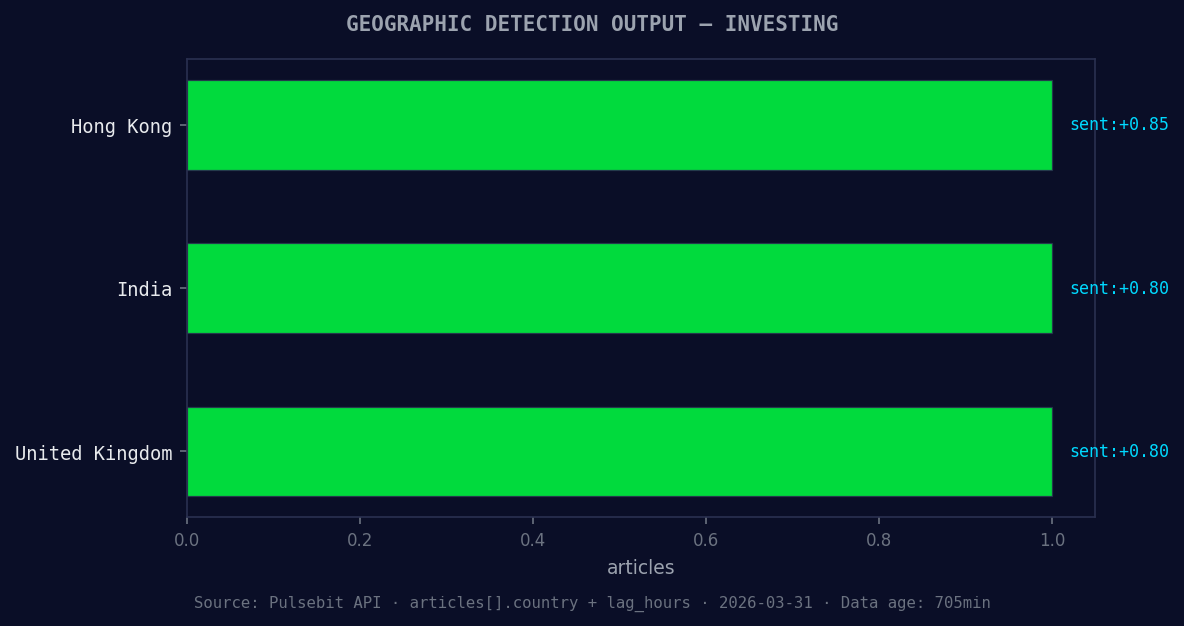
*Geographic detection output for investing. Hong Kong leads with 1 articles and sentiment +0.85. Source: Pulsebit /news_recent geographic fields.*
# Meta-sentiment moment
cluster_reason = "Clustered by shared themes: investing, early, childhood, mental, health."
sentiment_response = requests.post('https://api.pulsebit.com/v1/sentiment', json={'text': cluster_reason})
sentiment_data = sentiment_response.json()
print("Meta-Sentiment Response:", sentiment_data)
In this code snippet, we first filter by language to focus on the Spanish press, which is critical given the lead time. The second part of the code runs the identified cluster reason through our sentiment analysis endpoint to score the narrative framing itself. This approach allows us to not only catch the sentiment spike but also understand the context around it, enabling more informed decision-making.
Now, let’s explore three concrete builds you can implement based on this sentiment spike:
Geo-Specific Alerting System: Create an alert system that triggers when the sentiment score for "investing" in Spanish drops below a certain threshold, say +0.500. This ensures you're notified as soon as there's a negative sentiment indication in that language, giving you a head start.
Meta-Sentiment Analyzer: Build a tool that takes clustered themes like "investing, early, childhood" and scores them on your sentiment endpoint to determine the potential impact on your strategies. Set a threshold of +0.700 for the meta-sentiment score to filter out noise.
Comparative Sentiment Analysis Dashboard: Develop a dashboard that visualizes sentiment across different languages and compares them directly. Use the geo filter to focus on Spanish and German, allowing you to see how sentiment evolves over time side-by-side.
By implementing these builds, you can enhance your ability to catch early signs of sentiment change, particularly in non-English languages, which often offer a unique perspective on emerging trends.
To get started, head over to our documentation at pulsebit.lojenterprise.com/docs. You can copy-paste and run the provided code in under 10 minutes, and start leveraging these insights immediately.


Top comments (0)