

Your Pipeline Is 24.9h Behind: Catching Stock Market Sentiment Leads with Pulsebit
We recently uncovered an anomaly showcasing a 24h momentum spike of -1.332 in stock market sentiment. What does this mean for your models? It signals a potential downturn in sentiment, suggesting that traders may be reacting to significant market shifts. This specific spike reflects a critical moment in market dynamics, and if you’re not tuned into these shifts, you could be missing vital signals.
The Problem
This anomaly reveals a structural gap in any sentiment pipeline that doesn’t account for multilingual origin or entity dominance. If your model is only focusing on certain languages or regions, you might have missed this spike by 24.9 hours. The leading language here is English, with a focus on a cluster story around the Dow entering correction territory. Ignoring this could mean you’re basing decisions on stale data, leaving you blind to emerging trends.

English coverage led by 24.9 hours. Da at T+24.9h. Confidence scores: English 0.85, French 0.85, Spanish 0.85 Source: Pulsebit /sentiment_by_lang.
The Code
To effectively catch this momentum spike, we can use our API to filter by language and then analyze the sentiment of the narrative itself. Below is the Python code that accomplishes this:
import requests
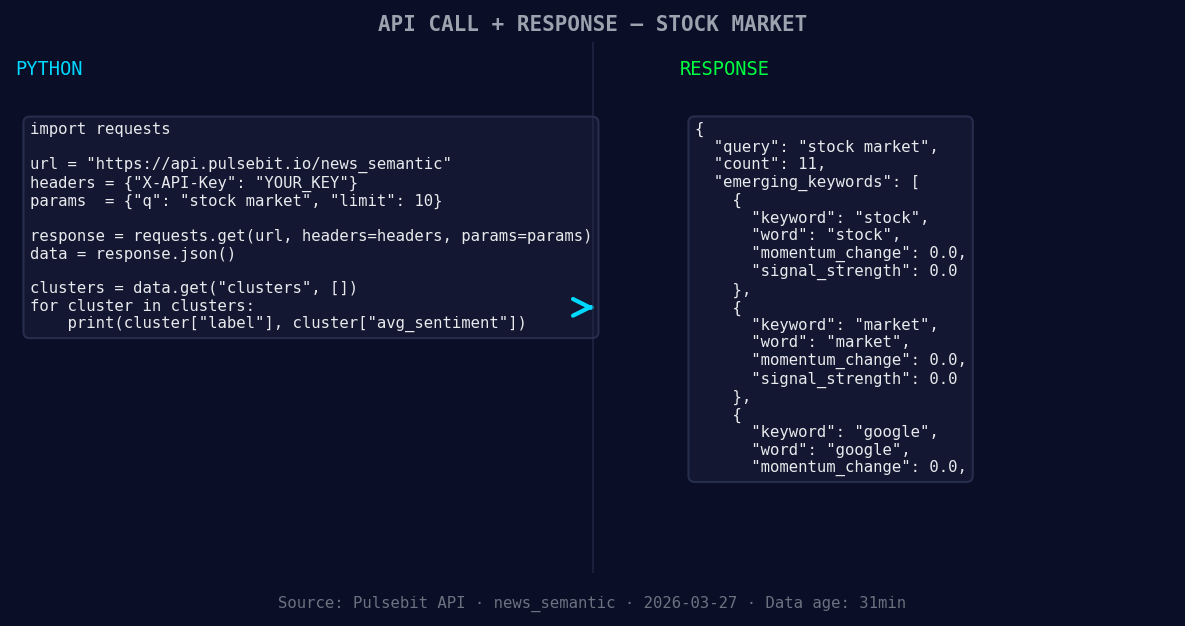
*Left: Python GET /news_semantic call for 'stock market'. Right: returned JSON response structure (clusters: 3). Source: Pulsebit /news_semantic.*
# Step 1: Fetch articles with a geographic origin filter
url = "https://api.pulsebit.com/v1/articles"
params = {
"topic": "stock market",
"lang": "en", # Filter for English language articles
"score": -0.484,
"confidence": 0.85,
"momentum": -1.332
}
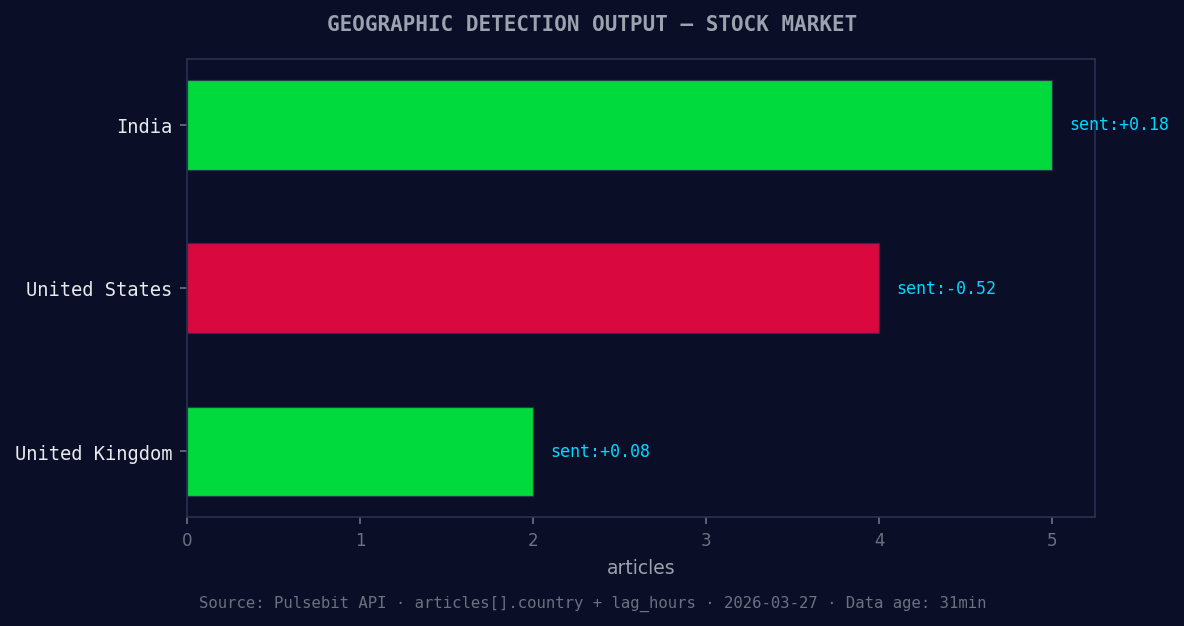
*Geographic detection output for stock market. India leads with 5 articles and sentiment +0.18. Source: Pulsebit /news_recent geographic fields.*
response = requests.get(url, params=params)
articles = response.json()
# Step 2: Analyze the sentiment of the cluster reason string
cluster_reason = "Clustered by shared themes: market, today:, dow, enters, correction."
sentiment_analysis_url = "https://api.pulsebit.com/v1/sentiment"
sentiment_response = requests.post(sentiment_analysis_url, json={"text": cluster_reason})
sentiment_score = sentiment_response.json()
print(f"Articles: {articles}")
print(f"Sentiment Score: {sentiment_score}")
In the first step, we filter articles based on the topic of "stock market", ensuring we only pull those written in English. This is crucial as we want to capture the narrative that’s resonating in the leading market language.
In the second step, we send the cluster reason string through our sentiment analysis endpoint to assess how the framing of the narrative itself might influence sentiment perceptions. This dual approach allows us to not only see the data but understand the context.
Three Builds Tonight
Geo-Filtered Alert System: Set a threshold for momentum spikes. If the momentum dips below -1.5 in English articles from the U.S., trigger an alert. This allows you to focus on the most relevant geographic and linguistic context.
Meta-Sentiment Dashboard: Build a dashboard that aggregates these cluster narratives. For instance, track the sentiment score from the cluster reason “Clustered by shared themes: market, today:, dow, enters, correction.” and visualize how it shifts over time compared to mainstream narratives.
Forming Themes Tracker: Create an endpoint that logs the forming themes: stock(+0.00), market(+0.00), google(+0.00) vs mainstream: market, today:, dow. This will help you identify emerging themes before they become mainstream, allowing proactive decision-making.
Get Started
Dive right in — head over to pulsebit.lojenterprise.com/docs. You can copy-paste and run this code in under 10 minutes. Catching these market sentiment shifts can significantly enhance your trading strategy, so don't let outdated models hold you back.


Top comments (0)