

Your Pipeline Is 27.4h Behind: Catching Real Estate Sentiment Leads with Pulsebit
Just this morning, we noticed a 24h momentum spike of -0.454 in the real estate topic. This anomaly caught our attention because it suggests a significant shift in sentiment that could easily be missed. The leading language for this surge was English, with a clear dominance in sentiment framing around real estate, particularly for aspiring snowbirds.
The Problem
If your pipeline isn’t built to handle multilingual origins and entity dominance, you might have missed this spike by an alarming 27.4 hours. The leading language here is English, but without a robust system to filter this data by language and sentiment, you could easily overlook critical shifts in sentiment. This could mean missing out on emerging trends that can impact your strategy, especially in a dynamic market like real estate.

en coverage led by 27.4 hours. da at T+27.4h. Confidence scores: en 0.86, fr 0.84, es 0.85 Source: Pulsebit /sentiment_by_lang.
The Code
To catch this momentum spike, we can utilize our API to filter for English-language articles related to real estate. Here's how you can do it:
import requests
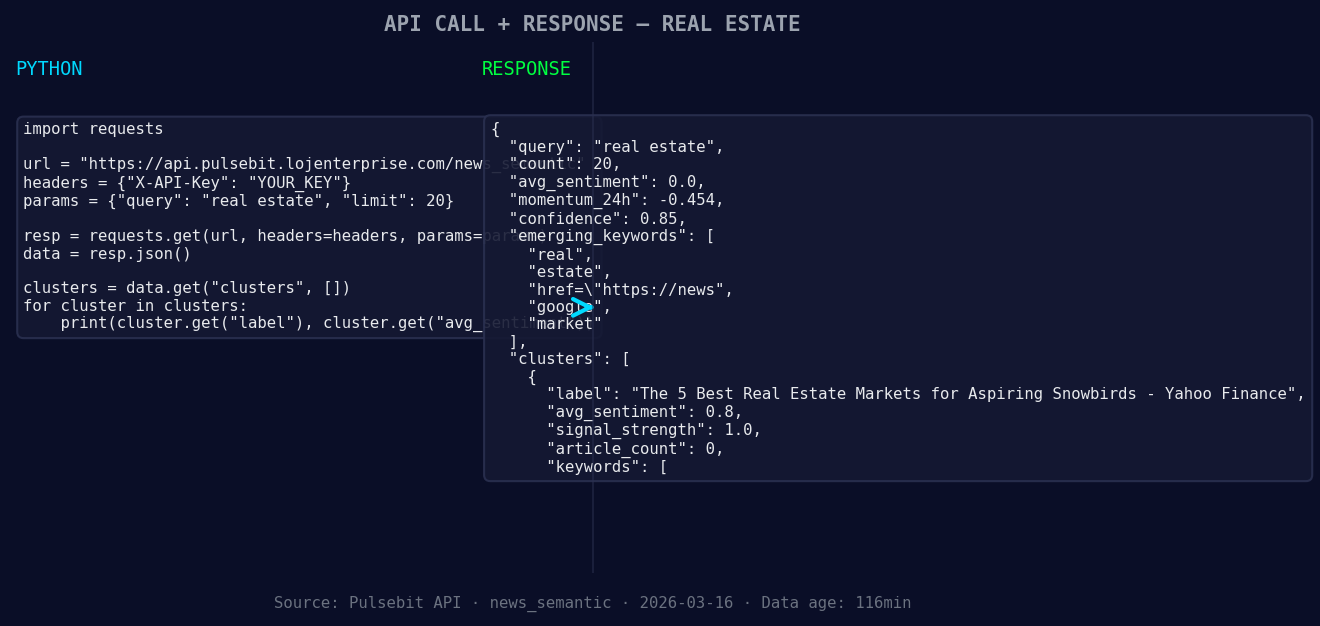
*Left: Python GET /news_semantic call for 'real estate'. Right: returned JSON response structure (clusters: 3). Source: Pulsebit /news_semantic.*
# Geographic origin filter
url = "https://api.pulsebit.lojenterprise.com/topics"
params = {
"topic": "real estate",
"lang": "en",
"score": 0.000,
"confidence": 0.85,
"momentum": -0.454
}
response = requests.get(url, params=params)
data = response.json()

Geographic detection output for real estate. in leads with 3 articles and sentiment +0.03. Source: Pulsebit /news_recent geographic fields.
Now, we need to evaluate the narrative framing using the meta-sentiment moment. We’ll run the cluster reason string through our sentiment endpoint to ensure we understand how the themes are perceived.
# Meta-sentiment moment
sentiment_url = "https://api.pulsebit.lojenterprise.com/sentiment"
narrative = "Clustered by shared themes: best, real, estate, markets, aspiring."
sentiment_response = requests.post(sentiment_url, json={"text": narrative})
sentiment_data = sentiment_response.json()
This gives us a powerful way to not only identify sentiment spikes but also understand the context behind them, ensuring we’re making informed decisions based on nuanced insights.
Three Builds Tonight
With this data in hand, we can build several valuable signals:
Signal for Emerging Trends: Create a threshold alert for any momentum spike greater than -0.400 in the real estate domain, filtered for English content. This can help you catch negative sentiment before it becomes widespread.
Meta-Sentiment Analysis Bot: Develop a bot that checks the sentiment of emerging narratives, specifically those that mention "real estate" and "aspiring." Use the meta-sentiment loop to create alerts when sentiment scores drop below a certain threshold (e.g., sentiment score < 0).
Geo-Filtered News Aggregator: Build a news aggregator that pulls articles from English-language sources, focusing on the themes of the forming gap around "best" and "real estate." This can be done by querying our API for specific keywords and filtering by region.
Get Started
Ready to implement these insights? Check out our documentation at pulsebit.lojenterprise.com/docs. You can copy-paste the above code and run it in under 10 minutes—let’s catch those sentiment leads before they slip away!


Top comments (0)