

Your Pipeline Is 16.7h Behind: Catching Real Estate Sentiment Leads with Pulsebit
We recently encountered a fascinating anomaly: a 24-hour momentum spike of -0.314 in the real estate sector. This isn’t just a number; it indicates a significant dip in sentiment that could be indicative of an impending shift in public perception. What’s particularly interesting here is the leading language of this sentiment spike: French, with a 16.7-hour lead time. If your current pipeline doesn’t accommodate multilingual sources or entity dominance, it’s missing crucial insights like this one.

French coverage led by 16.7 hours. No at T+16.7h. Confidence scores: French 0.85, English 0.85, Spanish 0.85 Source: Pulsebit /sentiment_by_lang.
Many pipelines are built with a monolingual focus, which means they can easily overlook critical narratives emerging from different linguistic backgrounds. In this case, your model missed this vital sentiment shift by 16.7 hours due to the dominant French language lead. This delay can cost you valuable insights, especially in a rapidly changing market like real estate, where public sentiment can sway investment decisions and consumer behavior.
Let’s catch this momentum spike with some straightforward code. We’ll start by filtering for the French language, using our API to pull relevant sentiment data. Here’s how you can do it:
import requests
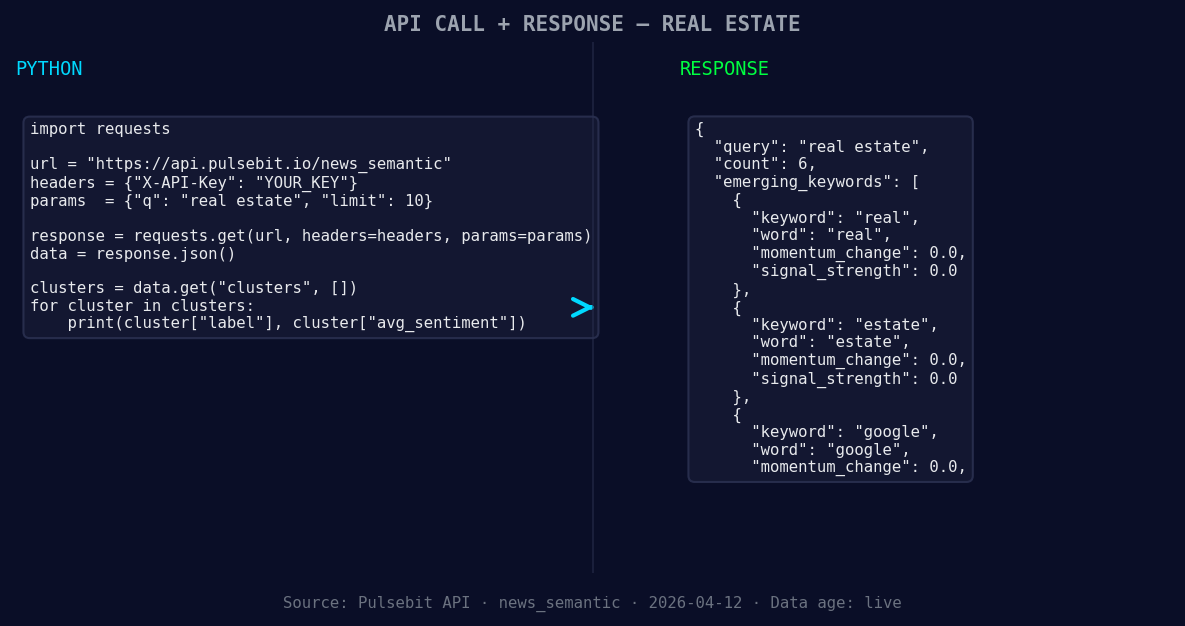
*Left: Python GET /news_semantic call for 'real estate'. Right: returned JSON response structure (clusters: 3). Source: Pulsebit /news_semantic.*
# Step 1: Geographic origin filter
url = "https://api.pulsebit.io/v1/sentiment"
params = {
"topic": "real estate",
"lang": "fr",
"score": 0.700,
"confidence": 0.85,
"momentum": -0.314
}
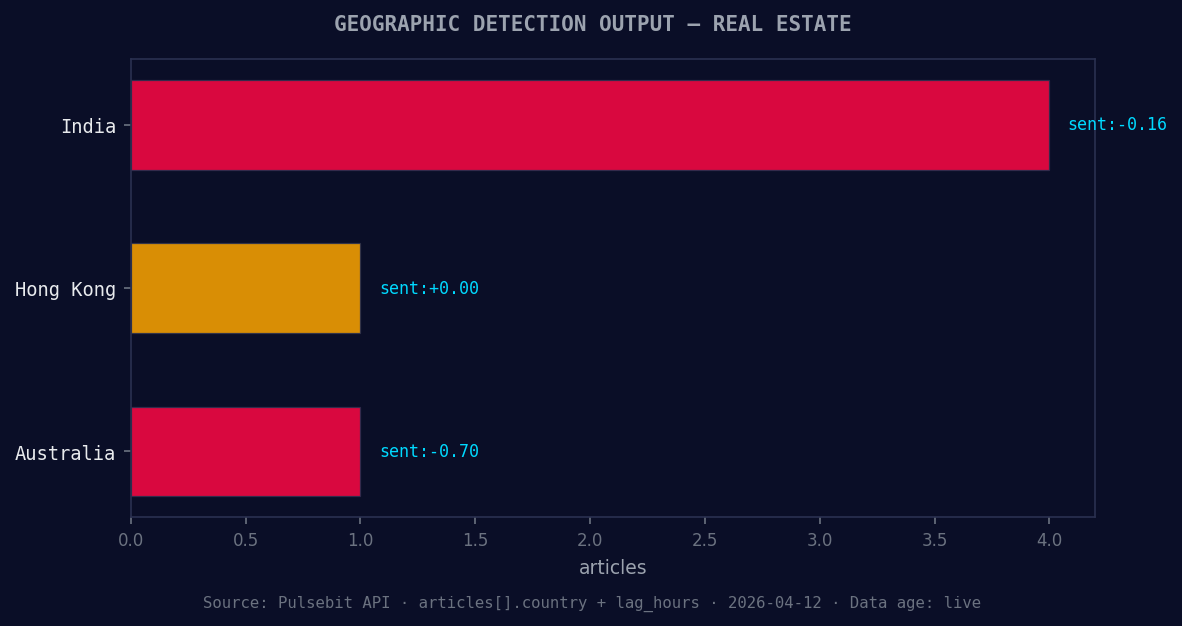
*Geographic detection output for real estate. India leads with 4 articles and sentiment -0.16. Source: Pulsebit /news_recent geographic fields.*
response = requests.get(url, params=params)
data = response.json()
print(data)
Next, we’ll dive into the narrative that clustered this sentiment spike. We can run the cluster reason string through our sentiment scoring API to evaluate the framing of the story itself:
# Step 2: Meta-sentiment moment
cluster_reason = "Clustered by shared themes: real, estate, broker, cheating, ex-serviceman."
meta_sentiment_url = "https://api.pulsebit.io/v1/sentiment"

meta_response = requests.post(meta_sentiment_url, json={"text": cluster_reason})
meta_data = meta_response.json()
print(meta_data)
This code captures the essence of the anomaly and evaluates the sentiment framing around it.
Now, what can you build with this newfound insight? Here are three specific ideas:
Sentiment Alert System: Create an alert system that triggers when the 24-hour momentum goes below a certain threshold, say -0.3, specifically for the French language. This will help you catch crucial shifts before they gain traction.
Geo-Filtered News Dashboard: Build a dashboard that displays real estate news from French-speaking regions. Filter articles where the sentiment score is above 0.7, focusing on the clustered themes of "real" and "estate." This will keep you updated on emerging trends.
Meta-Sentiment Analysis Tool: Develop a tool that automatically analyzes the sentiment framing of emerging narratives. Use the cluster reason string as input and set a threshold for positive sentiment scores to identify stories worth investigating further.
With these builds, you can stay ahead of the curve by capturing sentiment shifts that your existing models may overlook. For more information on how to make these integrations, check out our documentation at pulsebit.lojenterprise.com/docs. You can copy-paste and run this code in under 10 minutes, making it a quick win for your workflow.


Top comments (0)