

Your Pipeline Is 27.0h Behind: Catching Energy Sentiment Leads with Pulsebit
On April 6, 2026, we observed a striking 24h momentum spike of +0.889 in energy sentiment, fueled by a surge in U.S. inflation linked to the ongoing conflict in Iran. This anomaly, clustered through four articles, reveals how interconnected narratives can drive sentiment shifts. It’s a reminder of how quickly news cycles can evolve and how critical it is to stay ahead of these developments.
You might be surprised to learn that your model missed this spike by a staggering 27 hours. While the leading language was English, the dominant narratives focused on themes like inflation and war, which your pipeline may not have effectively captured if it doesn’t handle multilingual origins or entity dominance. If your system only processes data from a singular linguistic or cultural lens, you're likely missing crucial insights that could shape your decision-making.

English coverage led by 27.0 hours. Ro at T+27.0h. Confidence scores: English 0.85, Spanish 0.85, French 0.85 Source: Pulsebit /sentiment_by_lang.
Here’s how you can catch this kind of momentum spike in your pipeline using our API. We’ll start by querying articles related to energy sentiment filtered by language and geographic origin:

Geographic detection output for energy. Hong Kong leads with 4 articles and sentiment +0.38. Source: Pulsebit /news_recent geographic fields.
import requests
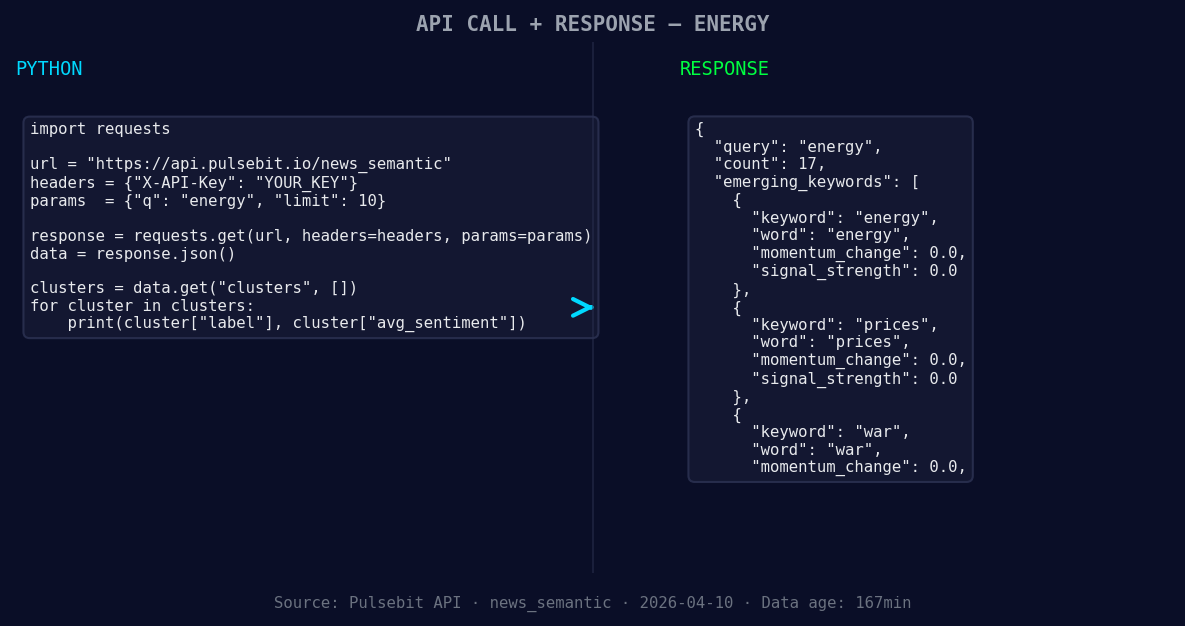
*Left: Python GET /news_semantic call for 'energy'. Right: returned JSON response structure (clusters: 3). Source: Pulsebit /news_semantic.*
url = "https://api.pulsebit.com/v1/articles"
params = {
"topic": "energy",
"lang": "en",
"score": -0.650,
"confidence": 0.85,
"momentum": +0.889
}
response = requests.get(url, params=params)
data = response.json()
Next, we’ll run the cluster reason string through our sentiment scoring endpoint to capture how the narrative is framed. This allows us to understand the underlying sentiment better:
cluster_reason = "Clustered by shared themes: visit, minister’s, uae, india, energy."
url = "https://api.pulsebit.com/v1/sentiment"
payload = {"text": cluster_reason}
response = requests.post(url, json=payload)
meta_sentiment = response.json()
This approach gives you a clearer view of how the narrative is being shaped and allows you to adjust your model accordingly.
Now that we have the groundwork laid out, here are three specific builds you can implement based on this data pattern:
Geo-Filtered Energy Momentum Tracker: Set a signal strength threshold of 0.870 for energy sentiment specifically in English-speaking regions. This will help you capture local sentiment shifts, particularly around energy prices and inflation linked to geopolitical events.
Meta-Sentiment Analysis Loop: Create a pipeline that continuously feeds the cluster reason strings back into the sentiment scoring endpoint. This will help you assess the framing of narratives around themes like energy, prices, and war, enabling you to stay ahead of public sentiment.
Real-time Alert System for Forming Themes: Implement an alert system that triggers when sentiment scores for themes such as energy, prices, or war exceed pre-defined thresholds (e.g., +0.00). For instance, if prices spike alongside energy sentiment, you'll be alerted to potential market shifts before they become mainstream news.
To get started, check our documentation at pulsebit.lojenterprise.com/docs. With these snippets and insights, you can copy-paste and run this in under 10 minutes, ensuring your pipeline is always aligned with the latest momentum shifts.


Top comments (0)